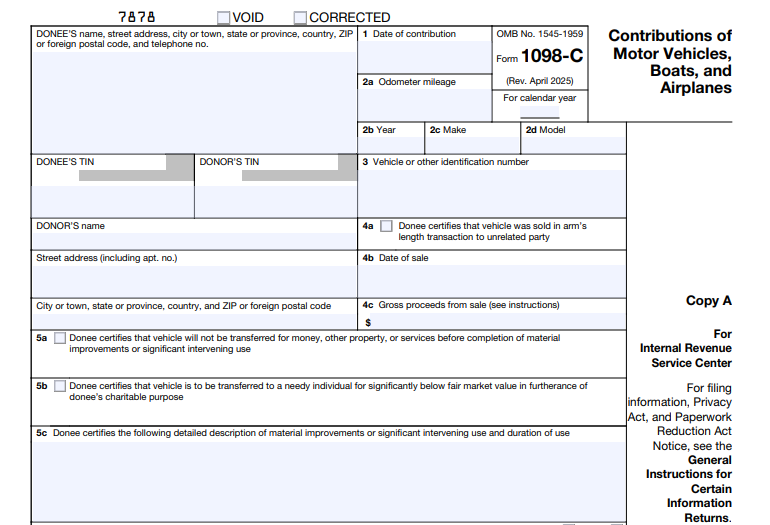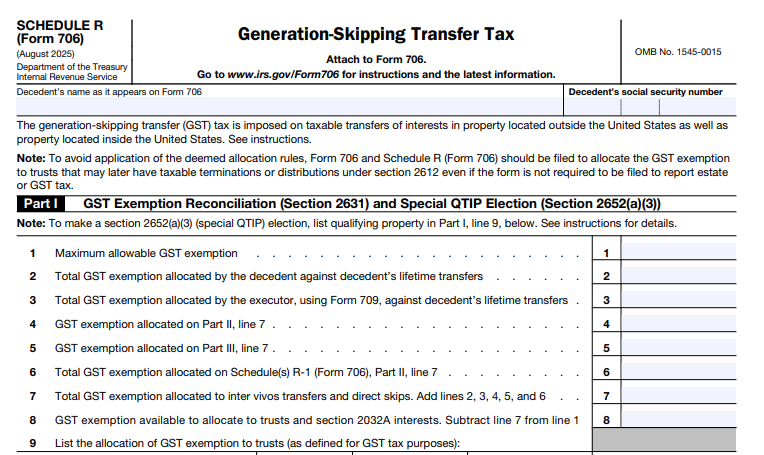
IRS Form 8829 – Expenses for Business Use of Your Home

IRS Form 8829 - Expenses for Business Use of Your Home

IRS Form 8829 – Expenses for Business Use of Your Home – In today’s remote work revolution, where over 40% of U.S. workers now operate from home at least part-time, turning your living space into a tax-deductible office is a game-changer. IRS Form 8829Expenses for Business Use of Your Home, empowers self-employed individuals, freelancers, and small business owners to claim a portion of rent, utilities, insurance, and depreciation—potentially saving thousands annually. For the 2025 tax year, the form remains unchanged in structure from 2024, but with the SALT deduction cap rising to $40,000 ($20,000 if married filing separately) and inflation adjustments influencing phaseouts, it’s prime time to optimize your home office setup.

This SEO-optimized guide, based on the official 2025 Instructions for Form 8829 (Rev. December 2024) and IRS Publication 587 (Business Use of Your Home), breaks down eligibility, methods, step-by-step completion, deadlines, and pitfalls. Whether you’re a gig economy creator in a spare bedroom or a consultant deducting mortgage interest, Form 8829 could unlock deductions up to your business’s gross income—without the simplified method’s $1,500 cap. Download the 2025 PDF from IRS.gov and transform your home into a profit center before the April 15, 2026, deadline.

IRS Form 8829 - Expenses for Business Use of Your Home
IRS Form 8829 – Expenses for Business Use of Your Home


What Is IRS Form 8829?

Form 8829 is a detailed worksheet for calculating the allowable business use of home deduction on Schedule C (Form 1040), Schedule F (Form 1040), or Schedule E (Form 1040), allocating indirect expenses like utilities and direct costs like repairs to your office space. It separates operating expenses from depreciation and casualty losses, ensuring compliance with the exclusive and regular use rules while carrying forward unallowed amounts indefinitely.

The multi-part form includes:

  • Part I: Simplified method election (optional $5/sq ft up to 300 sq ft, max $1,500).
  • Part II: Direct/indirect expenses calculation.
  • Part III: Depreciation and basis.
  • Part IV: Carryover of unallowed expenses.
  • Part V: Total allowable deduction.

For 2025, instructions highlight the SALT cap increase to $40,000 (from $10,000), allowing fuller real estate tax deductions on Schedule A while using Form 8829 for business portions. Attach to Schedule C, line 30; no separate filing. The deduction is limited to your business’s gross income (minus non-home expenses), with excess carried forward.

Key Fact: Unlike employees (ineligible since 2018 TCJA), self-employed can deduct via Form 8829 or the simplified method—no recapture on sale if using actual expenses.

Who Must File Form 8829?

File Form 8829 if you’re self-employed and using the actual expense method for a qualifying home office—mandatory for detailed tracking, though the simplified method skips it entirely. Eligible filers include:

  • Sole Proprietors/Schedule C: Freelancers, consultants with exclusive/regular home office use.
  • Farmers/Schedule F: Those with a home-based ag business (worksheet in Pub. 587).
  • Partners/Schedule E: Rental property managers using home for admin.
  • Qualified Daycare Providers: Time-based allocation if not exclusive use.

Qualifying Use: Space used regularly/exclusively for business (principal place, client meetings, or inventory storage); or daycare with time proration.

Exceptions:

  • Employees: No deduction (TCJA 2018–2025).
  • Simplified Method Users: Enter directly on Schedule C, line 30 (up to $1,500).
  • No Profit: Deduction limited to gross income; carryover allowed.

Choose methods yearly—actual for higher deductions if expenses exceed $1,500.

Actual vs. Simplified Method: Which Home Office Deduction Fits Your 2025 Setup?

Form 8829 is for actual expenses, but the simplified method offers ease—compare to decide. Here’s a breakdown:

Feature Actual Expense Method (Form 8829) Simplified Method
Calculation % of home (sq ft or rooms) × actual costs (mortgage, utilities, etc.) $5 per sq ft (up to 300 sq ft = $1,500 max)
Eligible Expenses Direct (repairs) + indirect (prorated rent, insurance, depreciation) Flat rate; no depreciation or itemization
Recordkeeping Receipts, measurements, basis for depreciation Minimal; just sq ft and business %
Depreciation Allowed; recapture on home sale None; no recapture
Limit Gross business income (carryover excess) $1,500 absolute cap
Best For High expenses/homeowners with equity Low costs/renters or beginners
SALT Interaction Business % of taxes deductible on Schedule A (up to $40,000 cap) Full SALT on Schedule A unchanged

Switch methods yearly; simplified avoids audits over depreciation.

Step-by-Step Guide: How to Complete IRS Form 8829 for 2025

Use the 2025 Form 8829 (Rev. December 2024)—a 4-page PDF from IRS.gov; software like TurboTax auto-populates from inputs. Measure office sq ft; track expenses.

1. Part I: Simplified Method (Lines 1–5) – Optional

  • Line 1: Sq ft used (≤300).
  • Line 2: $5 × line 1 (≤$1,500).
  • Line 3: Business % (if partial year).
  • Line 4: Multiply lines 2–3.
  • Line 5: Enter on Schedule C, line 30 if electing; skip to Part II otherwise.

2. Part II: Direct/Indirect Expenses (Lines 6–18)

  • Line 6: Direct expenses (100% deductible, e.g., office repairs).
  • Lines 7–18: Indirect (prorated): Mortgage interest, taxes (business % of total), utilities, insurance, etc.
  • Business %: Sq ft office/total home or # rooms (fair comparison).

3. Part III: Depreciation (Lines 19–41)

  • Line 19: Home basis (purchase + improvements – land value).
  • Line 20–36: Adjusted basis for business use.
  • Line 37–41: Depreciation % from tables (e.g., 2.461% for 39-year property placed in 2025); multiply for allowable.

4. Part IV: Carryover (Lines 42–43)

  • Line 42: Prior unallowed from 2024 Form 8829, line 43.
  • Line 43: Current unallowed (total expenses – income limit).

5. Part V: Total Deduction (Lines 44–35)

  • Sum allowable; enter on Schedule C, line 30 (limited to business income).

Pro Tip: Use Pub. 587 worksheet for daycare time allocation; track sq ft annually.

Deadlines and How to File Form 8829 for 2025

Attach to Schedule C/F/E with your 2025 Form 1040—due April 15, 2026 (extendable to October 15 via Form 4868). E-file (90%+ returns) or paper mail to IRS center.

  • Simplified Method: No form—direct to Schedule C.
  • Amended: Use 1040-X within 3 years for missed deductions.
  • Depreciation Deadline: Placed-in-service by December 31, 2025.

Refunds in 21 days e-file; retain records (receipts, measurements) 3+ years.

Common Mistakes to Avoid When Filing Form 8829

Audit triggers often stem from poor records—here’s a table of pitfalls:

Mistake Why It Happens How to Fix/Avoid Potential Consequence
Non-Qualifying Space Mixed personal/business use. Ensure exclusive/regular; photo/document. Full disallowance; $5,000 penalty.
Wrong Business % Inaccurate sq ft/rooms. Measure precisely; use fair room method. Under/over deduction; audit.
Depreciation Errors (Part III) Wrong basis/table. Exclude land; use MACRS 39-year. Recapture on sale; interest.
Income Limit Ignore Deducting >gross income. Cap at income; carryover excess. IRS adjustment; negligence penalty.
SALT Double-Dip Full taxes on Schedule A. Prorate business % to Form 8829. Over-deduction; repayment.
No Carryover (Part IV) Forgetting prior unallowed. Track line 43 annually. Lost deductions.

Amend with 1040-X; audit-proof with logs.

IRS Form 8829 Download and Printable

Download and Print: IRS Form 8829

2025 Updates and Special Considerations for Form 8829

The 2025 instructions (Rev. Dec. 2024) reflect TCJA extensions:

  • SALT Cap: $40,000 ($20,000 MFS; phaseout >$500K MAGI)—prorate business taxes.
  • Simplified Max: $1,500 (300 sq ft × $5); no depreciation.
  • Depreciation: MACRS 39-year residential; Pub. 946 tables.
  • Carryover: Indefinite for unallowed operating/depreciation.
  • Daycare: Time % if non-exclusive; Pub. 587 worksheet.
  • Renters: Full prorated rent; no basis issues.

Post-2025 TCJA sunset may reinstate employee deductions—monitor.

Final Thoughts: Deduct Smarter with Form 8829 in 2025

IRS Form 8829 unlocks the full power of home office deductions for self-employed pros, prorating costs to fuel your business without the simplified method’s limits. For 2025, measure accurately, track expenses, and file by April 15, 2026—potentially deducting $5,000+ while carrying over more. With SALT cap relief to $40,000, itemize boldly.

Consult Pub. 587 or a CPA for daycare/depreciation. This guide is informational; verify IRS.gov.

Not tax advice. Refer to official IRS resources.

FAQs About IRS Form 8829

What is the simplified method limit for Form 8829 in 2025?

$1,500 max ($5/sq ft up to 300 sq ft); skips the form.

Can renters use Form 8829 for home office?

Yes—prorate rent as indirect expense.

What is the business income limit for Form 8829 deductions?

Capped at gross income from business; excess carries forward.

Does Form 8829 require depreciation?

Only for actual method; simplified avoids it.


IRS Form 8843 – Statement for Exempt Individuals and Individuals With a Medical Condition

IRS Form 8843 - Statement for Exempt Individuals and Individuals With a Medical Condition

IRS Form 8843 – Statement for Exempt Individuals and Individuals With a Medical Condition – For nonresident aliens navigating U.S. tax residency rules, maintaining exempt status can mean the difference between filing a simple informational form and facing full U.S. taxation. IRS Form 8843Statement for Exempt Individuals and Individuals with a Medical Condition, is the essential tool to exclude days of physical presence in the United States from the substantial presence test, helping F-1, J-1, M-1, Q-1 visa holders (and their dependents) avoid unintended residency. As the IRS updated the form in January 2025 for tax year 2024 (applicable to 2025 filings), with no major structural changes but clarified instructions on visa extensions and medical exceptions, timely submission remains crucial to preserve nonresident status and potential treaty benefits.

This SEO-optimized guide, based on the official 2025 Form 8843 (Rev. October 2024) and IRS Publication 519 (U.S. Tax Guide for Aliens), covers the form’s purpose, eligibility, step-by-step completion, deadlines, and common pitfalls. Whether you’re an international student on F-1 status wrapping up your degree or a J-1 scholar extending your program, Form 8843 ensures your U.S. days don’t trigger residency—yet only 60% of eligible filers submit it on time, risking audits or visa complications. Download the latest PDF from IRS.gov and file by June 15, 2026, for peace of mind.

IRS Form 8843 - Statement for Exempt Individuals and Individuals With a Medical Condition
IRS Form 8843 – Statement for Exempt Individuals and Individuals With a Medical Condition


What Is IRS Form 8843?

Form 8843 is an informational statement (not a tax return) that nonresident aliens use to document and exclude days of presence in the U.S. from the substantial presence test, which deems you a resident if present 183+ days over three years (weighted formula). It applies to “exempt individuals” like students, teachers, trainees, or those with medical conditions preventing departure, allowing you to maintain nonresident status for tax purposes.

The two-page form includes:

  • Part I: General information and visa details.
  • Part II: Exempt individual specifics (e.g., student/trainee days).
  • Part III: Medical condition exclusions (attach doctor’s statement).
  • Part IV: Signature under perjury.

For 2025 filings (covering 2024 presence, but form dated 2025), instructions emphasize attaching Form I-797 for status changes and providing facts for permanent residency intent (line 12). If no U.S. income, file standalone; otherwise, attach to Form 1040-NR. Failure to file may disqualify exclusions, potentially making you a U.S. tax resident liable for worldwide income.

Key Fact: Form 8843 doesn’t report income—it’s purely for presence exclusion; pair with Form 8840 for closer connection if needed.

Who Must File Form 8843?

All nonresident aliens present in the U.S. under F, J, M, or Q visas (and their F-2/J-2/M-2/Q-3 dependents) must file Form 8843 if they seek to exclude any days of presence, regardless of income. This includes:

  • Students (F-1/F-2, M-1/M-2, Q-1/Q-2): Exclude up to 5 calendar years (exception for 2 of prior 6 if teacher/trainee).
  • Teachers/Trainees (J-1): Up to 2 years (exception for prior student status).
  • Professional Athletes: Days competing in charitable events.
  • Medical Cases: Days unable to leave due to unforeseen condition (attach physician statement).

Threshold: Any U.S. presence in 2025; file even with zero income.

Exceptions:

  • U.S. residents for tax purposes (green card or substantial presence without exclusions).
  • No presence in 2025.
  • Dependents under 14 who can’t sign: Parent/guardian signs (attach statement).

Mail individually; no e-file for standalone 8843.

Step-by-Step Guide: How to Complete IRS Form 8843 for 2025

The 2025 Form 8843 (Rev. October 2024) is a two-page PDF—download from IRS.gov and complete by hand or digitally (no e-signature for standalone). Use black ink; attach statements as needed.

1. Part I: General Information (Lines 1–5)

  • Line 1a: Name (full legal).
  • Line 1b: U.S. address (if any; foreign OK).
  • Line 1c: Identifying number (SSN/ITIN; none required if no income).
  • Line 2: Foreign address.
  • Line 3: Country of citizenship.
  • Line 4: Days present in 2025 (total U.S. days).

2. Line 5: Visa Type

  • Enter F, J, M, or Q; check if exempt (student/teacher/trainee/professional athlete/medical).

3. Part II: Exempt Individual (Lines 6–15)

  • Students (Lines 6a–6c): Academic institution name/address/phone; visa type/dates; exclude up to 5 years.
  • Teachers/Trainees (Lines 8a–8c): Institution/program director details; up to 2 years.
  • Professional Athletes (Line 9): Charitable event name/dates.
  • Line 10: Total excluded days (sum above).

4. Part III: Medical Condition (Lines 16–18)

  • Line 16a: Describe condition/problem.
  • Line 16b: Date unable to leave.
  • Line 17: Physician name/address/signature certifying unforeseen complication.
  • Line 18: Excluded days (attach statement).

5. Part IV: Signature (Lines 19–21)

  • Sign/date under perjury; preparer info if applicable.

Pro Tip: For extensions (e.g., OPT), attach I-797; if changing status, explain on attached statement.

Deadlines and How to File Form 8843 for 2025

File by June 15, 2026, for standalone (no income); otherwise, with your 1040-NR by April 15, 2026 (extendable to June 15 abroad). Mail to Department of the Treasury, Internal Revenue Service Center, Austin, TX 73301-0215—no e-file for standalone.

  • With Return: Attach to 1040-NR; e-file if possible.
  • No Income: Standalone by June 15; certified mail for proof.
  • Prior Years: File late if missed; no penalty but preserves status.

Retain copies 3 years; no IRS confirmation—track mailing.

Common Mistakes to Avoid When Filing Form 8843

Non-filing risks residency deeming—here’s a table of errors:

Mistake Why It Happens How to Fix/Avoid Potential Consequence
Missing Days (Line 4) Underreporting presence. Count all U.S. days; include transit. Residency trigger; worldwide tax.
Wrong Visa (Line 5) Confusing F/J. Verify I-94; explain changes. Exclusion denial.
No Physician Statement (Part III) Medical without attach. Get signed note; describe unforeseen. Days not excluded.
Group Filing Mailing multiples together. Separate envelopes per person. Processing failure.
Late Standalone Missing June 15. Mail by deadline; certified proof. Status complications; visa issues.
Intent Statement (Line 12) No facts for “No” permanent residency. Attach home ties (job/family abroad). Residency presumption.

File late for prior years; no penalty but retroactive status risk.

IRS Form 8843 Download and Printable

Download and Print: IRS Form 8843

2025 Updates and Special Considerations for Form 8843

The 2025 Form 8843 (Rev. October 2024) is unchanged structurally:

  • OMB No.: 1545-0074; Cat. No. 17227H.
  • Visa Extensions: Attach I-797 for OPT/AT changes.
  • Medical Exception: Unforeseen complications only; physician certifies no pre-existing.
  • Student Limit: 5 years (exception if prior teacher/trainee).
  • Teacher/Trainee: 2 years; no overlap with student.
  • Dependents: Separate forms; parent signs for minors.
  • No SSN/ITIN Needed: If no income; otherwise, include.

For dual-status, attach to 1040-NR; states may not follow federal exclusions.

Final Thoughts: Secure Your Nonresident Status with Form 8843 in 2025

IRS Form 8843 is a low-effort safeguard for exempt nonresidents, excluding U.S. presence days to avoid residency traps. For 2025, file by June 15, 2026 (standalone), attach to 1040-NR if income, and mail separately per person—preserving treaty benefits and visa paths. With no income requirement, it’s a must for F/J/M/Q holders.

Consult Pub. 519 or a tax advisor for status changes. This guide is informational; verify IRS.gov.

Not tax advice. Refer to official IRS sources.

FAQs About IRS Form 8843

Who must file Form 8843 in 2025?

Nonresident aliens on F, J, M, or Q visas (and dependents) present any day in 2025, to exclude presence.

What is the deadline for standalone Form 8843 in 2025?

June 15, 2026; with 1040-NR by April 15, 2026.

Do I need an SSN/ITIN for Form 8843?

No, if no income; yes if filing a return.

Can dependents file Form 8843?

Yes—separate form; parent signs for under 14.


IRS Form 8906 – Distilled Spirits Credit

IRS Form 8906 - Distilled Spirits Credit

IRS Form 8906 – Distilled Spirits Credit – In the competitive world of alcohol distribution and production, every tax break counts. If you’re a wholesaler, importer, or qualified distiller holding inventory of bottled distilled spirits, the IRS Distilled Spirits Credit could reduce your federal income tax liability. Enter IRS Form 8906, Distilled Spirits Credit—the essential tool for claiming this incentive under IRC Section 5011. Searching for “how to file Form 8906 for 2025” or “Distilled Spirits Credit eligibility”? This SEO-optimized guide, based on the latest IRS resources, walks you through everything from qualifications to filing.

For tax year 2025, the credit rate remains at an average tax-financing cost of $0.29717 per case, helping offset excise taxes on inventory carried in your business. Download the 2025 Form 8906 PDF from IRS.gov and attach it to your return—potentially saving thousands on your 2026 filing. Let’s break it down.

IRS Form 8906 - Distilled Spirits Credit
IRS Form 8906 – Distilled Spirits Credit


What Is the Distilled Spirits Credit on IRS Form 8906?

The Distilled Spirits Credit reimburses eligible taxpayers for the average cost of carrying federal excise taxes on bottled distilled spirits in inventory. Enacted to ease the financial burden of pre-paid excise taxes (imposed under IRC Section 5001 at $13.50 per proof gallon), this nonrefundable credit is part of the general business credit reported on Form 3800. It’s calculated annually based on cases purchased or stored, not sold, during the tax year.

Key features for 2025:

  • Credit Amount: $0.29717 per case (fixed for the year, based on the prior calendar year’s average excise tax cost).
  • Case Definition: 12 bottles of 80-proof, 750 ml each (adjusted for other sizes/proofs via formula).
  • No Carryback/Carryforward Changes: Follows general business credit rules—carryforward up to 20 years if unused.

This credit doesn’t apply to beer or wine; it’s strictly for distilled spirits like whiskey, vodka, rum, and gin. Partnerships and S corporations must file Form 8906, while others can report pass-through credits directly on Form 3800, Part III, line 1n.

Pro Tip: Track inventory meticulously—eligible cases must be U.S.-bottled and purchased directly from bottlers.

Who Qualifies for the Distilled Spirits Credit in 2025?

Not every alcohol handler can claim this credit. Eligibility under IRC Section 5011 targets those bearing the excise tax burden:

  • Eligible Wholesalers: Holders of a Federal Alcohol Administration (FAA) Act wholesaler permit for distilled spirits. Excludes states, political subdivisions, or their agencies.
  • Qualified Distillers and Importers: Businesses importing or distilling spirits that maintain taxable inventory subject to Section 5001.
  • State Warehouse Storers: Persons subject to Section 5005 (tax on spirits stored in state-operated or affiliated warehouses where title hasn’t unconditionally passed via sale).

You must have purchased or stored eligible cases during 2025. No minimum inventory threshold, but the credit applies only to the taxable portion. Non-U.S. bottlings? Ineligible.

Eligibility Type Description Examples
Wholesaler FAA permit holder buying directly from bottlers Regional liquor distributors
Importer Brings in foreign spirits, pays excise on entry International spirits companies
State-Affiliated Stores in gov’t warehouses without title transfer Bonded warehouse operators
Distiller Produces and holds U.S.-bottled spirits Craft distilleries with inventory

If your business ceased operations in 2025, claim on your final return. Consult Pub. 510 (Excise Taxes) for nuances.

How to Calculate the Distilled Spirits Credit for 2025

The formula is simple: Number of Eligible Cases × $0.29717. But accuracy hinges on proper case counting.

  1. Determine Eligible Cases (Line 1): Count U.S.-bottled cases purchased directly (wholesalers) or stored without title passage (others). Use the adjustment formula for non-standard lots:
    • Liters in lot ÷ 9 × (Proof ÷ 80) = Cases.
    • Example: 90 bottles of 500 ml (0.5 L) at 150 proof = 45 L ÷ 9 = 5; 5 × (150/80) = 9.375 cases.
  2. Apply Rate (Line 2): Enter $0.29717 (IRS-provided for 2025).
  3. Multiply (Line 3): Line 1 × Line 2.
  4. Add Pass-Throughs (Line 4): Include credits from Schedule K-1 (Form 1065, box 15 code AL; Form 1120-S, box 13 code AL).
  5. Total Credit (Line 5): Sum Lines 3 + 4. Report on Form 3800.

No worksheets needed beyond the case formula—keep records for 3+ years per IRC Section 6001.

Step-by-Step Guide: Completing IRS Form 8906 for 2025

This one-page form attaches to your income tax return (e.g., Form 1120 for corporations). Here’s how:

  • Enter name and EIN/SSN from your return.

Line 1: Total Cases

  • Input calculated cases as described. Round to whole numbers? Use decimals for precision (e.g., 9.375).

Line 2: Average Cost

  • Pre-filled: 0.29717 (or $0.29717—enter with dollar sign if required by software).

Line 3: Multiplication

  • Auto-calculates in e-file software.

Line 4: Pass-Through Credits

  • Aggregate from K-1s. Partnerships/S corps report total on Schedule K.

Line 5: Total Credit

  • Transfer to Form 3800, Part III, line 1n (other credits).

Sign and date if preparing manually. E-file via modernized systems for faster processing.

2025 Filing Deadlines and Where to File Form 8906

Attach Form 8906 to your timely filed 2025 return:

  • Individuals/S corps/Partnerships: March 15, 2026 (or September/October with extension).
  • Corporations: April 15, 2026 (or October 15 extended).
  • Excise Tax Filers: Align with Form 720 if applicable.

No separate due date—late filing risks losing the credit. Paper file to your return’s address; e-file recommended for accuracy.

Potential Limitations and Common Errors

The credit is nonrefundable but carries forward. Watch for:

  • Overcounting ineligible imports.
  • Forgetting proof adjustments.
  • Mismatching with Form 3800 limitations (e.g., tentative minimum tax).

IRS audits focus on inventory records—use software like QuickBooks for tracking.

5 Tips for Maximizing Your Distilled Spirits Credit in 2025

  1. Audit Your Permits: Confirm FAA wholesaler status early.
  2. Inventory Precisely: Use ERP systems to log cases monthly.
  3. Coordinate with Partners: Ensure K-1s reflect accurate shares.
  4. E-File for Speed: Avoid paper delays; claim sooner on 3800.
  5. Consult Experts: For importers, pair with Pub. 510 and a tax pro.

Frequently Asked Questions (FAQs) About IRS Form 8906

Who is considered an eligible wholesaler for Form 8906?

Any FAA Act permit holder for distilled spirits wholesaling, excluding government entities.

What’s the 2025 credit rate per case?

$0.29717, based on average excise tax financing costs.

Do I need to file Form 8906 if only receiving pass-through credits?

No—report directly on Form 3800, line 1n. Partnerships/S corps must file.

Can the credit be carried forward?

Yes, up to 20 years under general business credit rules.

Where do I download the 2025 Form 8906?

From IRS.gov/forms-pubs/about-form-8906—PDF posted November 3, 2025.

Unlocking the Distilled Spirits Credit via IRS Form 8906 can boost your bottom line in the spirits industry. For personalized guidance, visit IRS.gov or a CPA. Share your tips in the comments!

This article is informational, based on 2025 IRS guidelines—not tax advice. Verify with official sources.

IRS Form 8906 Download and Printable

Download and Print: IRS Form 8906


IRS Form 4972 – Tax on Lump-Sum Distributions

IRS Form 4972 - Tax on Lump-Sum Distributions

IRS Form 4972 – Tax on Lump-Sum Distributions – Retirement planning often involves tough decisions, like taking a lump-sum distribution from a qualified plan such as a pension or 401(k). While this can provide immediate access to funds, it risks a hefty tax bill in a single year. Fortunately, for those born before January 2, 1936, IRS Form 4972Tax on Lump-Sum Distributions, offers special relief through options like 10-year tax averaging or a 20% capital gains rate on certain portions, potentially slashing your liability significantly. As the IRS released the 2025 draft form on April 14, 2025, with no structural changes from prior years, this grandfathered benefit remains available—though increasingly rare as the eligible population ages.

This SEO-optimized guide, based on the official 2025 Form 4972 instructions and IRS Publication 575 (Pension and Annuity Income), covers the form’s purpose, eligibility, step-by-step completion, deadlines, and key considerations. If you’re an estate executor handling a legacy distribution or a retiree born before 1936 evaluating options, Form 4972 could save thousands in taxes. Download the 2025 PDF from IRS.gov and explore if this relic of pre-ERISA tax law works for you.

IRS Form 4972 - Tax on Lump-Sum Distributions
IRS Form 4972 – Tax on Lump-Sum Distributions


What Is IRS Form 4972?

Form 4972 is a specialized tax computation form used to calculate the federal income tax on a qualified lump-sum distribution from a qualified retirement plan, applying special rules like 10-year averaging or a 20% capital gains election for participants born before January 2, 1936. A lump-sum distribution is the complete payout of all amounts from one type of plan (e.g., all pensions) in a single tax year, often triggered by separation from service, death, or plan termination.

The form’s structure:

  • Part I: Ordinary income portion (10-year averaging).
  • Part II: Capital gain election (20% rate on pre-1979 appreciation).
  • Part III: Death benefit exclusion.
  • Part IV: Total tax computation and entry on Form 1040/1041.

For 2025, the draft form (Cat. No. 13187U) retains its layout, with instructions referencing Form 1099-R (Code A for lump-sums) and Publication 575 for net unrealized appreciation (NUA) treatment. Attach to Form 1040, line 16 (check box 2), or Form 1041, Schedule G, line 1b. These options are grandfathered under pre-1986 rules, unavailable for post-1975 participants unless qualifying under special conditions.

Key Fact: Without Form 4972, lump-sums are taxed at ordinary rates (up to 37%), but averaging spreads tax over 10 years at 1986 brackets (max 50%), often yielding savings for large distributions.

Who Must File Form 4972?

File Form 4972 if you (or your estate/trust) received a qualified lump-sum distribution in 2025 from a qualified plan and were born before January 2, 1936, to elect special tax treatment. Eligible recipients include:

  • Individuals: Plan participants or beneficiaries (e.g., spouses, but not non-spouse heirs for capital gain election).
  • Estates/Trusts: For distributions to beneficiaries born before 1936.
  • Plans: Qualified pensions, profit-sharing, 401(k)s, or stock bonus plans.

Qualified Lump-Sum Defined:

  • Total payout from all plans of one type in one year.
  • Includes ordinary income, capital gains (pre-1974 participation), and NUA in employer securities.
  • Excludes after-tax contributions, IRD, or non-plan assets.

Ineligible If:

  • Born January 2, 1936, or later (no averaging/capital gain election).
  • Partial distribution or rollover to IRA.
  • Non-qualified plans (e.g., 403(b)s, unless grandfathered).

For alternate payees (e.g., QDRO), eligibility passes through the participant. No separate filing if no election—report on Form 1040 as ordinary income.

Step-by-Step Guide: How to Complete IRS Form 4972 for 2025

The 2025 Form 4972 is a four-part PDF—download from IRS.gov and use tax software for calculations. Gather Form(s) 1099-R and prior-year records for averaging.

1. Gather Data

  • 1099-R: Total distribution (Box 1), taxable (Box 2a), NUA (Box 6), code A (Box 7).
  • Birth date: Confirm pre-1936.
  • Prior years: AGI/tax for 10-year averaging (1986 tables in instructions).

2. Part I: Ordinary Income (Lines 1–12)

  • Line 1: Total lump-sum (all 1099-R Box 1).
  • Line 2: Minus after-tax/rollover.
  • Line 3: Capital gain portion (pre-1974; from plan admin).
  • Line 4–6: Death benefit (up to $5,000; line 3 if applicable).
  • Line 7: Ordinary (line 1 – 2 – 3 – death).
  • Line 8–12: 10-year averaging: Divide line 7 by 10, add to prior AGI, apply 1986 brackets (10%–50%).

3. Part II: Capital Gain Election (Lines 13–19)

  • Line 13: Capital gain (line 3).
  • Line 14: Multiply by 20%.
  • Line 15–19: If electing, tax on gain (20% rate); otherwise, ordinary.

4. Part III: Death Benefit (Lines 20–23)

  • Line 20: Eligible death benefit (line 3 or $5,000).
  • Line 21–23: Exclusion calculation.

5. Part IV: Total Tax (Lines 24–30)

  • Line 24: Ordinary tax (Part I).
  • Line 25: Capital gain tax (Part II).
  • Line 26: Death exclusion (Part III).
  • Line 27–30: Total tax; enter on 1040 line 16 (box 2).

Pro Tip: Elect both averaging and 20% gain if beneficial—run scenarios in software; NUA taxed at sale, not distribution.

Deadlines and How to File Form 4972 for 2025

Attach Form 4972 to your 2025 Form 1040, 1040-SR, 1040-NR, or 1041—due April 15, 2026 (extendable to October 15 via Form 4868/7004). E-file (recommended) or paper mail to IRS center.

  • Distribution Deadline: Report 2025 lump-sums on 2025 return.
  • Election Irrevocable: Once made, can’t change for future distributions from same plan.
  • Amended: Use 1040-X within 3 years if missed.

Refunds in 21 days for e-file; include 1099-Rs as support.

Common Mistakes to Avoid When Filing Form 4972

Grandfathered rules trip up 25% of filers—here’s a table of errors:

Mistake Why It Happens How to Fix/Avoid Potential Consequence
Ineligible Birth Date Assuming post-1935 qualify. Confirm pre-Jan. 2, 1936; no averaging otherwise. Ordinary rates (up to 37%); no relief.
Partial Distribution Rollover portion included. Exclude rollovers; report only qualifying. Incorrect tax; audit.
Wrong Averaging Years Using current brackets. Apply 1986 tables (10%–50%); Pub. 575 worksheet. Overpayment; amended return needed.
Ignoring NUA (Line 3) No employer stock. Report appreciation separately; taxed at sale. Double taxation risk.
No Election (Part II) Skipping capital gain. Elect 20% if pre-1974 participation; irrevocable. Higher ordinary tax.
Wrong Attachment Filing without 1040. Attach to line 16 (box 2); e-file supported. Processing delay.

Amend with 1040-X; retain 1099-Rs 3 years.

IRS Form 4972 Download and Printable

Download and Print: IRS Form 4972

2025 Updates and Special Considerations for Form 4972

The 2025 draft (Rev. April 2025) is unchanged structurally:

  • OMB No.: 1545-0075; Cat. No. 13187U.
  • Grandfathered Only: Pre-1936 birth; no new eligibility.
  • 10-Year Averaging: 1986 brackets (max 50%); AGI from prior years needed.
  • 20% Capital Gain: On pre-1974 ordinary income portion.
  • NUA: Box 6 on 1099-R; taxed at sale (0%/15%/20%).
  • Death Benefits: Up to $5,000 exclusion (Part III).
  • Estates/Trusts: Eligible if beneficiary pre-1936; report on 1041.

For QDROs/alternate payees, election applies if participant qualifies. Post-TCJA, no changes, but monitor sunset 2025.

Final Thoughts: Unlock Relief with Form 4972 in 2025

IRS Form 4972 provides rare tax relief for pre-1936 retirees facing lump-sum hits, using averaging or 20% gains to ease the burden. For 2025, confirm eligibility via birth date, gather 1099-Rs, and attach by April 15, 2026—potentially saving 20%+ on taxes. With fewer qualifying annually, act if eligible; otherwise, consider rollovers to IRAs.

Consult Pub. 575 or a CPA for NUA/QDROs. This guide is informational; verify IRS.gov.

Not tax advice. Refer to official IRS sources.

FAQs About IRS Form 4972

Who qualifies for Form 4972 in 2025?

Participants/beneficiaries born before January 2, 1936, with qualified lump-sum distributions.

What is 10-year averaging on Form 4972?

Spreads ordinary income tax over 10 years using 1986 brackets (10%–50%).

Can estates file Form 4972?

Yes, if the beneficiary was born before 1936.

Is Form 4972 e-file compatible?

Yes—attach electronically or paper to 1040/1041.


IRS Form 2555 – Foreign Earned Income

IRS Form 2555 - Foreign Earned Income

IRS Form 2555 – Foreign Earned Income – As global mobility surges—with over 9 million Americans living abroad in 2025—the U.S. tax code’s worldwide reach can feel burdensome. Enter IRS Form 2555Foreign Earned Income, a powerful tool allowing qualifying expats to exclude up to $130,000 of foreign-earned income from U.S. federal taxes, plus a housing exclusion or deduction that can add another $20,000+ depending on location. For the 2025 tax year, the exclusion limit rises from $126,500 in 2024, providing inflation relief amid rising living costs in hotspots like London or Tokyo.

This SEO-optimized guide, based on the official 2025 Instructions for Form 2555 (Rev. December 2024) and IRS Publication 54 (Tax Guide for U.S. Citizens and Resident Aliens Abroad), covers eligibility, step-by-step completion, deadlines, and strategies to maximize benefits. Whether you’re a digital nomad in Bali or a corporate exec in Singapore, Form 2555 can slash your U.S. tax bill—yet only 25% of eligible expats claim it, leaving millions unexcluded. Download the 2025 PDF from IRS.gov and reclaim your earnings before the April 15, 2026, deadline.

IRS Form 2555 - Foreign Earned Income
IRS Form 2555 – Foreign Earned Income


What Is IRS Form 2555?

Form 2555 is the gateway to two major expat tax breaks: the Foreign Earned Income Exclusion (FEIE) and the Foreign Housing Exclusion/Deduction. It proves your foreign tax home and qualifying period, calculating exclusions for earned income (wages, self-employment) up to $130,000 and housing costs (rent, utilities) exceeding a base amount ($20.76/day in 2025, or $7,579 annually).

The 6-page form includes:

  • Parts I–III: Tests for bona fide residence or physical presence.
  • Part IV: Foreign earned income details.
  • Parts V–VI: Housing amounts and exclusions.
  • Part VII: Proration for partial years.
  • Part VIII: Total exclusions for 1040 attachment.
  • Part IX: Self-employment tax computation.

For 2025, instructions clarify reporting deferred compensation (e.g., bonuses earned abroad but paid later) and emphasize currency conversion using spot rates at receipt. Attach to Form 1040 (Schedule 1, line 8d); e-file supported. It doesn’t reduce self-employment tax—pair with Schedule SE for that.

Key Fact: FEIE excludes earned income only—passive (dividends, rentals) requires Form 1116 for foreign tax credits.

Who Qualifies for the Foreign Earned Income Exclusion Using Form 2555?

U.S. citizens or resident aliens qualify if they have a foreign tax home and meet one test, excluding up to $130,000 of foreign-earned income (prorated for partial years).

Foreign Tax Home

  • Principal place of business/abode abroad (not U.S.-centric).
  • Intent to return to U.S. doesn’t disqualify if abroad >183 days/year.

Qualifying Tests

  • Bona Fide Residence: Uninterrupted foreign residency for full tax year (e.g., Jan. 1–Dec. 31, 2025); facts/circumstances (family, voting, bank accounts).
  • Physical Presence: 330 full days abroad in any 12-month period (rolling; overlaps OK).

Eligible Income

  • Wages/salaries from foreign employers.
  • Self-employment abroad.
  • Bonuses/deferred comp earned/performed abroad.

Ineligible: U.S. government employees, passive income, or services in international waters/U.S. Housing applies to employer-provided or self-paid costs exceeding $7,579 base (location-adjusted, e.g., Tokyo +30%).

Step-by-Step Guide: How to Complete IRS Form 2555 for 2025

The 2025 Form 2555 is detailed but straightforward—use tax software for proration or download the PDF from IRS.gov. Convert foreign currency to USD at receipt date rates (Treas. Reg. 1.988-1).

1. Part I: General Info

  • Name, SSN, address (foreign OK).
  • Employer details; qualifying period start/end.

2. Parts II/III: Tests

  • Bona Fide: Dates, foreign residence facts (attach statement if needed).
  • Physical Presence: 330+ days; list travel (country/dates).

3. Part IV: Foreign Earned Income

  • Days abroad; prorate $130,000 (line 38: days/365 × $130,000).
  • Report wages/self-employment; exclude U.S. sources.

4. Parts V/VI: Housing

  • Expenses (rent/utilities); subtract base ($7,579).
  • Location adjustment (e.g., Paris 15%); max exclusion.

5. Part VII: Proration

  • Short year: Qualifying days/total days × max.

6. Part VIII: Totals

  • Line 45: FEIE + housing; enter on 1040 Schedule 1, line 8d.

Pro Tip: Elect once via timely 1040; irrevocable for 5 years without consent—file Form 2555-EZ for simple cases.

Deadlines and How to File Form 2555 for 2025

Attach to Form 1040/1040-SR—due April 15, 2026; expats abroad get automatic 2-month extension to June 15 (pay by April to avoid interest). Further extend to October 15 via Form 2350 (if needed for tests) or 4868.

  • E-File: Supported; mail if paper.
  • Amended: Use 1040-X within 3 years for missed exclusions.
  • Housing Deadline: Expenses through December 31, 2025.

Refunds in 21 days e-file; use direct deposit.

Common Mistakes to Avoid When Filing Form 2555

Eligibility errors cost expats $1B+ annually—here’s a table of pitfalls:

Mistake Why It Happens How to Fix/Avoid Potential Consequence
Wrong Test (Parts II/III) Confusing bona fide vs. physical. Document days/travel; attach statements. Denial; $5,000 accuracy penalty.
Proration Error (Part VII) Full-year assumption. Days/365 × $130,000; include leap year. Over-exclusion; repayment + interest.
Housing Overclaim (Part VI) Ignoring base adjustment. Subtract $7,579; use IRS tables for locations. Audit; recapture.
Currency Conversion Using average rates. Spot rates at receipt; IRS tables. Underreporting; penalties.
No Election Assuming automatic. File with timely 1040; irrevocable 5 years. Lost exclusion.
Self-Employment Oversight Forgetting SE tax. Exclude for income tax only; pay SE on full. Underpaid SE tax + 15.3%.

Amend via 1040-X; retain records 3 years.

IRS Form 2555 Download and Printable

Download and Print: IRS Form 2555

2025 Updates and Special Considerations for Form 2555

The 2025 instructions (Rev. Dec. 2024) feature inflation tweaks:

  • FEIE Limit: $130,000 (up $3,500 from 2024).
  • Housing Base: $7,579 ($20.76/day; up from $7,315).
  • Election: Timely 1040/1040X; 5-year lockout on revocation.
  • Deferred Income: Exclude if earned/performed abroad (attach statement).
  • E-File: Supported; automatic June 15 extension abroad.
  • Interactions: No EITC/child credit if claiming; pair with FTC for passive.

For dual-status (U.S./foreign), prorate carefully.

Final Thoughts: Empower Your Expat Taxes with Form 2555 in 2025

IRS Form 2555 is a game-changer for expats, excluding up to $130,000 in income and housing costs to ease double taxation. For 2025, meet the tests, prorate accurately, and file by June 15, 2026 (abroad)—unlocking savings that fund your next adventure. With housing add-ons reaching $40,000+ in high-cost cities, don’t leave it unclaimed.

Consult Pub. 54 or a tax advisor for tests. This guide is informational; verify IRS.gov.

Not tax advice. Refer to official IRS sources.

FAQs About IRS Form 2555

What is the 2025 foreign earned income exclusion limit?

$130,000 per qualifying individual.

How do I qualify for Form 2555 abroad?

Establish foreign tax home + bona fide residence (full year) or physical presence (330 days/12 months).

Can I claim housing exclusion with FEIE on Form 2555?

Yes—up to location-adjusted max exceeding $7,579 base.

When is the 2025 Form 2555 due?

April 15, 2026; automatic June 15 extension abroad.


IRS Form 8863 – Education Credits (American Opportunity and Lifetime Learning Credits)

IRS Form 8863 - Education Credits (American Opportunity and Lifetime Learning Credits)

IRS Form 8863 – Education Credits (American Opportunity and Lifetime Learning Credits) – As college tuition continues to climb—with average in-state public university costs exceeding $11,000 annually—tax credits like the American Opportunity Credit (AOTC) and Lifetime Learning Credit (LLC) offer vital relief for students and families. IRS Form 8863Education Credits (American Opportunity and Lifetime Learning Credits), is your key to claiming up to $2,500 per student via AOTC or $2,000 per return with LLC, potentially refunding 40% of AOTC expenses even if you owe no tax. For the 2025 tax year, phaseout thresholds hold steady at $80,000–$90,000 MAGI for singles ($160,000–$180,000 joint), ensuring broad access amid inflation, but eligibility hinges on Form 1098-T data and careful expense tracking.

This SEO-optimized guide, based on the official 2025 Instructions for Form 8863 (Rev. December 2024) and IRS Publication 970 (Tax Benefits for Education), demystifies the form: eligibility, step-by-step filing, deadlines, and strategies to maximize savings. Whether you’re a first-year undergrad eyeing AOTC’s refundable portion or a grad student leveraging LLC’s flexibility, Form 8863 could cut your tax bill by thousands—yet only 20% of eligible families claim it. Download the 2025 PDF from IRS.gov and reclaim your education investment today.

IRS Form 8863 - Education Credits (American Opportunity and Lifetime Learning Credits)
IRS Form 8863 – Education Credits (American Opportunity and Lifetime Learning Credits)


What Is IRS Form 8863?

Form 8863 is a two-page worksheet taxpayers use to calculate and claim two major education credits: the partially refundable AOTC and nonrefundable LLC, based on qualified tuition, fees, and related expenses (QTRE) paid in 2025. Attach it to Form 1040 or 1040-SR (Schedule 3, line 3) after receiving Form 1098-T from your school—though the 1098-T amount may differ from your actual payments.

  • Part I: AOTC calculation (up to $2,500 per student; 40% refundable).
  • Part II: LLC calculation (20% of up to $10,000; max $2,000 per return).
  • Part III: Limitation and total credit (phaseouts by MAGI).

For 2025, the form requires the school’s EIN if claiming AOTC, and you can’t double-dip both credits for the same student in the same year—choose the better option. Qualified expenses include tuition, fees, and (for AOTC) books/supplies needed for enrollment—paid in 2025 for periods starting in 2025 or the first three months of 2026.

Key Fact: AOTC is limited to the first four years of postsecondary education and requires half-time enrollment; LLC has no year or enrollment limits, making it ideal for grad/professional studies.

American Opportunity Credit (AOTC) vs. Lifetime Learning Credit (LLC): Which Is Right for You?

Both credits reduce QTRE taxes but differ in scope and benefits—use Form 8863’s worksheets to compare. Here’s a quick breakdown for 2025:

Feature American Opportunity Credit (AOTC) Lifetime Learning Credit (LLC)
Maximum Credit $2,500 per student (100% of first $2,000 + 25% of next $2,000) $2,000 per return (20% of up to $10,000 QTRE)
Refundable Portion Up to 40% ($1,000 max) even if no tax owed Nonrefundable; reduces tax to $0 only
Eligible Expenses Tuition, fees, books/supplies, course materials Tuition, fees (no books/supplies)
Enrollment At least half-time in degree/certificate program Any enrollment (full/partial, no degree required)
Years Allowed First 4 years of postsecondary education Unlimited years
Students Per eligible student Per tax return (any number)
Phaseout MAGI (Single) $80,000–$90,000 $80,000–$90,000
Phaseout MAGI (Joint) $160,000–$180,000 $160,000–$180,000

Pro Tip: AOTC often yields more (up to $2,500 vs. $2,000), but LLC suits non-degree courses or beyond year four—run both in tax software to optimize.

Who Can Claim Education Credits on Form 8863?

You (or your spouse) can claim credits for yourself, spouse, or dependents if:

  • The student was enrolled at an eligible postsecondary institution (accredited college/university/vocational school; EIN required for AOTC).
  • Expenses were paid in 2025 (or first 3 months 2026) for academic periods starting then.
  • No felony drug conviction during enrollment.
  • Not claimed as a dependent on someone else’s return (except parents for AOTC).

Ineligible If:

  • Married filing separately.
  • Nonresident alien (unless electing residency).
  • Expenses reimbursed tax-free (e.g., employer aid, 529 withdrawals, scholarships).

Students can claim if non-dependents; parents typically do for dependents. Use Form 1098-T (Box 1 payments) but adjust for actual out-of-pocket costs.

Step-by-Step Guide: How to Complete IRS Form 8863 for 2025

The 2025 Form 8863 is user-friendly—download from IRS.gov and pair with tax software for auto-fill from 1098-T. Complete per student for AOTC; aggregate for LLC.

1. Gather Documents

  • Form 1098-T (tuition paid).
  • Receipts for books/supplies (AOTC only).
  • Form 1040 AGI/MAGI calculation.

2. Part I: American Opportunity Credit (Lines 1–8)

  • Line 1: Student name/SSN/EIN (school’s).
  • Line 2: Adjusted QTRE (tuition + fees + books; subtract tax-free aid).
  • Line 3: Multiply line 2 by 100% (up to $2,000).
  • Line 4: Excess over $2,000 × 25% (up to $500).
  • Line 5: Total tentative credit ($0–$2,500).
  • Line 6: Refundable portion (40% of line 5, up to $1,000).
  • Line 7: Nonrefundable (line 5 – 6).
  • Line 8: Add for all AOTC students.

3. Part II: Lifetime Learning Credit (Lines 9–18)

  • Line 9: Adjusted QTRE (tuition/fees only; up to $10,000).
  • Line 10: Multiply by 20% ($0–$2,000).
  • Line 11: Add for all LLC students (max $2,000 total).

4. Part III: Credit Limit (Lines 19–31)

  • Line 19: MAGI from 1040.
  • Line 20–23: Phaseout reduction (e.g., for AOTC single: ($MAGI – $80,000)/$10,000 × credit).
  • Line 24: Allowed credit after phaseout.
  • Line 25–31: Apply to tax liability; enter on Schedule 3.

Pro Tip: Can’t claim both for one student—Part I/II auto-compares; choose higher.

Deadlines and How to File Form 8863 for 2025

Attach Form 8863 to your 2025 Form 1040—due April 15, 2026 (extendable to October 15 via Form 4868). E-file (90%+ returns) or paper mail to IRS center.

  • Expense Deadline: Pay by April 15, 2026, for first-quarter 2026 periods.
  • 1098-T Receipt: By January 31, 2026; request if missing.
  • Amended Claims: File 1040-X within 3 years for missed credits.

Refunds via direct deposit in 21 days; paper slower.

Common Mistakes to Avoid When Filing Form 8863

Phaseout errors deny 30% of claims—here’s a table of pitfalls:

Mistake Why It Happens How to Fix/Avoid Potential Consequence
Double-Dipping Credits Claiming AOTC + LLC for one student. Use Part I/II comparison; choose one. IRS disallowance; repay + interest.
Ignoring Phaseouts (Part III) Using AGI vs. MAGI. Add tax-exempt interest; check $80K–$90K single. Reduced/zero credit.
Wrong Expenses (Line 2/9) Including room/board. Limit to tuition/fees/books (AOTC); subtract aid. Audit; $5,000 accuracy penalty.
Missing EIN (Line 1) No 1098-T Box 2. Request from school; required for AOTC. Credit denial.
Late Payment Inclusion Post-April 15 for Q1 2026. Pay by deadline; designate year. Lost credit.
Student Ineligibility Felony conviction or >4 years. Verify half-time/degree pursuit. Repayment + 20% penalty.

Amend with 1040-X; retain records 3 years.

IRS Form 8863 Download and Printable

Download and Print: IRS Form 8863

2025 Updates and Special Considerations for Form 8863

The 2025 instructions (Rev. Dec. 2024) confirm steady parameters:

  • Phaseouts: Unchanged at $80K–$90K single/$160K–$180K joint (no inflation adjustment).
  • AOTC Max: $2,500/student (40% refundable); first 4 years only.
  • LLC Max: $2,000/return; unlimited years/job skills OK.
  • 1098-T Requirement: Needed for AOTC; optional for LLC if substantiated.
  • Coordination: Can’t claim with 529/employer aid for same expenses.
  • Expats: Eligible if U.S. tax resident; FEIE may lower MAGI.

Monitor for TCJA sunset post-2025—phaseouts could drop to $4,000–$5,000 single.

Final Thoughts: Reclaim Your Education Costs with Form 8863 in 2025

IRS Form 8863 unlocks up to $2,500 in AOTC relief or $2,000 via LLC, turning tuition burdens into tax wins for 2025. With phaseouts at $80,000–$90,000 MAGI (single), verify eligibility via 1098-T, run both credits, and file by April 15, 2026, for refunds up to $1,000. Don’t overlook this—over 70% of families qualify but underclaim.

Pair with 529s for max savings; consult Pub. 970 or a CPA for complexities. This guide is informational; always check IRS.gov.

Not tax advice. Refer to official IRS sources.

FAQs About IRS Form 8863

What is the 2025 AOTC maximum credit?

$2,500 per student (100% first $2,000 + 25% next $2,000; 40% refundable).

Can I claim both AOTC and LLC in 2025?

No—for the same student/year; choose the higher via Form 8863.

What is the 2025 MAGI phaseout for education credits?

$80,000–$90,000 single; $160,000–$180,000 joint.

Do I need Form 1098-T to file Form 8863?

Yes for AOTC; helpful but not required for LLC if expenses substantiated.


IRS Form 8880 – Credit for Qualified Retirement Savings Contributions

IRS Form 8880 - Credit for Qualified Retirement Savings Contributions

IRS Form 8880 – Credit for Qualified Retirement Savings Contributions – Saving for retirement just got a little more rewarding for low- and moderate-income taxpayers, thanks to the Saver’s Credit—a nonrefundable tax break that can slash up to $1,000 ($2,000 if married filing jointly) off your federal bill for contributions to IRAs, 401(k)s, or ABLE accounts. IRS Form 8880Credit for Qualified Retirement Savings Contributions, is the key form to calculate and claim this incentive, making it easier than ever to turn your nest egg into immediate tax relief. With 2025 income limits rising to $39,500 for singles (up from $38,250 in 2024), more Americans qualify amid inflation pressures, but only about 5-6% of eligible filers claim it—leaving billions on the table annually.

This SEO-optimized guide, based on the official 2025 Form 8880 (Rev. November 2025) and IRS Publication 590-A (Contributions to Individual Retirement Arrangements), walks you through eligibility, step-by-step completion, deadlines, and strategies to maximize your credit. Whether you’re kickstarting a Roth IRA or maxing your 401(k), Form 8880 could deliver a 10%–50% match on up to $2,000 of contributions—effectively free money for your future. Download the 2025 PDF from IRS.gov and supercharge your savings today.

IRS Form 8880 - Credit for Qualified Retirement Savings Contributions
IRS Form 8880 – Credit for Qualified Retirement Savings Contributions


What Is IRS Form 8880?

Form 8880 is a one-page worksheet that helps eligible taxpayers compute the Saver’s Credit under Internal Revenue Code Section 25B, rewarding voluntary contributions to qualified retirement plans with a dollar-for-dollar reduction in tax liability. It’s nonrefundable (reduces tax owed to zero but no cash back) and stacks with deductions like traditional IRA contributions, potentially amplifying savings.

The form breaks down into:

  • Part I: Eligible contributions (up to $2,000 per person; $4,000 joint).
  • Part II: Adjusted gross income (AGI) check for phaseouts.
  • Part III: Credit rate (10%–50%) and final amount.
  • Credit Limit Worksheet: Ensures credit ≤ your tax liability.

For 2025, the draft form (released November 4, 2025) previews the Saver’s Match—a 50% government deposit into your account starting 2027 (up to $1,000)—but sticks to the traditional credit for now. Attach to Schedule 3 (Form 1040), line 4; no separate filing.

Key Fact: The credit applies to new money only—rollovers don’t count—and recent distributions (up to 3 prior years) reduce eligible amounts, so time withdrawals carefully.

Who Is Eligible for the Saver’s Credit Using Form 8880?

The Saver’s Credit targets low- to moderate-income workers saving for retirement—file Form 8880 if you meet these criteria:

  • Age/Residency: Born before January 2, 2008 (age 18+); U.S. citizen/resident; not a dependent or full-time student.
  • Contributions: Made to a traditional/Roth IRA, 401(k)/403(b)/457(b), SIMPLE/SARSEP, or ABLE account (if disability beneficiary).
  • AGI Limits (2025): | Filing Status | Full Credit (50%) Up To | Partial (20%) Up To | Partial (10%) Up To | Ineligible Over | |————————|————————-|———————|———————|—————–| | Single/MFS | $23,750 | $25,750–$39,500 | N/A | $39,500 | | HoH/Qualifying Surviving Spouse | $35,625 | $38,625–$59,250 | N/A | $59,250 | | MFJ | $47,500 | $51,500–$79,000 | N/A | $79,000 |
  • Max Credit: 50% of $2,000 ($1,000 single; $2,000 joint), but limited to your tax liability.

Exceptions: Full-time students (5+ months enrollment) or dependents can’t claim; distributions from the prior 3 years reduce eligible contributions (e.g., $1,000 2024 withdrawal cuts 2025 limit by $1,000). EITC-eligible folks often qualify too—stack for bigger refunds.

Step-by-Step Guide: How to Complete IRS Form 8880 for 2025

The 2025 Form 8880 is a concise one-pager—grab the draft PDF from IRS.gov and use tax software for auto-calculation. Gather W-2s, 5498s, and prior-year distributions.

1. Part I: Eligible Contributions (Lines 1–6)

  • Line 1: Traditional/Roth IRA contributions (Form 5498, Box 1/10).
  • Line 2: Elective deferrals to 401(k)/403(b)/457(b)/SIMPLE (W-2, Box 12 codes D/E/F/S).
  • Line 3: ABLE contributions (if applicable).
  • Line 4: Subtract recent distributions (e.g., 1099-R from 2022–2025).
  • Line 5: Per-person limit ($2,000; sum for joint).
  • Line 6: Total eligible (smaller of 4 or 5).

2. Part II: AGI and Rate (Lines 7–9)

  • Line 7: AGI from Form 1040, line 11.
  • Line 8: Filing status (single/MFS, HoH, MFJ).
  • Line 9: Credit rate (50%/20%/10% based on AGI table above).

3. Part III: Credit Calculation (Lines 10–13)

  • Line 10: Line 6 × line 9 rate.
  • Line 11: Credit limit (your tax from Form 1040, line 16 minus other nonrefundables).
  • Line 12: Smaller of 10 or 11.
  • Line 13: Final credit (enter on Schedule 3, line 4).

Pro Tip: Use the Credit Limit Worksheet (instructions page 2) to cap against liability; software like TurboTax auto-fills from W-2s.

Deadlines and How to File Form 8880 for 2025

Attach Form 8880 to your 2025 Form 1040/SR/NR—due April 15, 2026 (or October 15 with Form 4868 extension). E-file via software (90%+ of returns) or paper mail to your IRS center.

  • IRA Deadline: Contribute by April 15, 2026, for 2025 credit (postmark counts).
  • No Separate Filing: Integrates with 1040; nonrefundable, so pay taxes first.
  • Amended Returns: Use Form 1040-X with revised 8880 if AGI changes.

Refunds average 21 days for e-file/direct deposit.

Common Mistakes to Avoid When Filing Form 8880

Overlooking eligibility phases out 40% of claims—here’s a table of pitfalls:

Mistake Why It Happens How to Fix/Avoid Potential Consequence
AGI Overestimation (Line 7) Forgetting IRA deduction. Subtract contributions first; use Pub. 590-A worksheet. Ineligible; missed $1,000 credit.
Ignoring Distributions (Line 4) Recent 401(k) withdrawals. Subtract from 1099-Rs (last 3 years); time rollovers. Reduced eligible amount.
Wrong Rate (Line 9) Misreading phaseouts. Use 2025 table; singles phase at $23,750–$39,500. Underclaimed credit.
Student/Dependent Oversight Claiming as full-time student. Exclude if 5+ months enrolled or claimed dependent. IRS disallowance + interest.
Not Stacking with EITC Assuming mutual exclusion. Both eligible; claim on Schedule 3. Missed combo refund.
Late IRA Contribution Missing April 15, 2026. Postmark by deadline; designate for 2025. Lost credit opportunity.

Amend with 1040-X within 3 years; no penalty for good-faith errors.

2025 Updates and Special Considerations for Form 8880

The 2025 Form 8880 draft (Rev. Nov. 2025) previews SECURE 2.0 changes:

  • Income Limits: Singles $39,500 (up $1,250); MFJ $79,000 (up $2,500); HoH $59,250 (up $1,875).
  • Max Credit: $1,000 single/$2,000 joint (50% of $2,000/person).
  • ABLE Inclusion: Disability beneficiaries qualify; limit $19,000.
  • Saver’s Match Preview: 2027 shift to 50% deposit (up to $1,000)—Form 8880 for ABLE only post-2026.
  • Nonrefundable: Reduces tax to $0; excess lost (no carryforward).
  • Expats: FEIE reduces AGI, boosting eligibility.

Combine with IRA deduction ($7,000 limit) for double dip.

Final Thoughts: Maximize Your Retirement Boost with Form 8880 in 2025

IRS Form 8880 turns everyday retirement contributions into a powerful tax credit, offering up to 50% back on $2,000 for qualifying savers. With 2025 limits at $39,500 (single), contribute by April 15, 2026, and file by October 15 to claim—don’t miss out on this underused gem averaging $194 per claimant. Use Free File if AGI <$84,000 for guided prep.

Consult Pub. 590-A or a tax pro for distributions. This guide is informational; verify IRS.gov.

Not tax advice. Always use official IRS resources.

FAQs About IRS Form 8880

What is the 2025 Saver’s Credit income limit?

$39,500 single; $59,250 HoH; $79,000 MFJ.

Can I claim the Saver’s Credit with an IRA contribution in 2025?

Yes, up to $2,000 eligible; 50% credit if AGI ≤$23,750 (single).

Is the Saver’s Credit refundable in 2025?

No—nonrefundable; reduces tax to $0 but no cash beyond.

When does the Saver’s Match replace Form 8880?

2027 (filed 2028); 50% match up to $1,000 deposited directly.

IRS Form 8880 Download and Printable

Download and Print: IRS Form 8880

IRS Form 8453 – U.S. Individual Income Tax Transmittal for an IRS e-file Return

IRS Form 8453 - U.S. Individual Income Tax Transmittal for an IRS e-file Return

IRS Form 8453 – U.S. Individual Income Tax Transmittal for an IRS e-file Return – In an era where over 90% of individual tax returns are filed electronically for faster refunds and fewer errors, certain paper documents still require a bridge to the digital world. IRS Form 8453U.S. Individual Income Tax Transmittal for an IRS e-file Return, serves as that essential cover sheet, allowing taxpayers to mail supporting paperwork—like Form 1098-T for education credits or Form 5329 for excess IRA contributions—without delaying their e-filed Form 1040. As the IRS gears up for the 2025 filing season with instructions released in late 2024, this form remains unchanged in structure but underscores the importance of timely mailing (within 48 hours of e-file acceptance) to avoid processing delays or penalties up to $340 per return for intentional disregard.

This SEO-optimized guide, based on the official 2025 Form 8453 (Rev. November 2025) and related IRS resources, covers the form’s purpose, who needs it, step-by-step instructions, deadlines, and common pitfalls. Whether you’re a first-time e-filer claiming a historic structures credit or an itemizer attaching Form 4952 for investment interest, Form 8453 ensures your paper attachments are properly transmitted. Download the latest PDF from IRS.gov and streamline your 2025 filing—e-file acceptance doesn’t mean your work is done until the mail drops.

IRS Form 8453 - U.S. Individual Income Tax Transmittal for an IRS e-file Return
IRS Form 8453 – U.S. Individual Income Tax Transmittal for an IRS e-file Return


What Is IRS Form 8453?

Form 8453 is a one-page transmittal document used exclusively with IRS e-file returns to authorize and accompany paper forms or supporting statements that cannot be electronically submitted. It acts as a signature authorization for your electronic return originator (ERO)—like a tax preparer or software provider—while listing the attached documents, ensuring the IRS matches them to your e-filed 1040.

Key features for 2025:

  • Checkboxes: For 13 specific forms/statements (e.g., Form 8839 for qualified adoption expenses, Form 4136 for credit for federal tax paid on fuels).
  • Signature Section: Taxpayer’s wet signature under penalty of perjury.
  • Direct Deposit: Optional authorization for refunds.

The form doesn’t hold up e-file processing—your return is accepted immediately—but attachments must arrive within 48 hours to avoid IRS requests for originals. For 2025, the revision date is November 2025, with Cat. No. 62766T and OMB No. 1545-0074, emphasizing foreign address handling and no payment attachments (use Form 1040-V instead). It’s not filed standalone; always pair with an e-filed return.

Key Fact: Form 8453 is taxpayer-specific—only the primary taxpayer (or spouse for joint returns) signs, and it’s retained by the ERO after mailing.

Who Must File Form 8453?

You must use Form 8453 if you’re e-filing Form 1040 (or 1040-SR) and have one or more of the 13 listed paper forms/statements to attach. This includes:

  • Individual Taxpayers: Claiming credits requiring originals, like Form 8839 (adoption) or Form 2120 (multiple support declaration).
  • Itemizers: Attaching Form 4952 (investment interest) or Form 1116 (foreign tax credit) if not e-fileable.
  • Joint Filers: Both spouses sign if authorizing direct deposit or power of attorney.

When Required: Check the 13 boxes on the form—if any apply (e.g., Form 1098-C for charitable vehicle contributions), complete and mail.

Exceptions:

  • Pure e-file returns with no paper needs: Skip Form 8453.
  • Amended returns: Use Form 8453-X instead.
  • Estates/trusts: Use Form 8879 (or variants like 8453-FE).

EROs (preparers) retain the signed original; taxpayers keep copies for 3 years.

Step-by-Step Guide: How to Complete IRS Form 8453 for 2025

The 2025 Form 8453 is simple—download the fillable PDF from IRS.gov and complete after e-file acceptance. Sign by hand; no e-signature.

1. Prepare Your E-File Return

  • Use software (e.g., TurboTax) to generate Form 1040; note acceptance date/time.
  • Identify attachments: Review the 13 checkboxes (e.g., Form 1116 if foreign taxes >$300).

2. Fill the Header

  • Your Name/Address: Print or type; use foreign format if applicable (no P.O. box unless necessary).
  • SSN: Primary taxpayer’s full number.

3. Check Applicable Boxes (Lines 1–13)

  • Mark each required form/statement (e.g., Line 1: Form 2120; Line 13: General election/statement).
  • Attach originals or copies as specified (e.g., certified transcripts for Line 11).

4. Direct Deposit (Line 14)

  • Optional: Enter routing/transit number, account type (checking/savings), and account number for refunds.

5. Power of Attorney (Line 15)

  • If authorizing an agent, attach Form 2848 specifying e-file signature rights.

6. Sign and Date

  • Taxpayer (and spouse for joint) signs under penalty; date within 48 hours of acceptance.
  • ERO enters their PTIN/firm info; no ERO signature needed.

Pro Tip: Mail to the address in the instructions based on your state (e.g., Andover, MA for Northeast); use certified mail for tracking.

Deadlines and How to File Form 8453 for 2025

Form 8453 ties to your e-filed return—due April 15, 2026, but mail within 48 hours of IRS acceptance to match records. Extensions for the return (Form 4868) don’t extend mailing.

  • Mailing Address: Varies by state (e.g., Fresno, CA for West; full list in instructions).
  • No E-File for 8453: Always paper; no payment attached (use 1040-V).
  • Retention: ERO keeps signed original; taxpayer retains copies 3 years.

If attachments arrive late, the IRS may request resubmission—delaying refunds.

Common Mistakes to Avoid When Filing Form 8453

Delays from mismatches affect 15% of e-files—here’s a table of pitfalls:

Mistake Why It Happens How to Fix/Avoid Potential Consequence
Mailing >48 Hours Post-Acceptance Delaying after e-file. Print/sign/mail immediately; track certified. IRS request for originals; refund delay.
Wrong Checkbox (Lines 1–13) Attaching non-listed forms. Review list (e.g., no Form W-2); use 1099 for others. $60–$340/form penalty.
SSN/Address Errors Typos in header. Double-check vs. 1040; full foreign address. Mismatch notice (CP2000).
No Signature/Date Forgetting wet ink. Sign by hand; date timely. Invalid authorization; return rejection.
Wrong Mailing Address Using general IRS. Follow state-specific (e.g., Kansas City for Midwest). Lost documents; refiling.
Attaching Payments Including check with 8453. Use Form 1040-V separately. Processing errors.

Amend via e-filed 1040X; resend attachments if needed.

IRS Form 8453 Download and Printable

Download and Print: IRS Form 8453

2025 Updates and Special Considerations for Form 8453

The 2025 Form 8453 (Rev. November 2025) is largely unchanged, but instructions note:

  • OMB No.: 1545-0074; Cat. No. 62766T.
  • 48-Hour Rule: Strict enforcement for attachments.
  • Direct Deposit: Still optional; no changes to routing.
  • Power of Attorney: Form 2848 must specify e-file rights.
  • E-File Push: 90%+ adoption; 8453 for the remaining paper needs.
  • Penalties: $60–$340 late; up to $680 intentional (inflation-adjusted post-12/31/2025).

For foreign filers, use international addresses; nonresidents attach to 1040-NR.

Final Thoughts: Simplify E-File Attachments with Form 8453 in 2025

IRS Form 8453 bridges e-file convenience with paper necessities, ensuring your credits and deductions aren’t lost in the digital shuffle. For 2025, e-file your 1040 by April 15, 2026, then mail attachments within 48 hours—use certified mail and keep records to sidestep delays. With 13 specific checkboxes, review early to avoid surprises.

Tax pros: Guide clients on signatures; filers: Leverage software for prep. This guide is informational; consult IRS.gov for your return.

Not tax advice. Always refer to official IRS guidance.

FAQs About IRS Form 8453

What is Form 8453 used for in 2025?

Transmitting paper forms/statements with e-filed 1040 returns.

When must I mail Form 8453 for 2025?

Within 48 hours of IRS e-file acceptance.

Do I attach payments to Form 8453?

No—use Form 1040-V separately.

Who signs Form 8453?

The taxpayer (and spouse for joint); ERO enters PTIN but doesn’t sign.


IRS Form 8027 – Employer’s Annual Information Return of Tip Income and Allocated Tips

IRS Form 8027 - Employer's Annual Information Return of Tip Income and Allocated Tips

IRS Form 8027 – Employer’s Annual Information Return of Tip Income and Allocated Tips – In the hospitality industry, where tips can account for up to 40% of employee earnings, accurate reporting isn’t just good practice—it’s a federal requirement. IRS Form 8027Employer’s Annual Information Return of Tip Income and Allocated Tips, helps large food and beverage establishments track charged tips, gross receipts, and allocate unreported tips to ensure fair taxation and Social Security credits. As 2025 comes to a close, with the IRS’s updated instructions released in late 2024 emphasizing electronic filing for efficiency and penalties adjusted for inflation (up to $340 per form for late filings after December 31, 2025), compliance is more critical than ever.

This SEO-optimized guide, based on the official 2025 Instructions for Form 8027 and Publication 531 (Reporting Tip Income), covers the form’s purpose, eligibility, step-by-step completion, deadlines, and strategies to avoid costly errors. Whether you’re a restaurant owner in New York or a casino operator in Las Vegas, mastering Form 8027 ensures your tipped employees receive proper credits while shielding your business from audits and fines up to $680 for intentional disregard. Download the 2025 PDF from IRS.gov and prepare—filing by February 28, 2026 (paper) or March 31 (electronic) keeps your operations tip-top compliant.

IRS Form 8027 - Employer's Annual Information Return of Tip Income and Allocated Tips
IRS Form 8027 – Employer’s Annual Information Return of Tip Income and Allocated Tips


What Is IRS Form 8027?

Form 8027 is an annual informational return used by employers in large food or beverage establishments to report total receipts from food/beverages, charged tips (e.g., credit card), directly reported tips, and indirectly allocated tips. It helps the IRS determine if tips meet the 8% gross receipts benchmark (or a lower IRS-approved rate), allocating shortfalls to non-tipped employees like cooks or bussers to prevent underreporting.

Key elements:

  • Lines 1–2: Charged receipts and tips.
  • Lines 3–4: Gross receipts and total tips reported.
  • Line 5: Directly tipped employees.
  • Line 6: 8% calculation (or lower rate).
  • Line 7: Allocated tips (shortfall).
  • Line 8: Unallocated shortfall.

For 2025, the form includes the standard OMB No. 1545-0029 and references electronic filing specs in Publication 1239 (Rev. September 2025). No major structural changes from 2024, but instructions clarify complimentary items as nonallocable and emphasize correcting W-2 allocations before year-end. Allocated tips appear on employees’ W-2s (Box 8) and are taxable, but employees can opt out via Form 4070A if they report more than allocated.

Key Fact: If tips <8% of gross receipts, allocate the difference proportionally—failure to do so risks IRS reallocation and penalties.

Who Must File Form 8027?

Employers operating large food or beverage establishments—where tipping is customary and located in the 50 states or D.C.—must file Form 8027 if they meet the 10-employee test based on 2024 averages. A “large” establishment is one with:

  • 10 employees on a typical business day in 2024 (calculate via optional worksheet: total hours / 80 >10).
  • Examples: Restaurants, bars, casinos, hotels with dining (even if separate EINs, aggregate if controlled).

File one Form 8027 per establishment; use Form 8027-T for multiple. Exceptions:

  • Small establishments (<10 employees).
  • Non-tipping venues (e.g., fast-food with no table service).
  • Delivery-only operations (tips still reported on W-2s, but no 8027).

E-file required for 10+ forms; all filers must sign under perjury.

Step-by-Step Guide: How to Complete IRS Form 8027 for 2025

The 2025 Form 8027 is a one-page PDF—use IRS e-file software or approved vendors like Tax1099 for bulk. Gather POS data, tip logs, and payroll records.

1. Header Information

  • Name/Address/EIN: Establishment and employer details; check “Yes/No” for charge acceptance.
  • Establishment Number: Sequential if multiple (e.g., 001 for main restaurant).

2. Lines 1–2: Charged Tips

  • Line 1: Total charged receipts (credit/debit; exclude non-food/beverage).
  • Line 2: Total charged tips from those receipts (even if $0).

3. Lines 3–4: Gross Receipts and Tips

  • Line 3: Total food/beverage receipts (cash + charged; ≥ line 1).
  • Line 4: Total tips reported (direct cash + charged; sum of employee reports).

4. Lines 5–7: Allocation

  • Line 5: Directly tipped employees (cumulative who worked any time in 2025).
  • Line 6: 8% of line 3 (or lower IRS-approved rate; attach letter).
  • Line 7: Allocated tips (line 6 – line 4; allocate via method: gross receipts, hours, or both).

5. Line 8: Unallocated Shortfall

  • Line 6 – (line 4 + line 7); explain if >0 (e.g., lower rate).

6. Signature

  • Authorized signer (owner/officer); date under perjury.

Pro Tip: Use the optional 10-employee worksheet to confirm filing need; allocate tips proportionally to W-2 Box 8.

Deadlines and How to File Form 8027 for 2025

For 2025 data, file by:

  • Paper: February 28, 2026 (with 8027-T if multiple; mail to IRS Austin).
  • Electronic: March 31, 2026 (mandatory 10+; via FIRE system per Pub. 1239 Rev. Sept. 2025).

Extensions: Form 8809 (30 days, by Feb. 28/March 31). No employee copies required—tips on W-2s suffice.

Common Mistakes to Avoid When Filing Form 8027

Underreporting tips triggers audits—here’s a table of top errors from IRS data:

Mistake Why It Happens How to Fix/Avoid Potential Penalty
Wrong Employee Count (Line 5) Counting only tipped staff. Include all direct (servers) + indirect (cooks); cumulative for year. $340/form; reallocation.
Miscalculating 8% (Line 6) Using decimal (.08) vs. percentage (8). Enter 8 (software multiplies); attach lower-rate letter. $340/form.
Excluding Complimentary Receipts (Line 3) Omitting free items. Include as nonallocable if no tip; explain unallocated. Audit; $60–$340/form.
No 8027-T for Multi-Locations Filing separately without transmittal. Use 8027-T for >1; aggregate if controlled. Rejection; penalties.
Late Electronic Filing Missing March 31. E-file via Pub. 1239; Form 8809 early. $340+/form (intentional $680).
Incorrect EIN/Address Using SSN or old data. Verify EIN; full address. Processing delays; $340/form.

Correct via amended 8027; respond to notices promptly.

IRS Form 8027 Download and Printable

Download and Print: IRS Form 8027

2025 Updates and Special Considerations for Form 8027

The 2025 instructions (Rev. December 2024) include minor tweaks:

  • OMB No.: 1545-0029; e-file specs in Pub. 1239 (Rev. Sept. 2025).
  • 10-Employee Test: Based on 2024 hours (>800/month average).
  • Lower Rate: Attach IRS letter if <8%; no new approvals mentioned.
  • E-Filing Push: Mandatory 10+; FIRE system for all.
  • Corrections: Update W-2s before SSA filing; use W-2c for post-January.
  • Penalties: $60–$340 late; $680 intentional (inflation-adjusted).

For multi-state ops, check state tip rules (e.g., CA requires separate reporting).

Final Thoughts: Master Tip Reporting with Form 8027 in 2025

IRS Form 8027 is your shield against tip underreporting penalties, ensuring fair allocation and employee benefits. For 2025, confirm your 10-employee status, calculate 8% accurately, and e-file by March 31, 2026, to stay compliant. Establishments: Use POS integration for ease; consult Pub. 531 for methods.

For complex allocations, engage a CPA. This guide is informational; always verify IRS.gov.

Not tax advice. Refer to official IRS sources.

FAQs About IRS Form 8027

Who must file Form 8027 in 2025?

Large food/beverage establishments with >10 employees on average in 2024, where tipping is customary.

What is the 2025 filing deadline for Form 8027?

February 28, 2026 (paper); March 31, 2026 (electronic).

What is the 8% tip rate on Form 8027?

Benchmark for allocation: If reported tips <8% gross receipts, allocate shortfall.

How do I correct a 2025 Form 8027 error?

File amended 8027; update W-2s via W-2c before SSA deadline.


IRS Form 4952 – Investment Interest Expense Deduction

IRS Form 4952 - Investment Interest Expense Deduction

IRS Form 4952 – Investment Interest Expense Deduction – In the world of investment strategies, borrowing to amplify returns can be a smart move—but it comes with tax implications. Enter IRS Form 4952, the Investment Interest Expense Deduction, a crucial tool for investors who finance their portfolios with debt. This form calculates how much of your margin interest or loan costs you can deduct on Schedule A (Form 1040), potentially saving thousands while carrying forward excess expenses indefinitely. For the 2025 tax year, with no major structural changes from prior years but inflation-adjusted thresholds influencing itemized deductions, Form 4952 remains a staple for high-net-worth individuals navigating the 2% AGI floor suspension on miscellaneous expenses through 2025.

This SEO-optimized guide, based on the official 2025 Form 4952 instructions (Rev. December 2024) and IRS Publication 550 (Investment Income and Expenses), breaks down everything from eligibility and calculation to filing steps, deadlines, and pitfalls. Whether you’re leveraging a brokerage margin account or financing rental properties, understanding Form 4952 can optimize your tax strategy amid the TCJA’s ongoing suspension of certain itemized deductions. Download the 2025 PDF from IRS.gov and start tracing your interest today.

IRS Form 4952 - Investment Interest Expense Deduction
IRS Form 4952 – Investment Interest Expense Deduction


What Is IRS Form 4952?

Form 4952 is a one-page worksheet used by individual taxpayers, estates, and trusts to compute the deductible portion of investment interest expense under Internal Revenue Code Section 163(d). It limits the deduction to your net investment income (e.g., interest, dividends, short-term capital gains), with any excess carried forward to future years—no expiration.

The form divides into:

  • Part I: Total investment interest expense (current year + carryover).
  • Part II: Net investment income (taxable income from investments minus expenses).
  • Part III: Deduction calculation (smaller of expense or income) and carryforward.

For 2025, the form retains its structure but references updated Publication 550 guidance on tracing rules (Temp. Regs. Sec. 1.163-8T) for allocating debt proceeds. Attach it to Schedule A, line 9, if itemizing—crucial since the standard deduction rose to $15,750 (single) or $31,500 (joint). No changes from 2024, but note the suspension of miscellaneous investment expenses (e.g., advisory fees) through 2025 under TCJA Sec. 67(g).

Key Fact: Unlike business interest (limited by Sec. 163(j) to 30% of adjusted taxable income), investment interest is capped solely by net investment income—no EBITDA adjustment needed.

Who Must File Form 4952?

File Form 4952 if you have investment interest expense and want to deduct any amount on Schedule A—mandatory for claiming the deduction, even if fully offset by income. This applies to:

  • Individual Investors: Those borrowing for stocks, bonds, or mutual funds (e.g., margin loans).
  • Rental Property Owners: Interest on debt for depreciable real estate held for income production.
  • Estates and Trusts: Reporting on Form 1041, Schedule A.
  • Traders: If electing mark-to-market (Sec. 475(f)), interest may qualify as business, bypassing Form 4952.

Exceptions:

  • No filing if expense ≤ net investment income and no carryforward.
  • Personal interest (e.g., credit cards, home equity not traced to investments) is nondeductible.
  • Tax-exempt interest (e.g., municipal bonds) reduces allowable income.

Itemizers only—compare to the 2025 standard deduction ($15,750 single, $31,500 joint) to ensure benefits.

Step-by-Step Guide: How to Complete IRS Form 4952 for 2025

The 2025 Form 4952 is straightforward—download the PDF from IRS.gov and use tax software for auto-population from Schedule B/D. Trace debt per Pub. 550; complete in black ink.

1. Gather Your Data

  • Investment interest paid (Form 1098 or lender statements).
  • Prior-year carryforward (from 2024 Form 4952, line 7).
  • Net investment income: Taxable interest/dividends (Schedule B), short-term gains (Schedule D), ordinary annuities minus expenses.

2. Part I: Total Investment Interest Expense (Lines 1–3)

  • Line 1: Current-year expense (e.g., margin interest).
  • Line 2: Carryforward from prior year.
  • Line 3: Total (sum lines 1+2).

3. Part II: Net Investment Income (Lines 4a–6)

  • Line 4a: Gross investment income (interest + dividends + short-term gains).
  • Line 4b: Qualified dividends/long-term gains (do not include to preserve preferential rates).
  • Line 4c: Subtract 4b from 4a.
  • Line 4d: Net short-term gain (Schedule D).
  • Line 4e: Ordinary income from annuities/royalties.
  • Line 4f–h: Sum and subtract expenses (e.g., safe deposit box fees; note: miscellaneous suspended).
  • Line 5: Investment expenses (limited post-2017).
  • Line 6: Net (line 4h – 5).

4. Part III: Investment Interest Expense Deduction (Lines 7–9)

  • Line 7: Smaller of line 3 or 6.
  • Line 8: Elective inclusion (from 4b/4e) to boost deduction.
  • Line 9: Total deduction (7 + 8); enter on Schedule A, line 9.

5. Carryforward (Line 10)

  • Disallowed expense (line 3 – line 9) carries to 2026.

Pro Tip: Elect to include qualified dividends on line 8 if marginal rate >15%—boosts deduction but taxes them at ordinary rates.

When and Where to File Form 4952 for 2025

Attach Form 4952 to your 2025 Form 1040 (or 1041) when filing—due April 15, 2026 (or October 15 with extension via Form 4868/7004). No separate submission; e-file via tax software for faster processing.

  • Itemizers Only: Weigh against standard deduction ($15,750 single, $31,500 joint in 2025).
  • AMT Impact: Deduction may trigger alternative minimum tax—use Form 6251 to check.
  • Carryforwards: Indefinite; track annually.

File electronically for refunds under 21 days; paper if mailing.

Common Mistakes to Avoid When Filing Form 4952

Tracing errors lead to 20% of investment audit adjustments—here’s a table of frequent issues:

Mistake Why It Happens How to Fix/Avoid Potential Consequence
Improper Tracing (Part I) Mixing personal/business debt. Use Temp. Regs. 1.163-8T; document loan proceeds. Full disallowance; audit.
Excluding Qualified Income (Part II) Omitting long-term gains. Include on line 4b; elect on line 8 if beneficial. Reduced deduction; carryforward loss.
Forgetting Carryforward (Line 2) Prior-year oversight. Retain old forms; add to line 1. Permanent loss of expense.
AMT Oversight (Line 9) Ignoring preference item. Run Form 6251; adjust if AMTI exceeds exemption. Underpayment penalty (0.5%/month).
Not Itemizing Taking standard despite benefits. Compare totals; use software simulation. Missed savings up to 37% of expense.
Suspended Expenses (Line 5) Including advisory fees. Exclude misc. items through 2025; focus on direct costs. IRS adjustment + interest.

Amend via Form 1040X if errors found post-filing.

IRS Form 4952 Download and Printable

Download and Print: IRS Form 4952

2025 Updates and Special Considerations for Form 4952

The 2025 instructions (Rev. December 2024) align with TCJA extensions:

  • No Form Changes: Structure identical to 2024; references Pub. 550 for tracing.
  • Standard Deduction Impact: $15,750 single/$31,500 joint—threshold for itemizing viability.
  • Suspended Expenses: Misc. investment costs (e.g., fees) nondeductible through 2025 (Sec. 67(g)).
  • AMT Exemption: $85,700 single/$133,300 joint (phase-out at $609,350/$1,218,700).
  • Carryforwards: Unlimited; ideal for volatile markets.
  • Traders: Business treatment under Sec. 475(f) election avoids limits.

For partnerships/S corps, use K-1 adjustments; nonresidents file with 1040-NR.

Final Thoughts: Unlock Savings with Form 4952 in 2025

IRS Form 4952 empowers investors to deduct borrowing costs up to net income, carrying forward the rest for future gains—essential for leveraged portfolios in a high-rate environment. For 2025, confirm tracing per Pub. 550, itemize wisely, and attach to your April 15, 2026, return. With TCJA suspensions ending post-2025, now’s the time to maximize.

Consult a CPA for tracing or AMT. This guide is informational; verify IRS.gov for your situation.

Not tax advice. Refer to official IRS resources.

FAQs About IRS Form 4952

What is the limit on the investment interest deduction for 2025?

Limited to net investment income; excess carries forward indefinitely.

Do I need Form 4952 to claim investment interest in 2025?

Yes, if deducting any amount on Schedule A.

Can I deduct margin interest on Form 4952?

Yes, if traced to taxable investments.

What if I’m subject to AMT in 2025?

The deduction may be reduced; use Form 6251 to calculate.