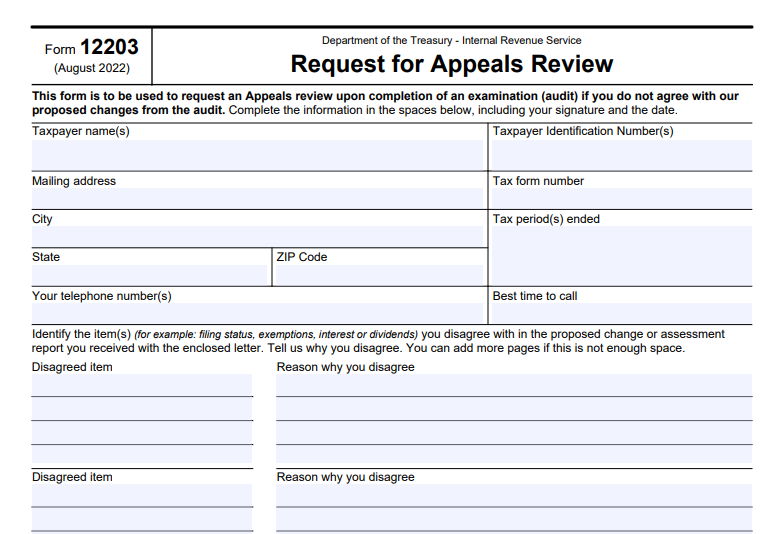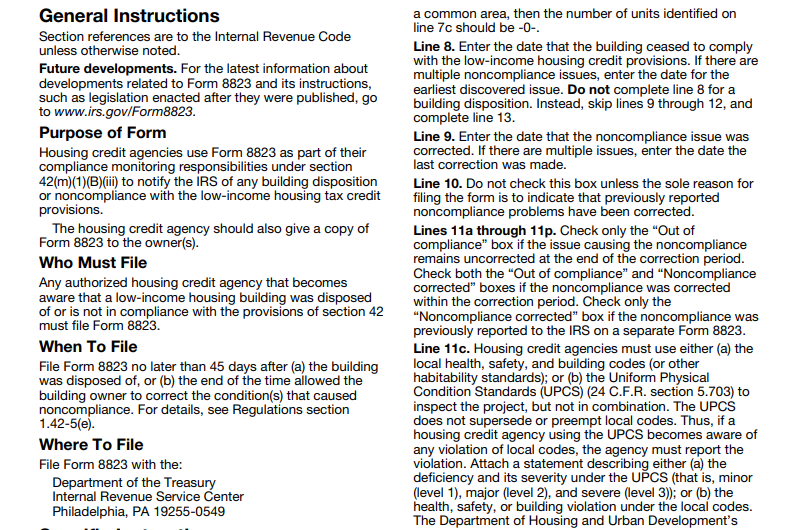
IRS Form 1310, Statement of Person Claiming Refund Due a Deceased Taxpayer, is used when a person claims a federal tax refund on behalf of someone who died and the filing situation requires the statement. Not every surviving spouse or court-appointed representative must attach Form 1310.
Download the official Form 1310 PDF (Rev. December 2025)
View the official IRS Form 1310 page
Independent-site notice: IRSTax-Forms.com is not affiliated with or endorsed by the IRS. The form above is hosted on IRS.gov.
Form 1310 Quick Facts
| Purpose | Claim a refund on behalf of a deceased taxpayer when required |
|---|---|
| Current revision | December 2025 |
| Common filer | A person other than a surviving spouse filing jointly or a qualifying court-appointed personal representative |
| Electronic filing | May be e-filed when attached to an eligible electronically filed return |
| Separate filing | Permitted in situations described by the form instructions |
| Last verified | August 6, 2026 |
Who Must File Form 1310?
The form divides claimants into three general categories:
- Line A: a surviving spouse requesting reissuance of a refund check received in both spouses’ names.
- Line B: a court-appointed or court-certified personal representative claiming a refund on Form 1040-X or Form 843.
- Line C: another person claiming the refund who is not a surviving spouse filing jointly and is not the qualifying court-appointed representative described above.
Read the wording on the current form carefully. “Personal representative” for this purpose generally means an executor or administrator appointed or certified by a court. A will or ordinary power of attorney is not a substitute for the court certificate.
Who Usually Does Not Need Form 1310?
According to the current IRS instructions, Form 1310 generally is not required when:
- a surviving spouse files an original or amended joint return with the deceased spouse; or
- a court-appointed or court-certified personal representative files the decedent’s original Form 1040, 1040-SR, 1040-NR, or 1040-SS and attaches the court certificate showing the appointment.
A different rule applies when that court-appointed representative claims a refund through Form 1040-X or Form 843: the current Form 1310 instructions require Form 1310 and the court certificate.
What Changed in the December 2025 Revision?
The form emphasizes that a claimant checking line B must attach the court certificate to Form 1310 even if the certificate was previously filed with the IRS. Use the current revision and follow its attachment instructions rather than relying on guidance written for an older edition.
How to File a Final Return for Someone Who Died
- Use the income tax form and tax year the decedent would have used.
- Report income received from the start of the tax year through the date of death under the applicable rules.
- Follow IRS instructions for identifying the return as a decedent’s final return.
- Have the proper person sign. A surviving spouse filing jointly and an appointed representative may both have signature responsibilities.
- Attach Form 1310 and/or a court certificate if the applicable category requires it.
The final individual return is separate from a possible estate income tax return on Form 1041. Income received after death may belong to the estate or another recipient and should not automatically be included on the final Form 1040.
How to Complete Form 1310
Identify the Decedent and Claimant
Enter the decedent’s name, date of death, Social Security number, and the claimant’s information exactly as requested. If both spouses are deceased and separate statements are required, the instructions require a separate Form 1310 for each spouse.
Select Line A, B, or C
Choose the line that accurately describes your legal status. Selecting the wrong category can lead to missing attachments or processing delays.
Complete Part II When Required
Claimants under line C generally answer questions concerning a will, appointment of a personal representative, and responsibility for the decedent’s property. These answers help establish whether the claimant may receive the refund.
Sign the Certification
The claimant signs under penalties of perjury. Do not sign for another person without legal authority.
Required and Unnecessary Documents
Depending on the category, attach:
- the court certificate showing appointment;
- the tax return or refund claim to which Form 1310 relates;
- the joint-name refund check marked as instructed when requesting reissuance.
The IRS generally does not require a death certificate with the final income tax return. Keep it and other estate records available in case the IRS requests them.
Where to File Form 1310
- Attached to a return: follow the filing instructions for that return.
- Attached to an e-filed eligible return: tax software may transmit Form 1310 electronically.
- Filed separately: generally send it to the service center where the original return was filed. If the original return was e-filed, use the center designated for the address shown on Form 1310 under the current instructions.
- Joint-name check reissuance: follow line A instructions for returning the check and request.
Do not use an address copied from an old article. Confirm it using the current return instructions and IRS “Where to File” pages.
Common Mistakes
- Attaching Form 1310 when an exception applies, or omitting it when required.
- Assuming a will proves court appointment.
- Failing to attach the court certificate for a line B claim.
- Combining two deceased spouses on one Form 1310.
- Confusing the final individual return with the estate’s Form 1041.
- Sending an original death certificate unnecessarily.
- Using an outdated mailing address.
Frequently Asked Questions
Does a surviving spouse filing jointly need Form 1310?
Generally, no, when filing an original or amended joint return with the decedent. Form 1310 may be used to request reissuance of a joint-name refund check.
Can Form 1310 be e-filed?
It can be transmitted with certain eligible e-filed individual returns. A separately filed Form 1310 generally follows paper-filing instructions.
Is a copy of the will enough?
No. The current instructions state that a will is not accepted as evidence that a person is a court-appointed personal representative.
How long does a deceased-taxpayer refund take?
Processing varies based on the return, matching records, attachments, identity verification, and whether the IRS needs additional estate documentation. Keep copies and delivery proof.
Official Resources
Last reviewed: August 6, 2026. Estate and probate rules can be complex; this guide is not individualized tax or legal advice.