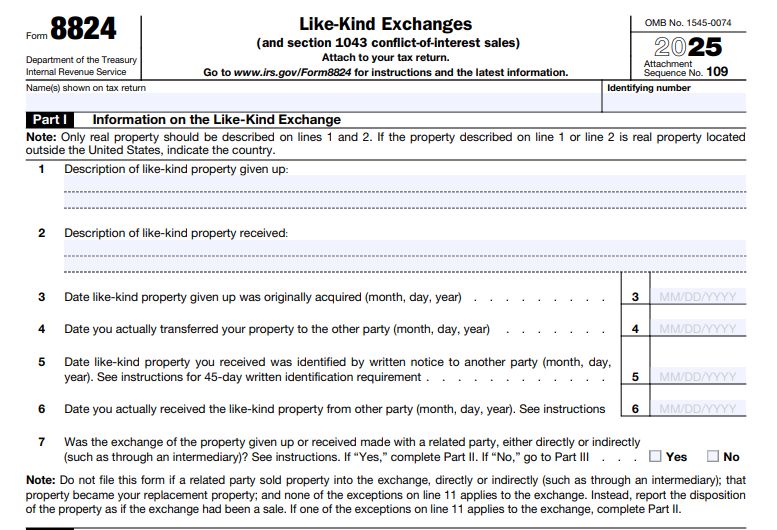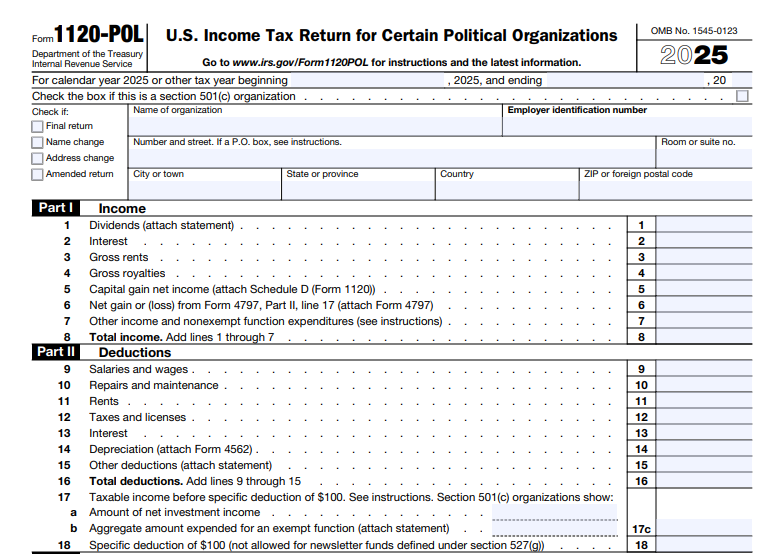
IRS Form 433-B (OIC) – Collection Information Statement for Businesses

IRS Form 433-B (OIC) - Collection Information Statement for Businesses

IRS Form 433-B (OIC) – Collection Information Statement for Businesses – Business tax debt can cripple operations, from payroll shortfalls to accumulated liabilities threatening solvency. For corporations, partnerships, and LLCs facing overwhelming IRS balances, the Offer in Compromise (OIC) program offers a potential lifeline—settling for less than owed if full collection isn’t feasible. But proving that requires IRS Form 433-B (OIC), the Collection Information Statement for Businesses, which unveils your financials to calculate reasonable collection potential (RCP). For 2025, with the April revision emphasizing asset equity at 80% FMV and 12/24-month income projections, this form is pivotal for OIC success, where business acceptance rates align with the overall 25-35% program average. This SEO-optimized guide, based on the latest IRS resources, covers eligibility, step-by-step filing, and strategies to bolster your application amid stricter RCP scrutiny.

IRS Form 433-B (OIC) - Collection Information Statement for Businesses
IRS Form 433-B (OIC) – Collection Information Statement for Businesses


What Is IRS Form 433-B (OIC)?

IRS Form 433-B (OIC) is the business counterpart to Form 433-A (OIC), a detailed financial disclosure for OIC applicants under IRC Section 7122. It assesses RCP—net asset equity plus future disposable income—to justify settling debts for less, typically under Doubt as to Collectibility (can’t pay full) or Effective Tax Administration (hardship/unfair). Spanning 8 pages, it covers business structure, income/expenses, assets, and affiliates, enabling IRS evaluators to verify solvency.

Key purposes:

  • OIC Support: Proves RCP < debt; required with Form 656.
  • Relief Alternatives: Aids partial payment installment agreements (PPIA) or currently not collectible (CNC) status.
  • Business-Specific: Tailored for entities like S-Corps, partnerships, and LLCs (corporation-classified).

The April 2025 revision (Catalog No. 55897B) refines RCP calculations (e.g., 80% FMV for quick-sale equity) and aligns with Pub. 656 updates for income-producing assets. Download the PDF from IRS.gov/pub/irs-pdf/f433boi.pdf, including instructions.

Who Needs to File IRS Form 433-B (OIC) in 2025?

Business entities (corporations, partnerships, LLCs taxed as such) must file if submitting an OIC via Form 656, or when requested for PPIA/CNC. Sole proprietors use Form 433-A (OIC). Approval requires current compliance—no open bankruptcies or unfiled returns.

Entity Type Filing Required? Details
Corporations (C/S) Yes For payroll, corporate tax debts; include shareholder info if >10% ownership.
Partnerships/LLCs Yes Report partner/member details; aggregate for joint OIC with individuals.
PPIA/CNC Applicants If >$50K debt IRS requests for long-term plans; shows affordability.
Sole Proprietors No—use 433-A (OIC) Business income goes on individual form.
Exemptions Doubt as to Liability Use Form 656-L—no financial statement.

Pre-qualify via IRS OIC Tool; low-income businesses (per Pub. 656 chart) waive $205 fee. Businesses must cease operations for some SBA EIDL OICs, but IRS OIC allows ongoing viability if RCP low.

Filing Deadlines and Submission for Form 433-B (OIC) in 2025

Submit with Form 656 anytime—no deadline, but before liens/levies. OIC processing: 6-24 months; respond to IRS queries within 15 days.

  • With OIC: Include in Form 656-B package; online via IRS.gov/account or mail to Centralized OIC Unit (Kansas City, MO 64999-0005).
  • Standalone: Per revenue officer notice; email/upload secure.
  • Extensions: Informal via letter; no formal process.
  • Electronic: Upload via Online Account; full e-OIC pilot expanding.

Certified mail for proof; track at IRS.gov/oic.

Step-by-Step Guide to Completing IRS Form 433-B (OIC)

Accuracy is crucial—use Pub. 656 standards. Gather 3 months’ statements, P&Ls, appraisals, and legal docs.

  1. Section 1: Business Info – Entity name, EIN, address, type (Corp/Partnership), years in business, NAICS code.
  2. Section 2: Ownership/Affiliates – List partners/officers (>10% owners), related entities; disclose transfers >$10K in 10 years.
  3. Section 3: Income/Expenses – Gross/monthly (line 5), net profit (11), other (e.g., rentals 14); allowable expenses (COGS 19, rent 20, utilities 21, etc.) per standards.
  4. Section 4: Assets/Equity – Real property (FMV, loans, 80% equity); personal (vehicles, accounts receivable, inventory); liquidate unless hardship.
  5. Section 5: Release of Claims – Authorize IRS verification.
  6. Section 6: Tax Compliance – Certify returns filed/current payments.
  7. Section 7: Offer Terms – Propose min RCP; payment type.
  8. Section 8: Signature – Authorized rep signs; under perjury.

RCP in Section 9: Equity + (disposable ×12/24). Submit with $205 fee/20% initial payment.

Key Sections of IRS Form 433-B (OIC) Explained

The form exposes business viability—precise data avoids rejection.

Section Focus 2025 Tip
2: Ownership Affiliates, transfers Disclose >10% owners; flag undervalued sales to avoid fraud flags.
3: Income/Expenses Gross/net, COGS 3-month averages; justify above-standards (e.g., high utilities with bills).
4: Assets Equity at 80% FMV Appraise inventory/AR; exclude income-producing except real estate.
9: RCP Min offer Lump-sum: Equity +12×disposable; periodic: Equity + (24×disposable)/12.

Disposable = Income – standards; IRS rejects if RCP ≥ debt.

IRS Form 433-B (OIC) Download and Printable

Download and Print: IRS Form 433-B (OIC)

Recent Updates to IRS Form 433-B (OIC) for 2025

The April 2025 revision (Rev. 4-2025) enhances business OIC efficiency:

  • Equity Calc: Explicit 80% FMV for quick-sale; excludes income-producing assets (except realty) from RCP.
  • Transfer Scrutiny: Expanded questions on 10-year asset transfers >$10K.
  • Digital Tools: Online upload integration; pilot e-forms for full OIC.
  • Pub. 656 Alignment: Updated multipliers (12/24 months); low-income charts expanded.

These, per IRM 5.8.1, support 25-35% acceptance, with businesses facing higher scrutiny for solvency.

Common Mistakes When Filing Form 433-B (OIC) and How to Avoid Them

Rejections hit 65-75%—common errors:

  • Undervalued Assets: Lowballing inventory/AR—use appraisals/P&Ls.
  • Excess Expenses: Non-allowable (e.g., luxuries)—stick to standards; document deviations.
  • Incomplete Affiliates: Omitting >10% owners—list all for transparency.
  • Outdated Financials: Stale statements—provide 3 months’ current.
  • Wrong Version: Using standard 433-B for OIC—grab OIC-specific.

Pre-qualify; enrolled agents boost odds 50%.

Penalties and Risks of an Incomplete Form 433-B (OIC)

No filing penalty, but:

  • Rejection/Delay: Incomplete = auto-return; 6-24 months lost.
  • Collections Resume: Liens/levies if denied.
  • Fraud: False info = perjury (5 years prison); audits.
  • OIC Default: Full debt revives + interest.

Appeal via Form 13711 (30 days); PPIA as fallback.

Frequently Asked Questions About IRS Form 433-B (OIC)

When is Form 433-B (OIC) required?

With Form 656 for business OIC; optional for PPIA/CNC if requested.

How does RCP work for businesses?

Equity (80% FMV – loans) + disposable income ×12/24 months.

Can ongoing businesses get OIC?

Yes—if RCP low; ceased operations easier but not required.

Is e-filing available in 2025?

Upload docs online; full e-OIC pilot for businesses.

What’s the business OIC success rate?

25-35%, like overall; higher with complete forms.

Visit IRS.gov/oic for more.

Final Thoughts: Empower Your Business OIC with IRS Form 433-B (OIC) in 2025

IRS Form 433-B (OIC) is the financial cornerstone of business tax relief, quantifying hardship to secure OIC settlements below full debt—crucial for solvency amid 25-35% acceptance rates. The April 2025 revision’s 80% FMV equity and online uploads make it more accessible; download from IRS.gov today, verify with P&Ls/appraisals, and engage pros for 50%+ odds. OIC revives businesses— a robust 433-B (OIC) revives your case.

This article is informational only—not tax advice. Verify with IRS or a professional.


IRS Form 433-A (OIC) – Collection Information Statement for Wage Earners and Self-Employed Individuals

IRS Form 433-A (OIC) - Collection Information Statement for Wage Earners and Self-Employed Individuals

IRS Form 433-A (OIC) – Collection Information Statement for Wage Earners and Self-Employed Individuals – Tax debt can spiral quickly with penalties and interest, but relief options like installment agreements, currently not collectible status, or an Offer in Compromise (OIC) provide a lifeline for struggling taxpayers. Central to proving your financial hardship is IRS Form 433-A (OIC)—the Collection Information Statement for Wage Earners and Self-Employed Individuals. This detailed form reveals your income, expenses, assets, and equity, helping the IRS assess your ability to pay. For 2025, with the revised April edition emphasizing streamlined OIC calculations and low-income waivers, Form 433-A (OIC) is key for OIC applicants, boasting acceptance rates around 25-35% for viable cases. This SEO-optimized guide, based on the latest IRS resources, covers eligibility, step-by-step completion, and tips to strengthen your application amid updated standards for reasonable collection potential (RCP).

IRS Form 433-A (OIC) - Collection Information Statement for Wage Earners and Self-Employed Individuals
IRS Form 433-A (OIC) – Collection Information Statement for Wage Earners and Self-Employed Individuals


What Is IRS Form 433-A (OIC)?

IRS Form 433-A (OIC) is a comprehensive financial disclosure required for individuals (wage earners or self-employed) seeking tax relief, particularly an OIC under IRC Section 7122. It calculates your RCP—net equity in assets plus future disposable income—to determine if the IRS can collect the full debt reasonably. Unlike the shorter Form 433-F (for initial inquiries), the OIC version (Rev. 4-2025) spans 8 pages, integrating income/expense analysis with asset valuation for OIC proposals.

Key purposes:

  • OIC Qualification: Proves Doubt as to Collectibility (can’t pay full) or Effective Tax Administration (hardship/unfairness).
  • Relief Pathways: Supports installment agreements, partial payment plans, or CNC status.
  • Self-Employed Focus: Includes business income/expenses for Schedule C filers.

The April 2025 revision (Catalog No. 55896Q) refines RCP multipliers (12 for lump-sum, 24 for periodic offers) and aligns with Pub. 656 (OIC Booklet). Download the PDF from IRS.gov/pub/irs-pdf/f433aoi.pdf for the full form and instructions.

Who Needs to File IRS Form 433-A (OIC) in 2025?

Submit Form 433-A (OIC) if applying for an OIC via Form 656, or when requested for other relief like a partial payment installment agreement (PPIA) or CNC. It’s mandatory for individuals with business income; spouses file jointly if shared liability.

Scenario Filing Required? Details
OIC Applicants Yes Attach to Form 656; proves RCP < debt for Doubt as to Collectibility.
Installment Agreements/PPIA If requested For debts >$50K; shows affordability beyond standard plans.
CNC Status Often If hardship; IRS may request for verification.
Self-Employed Yes Include Schedule C details; wage earners skip business sections.
Exemptions Businesses use 433-B (OIC) Joint filers complete one form; no need for Doubt as to Liability (use 656-L).

Pre-qualify via IRS OIC Tool; low-income (AGI ≤$62K single/$125K joint) waives $205 fee. Non-filers or in bankruptcy? Resolve first.

Filing Deadlines and Submission for Form 433-A (OIC) in 2025

No fixed deadline—submit with Form 656 anytime, but apply before collections escalate (e.g., liens). OIC processing: 6-24 months; respond to IRS requests within 15 days.

  • With OIC: Include in Form 656-B package; online via IRS.gov/account or mail to Centralized OIC Unit (Kansas City, MO 64999).
  • Standalone Relief: Mail to revenue officer or service center per notice.
  • Extensions: None formal; request via letter for good cause.
  • Electronic Options: Upload docs via IRS Online Account; full e-filing for OIC in pilot phase.

Certified mail for proof; track via “Where’s My OIC?” on IRS.gov.

Step-by-Step Guide to Completing IRS Form 433-A (OIC)

The 8-page form demands accuracy—use Pub. 656 for standards. Gather 3 months’ bank statements, pay stubs, bills, and appraisals.

  1. Section 1: Personal/Household Info – Names, DOBs, SSNs, dependents, marital status, contact.
  2. Section 2: Employment/Self-Employment – Job details, income (wages, business gross/net); attach P&Ls for self-employed.
  3. Section 3: Income/Expenses – Monthly totals: Wages (line 5), net business (11), other (e.g., alimony 14); allowable expenses (housing 19-20, food 21, transport 22-23, healthcare 24, etc.) per national/local standards.
  4. Section 4: Assets/Equity – Real property (values, loans, equity); personal (vehicles, bank accounts, investments, life insurance cash value); required liquidation unless hardship.
  5. Section 5: Release of Claims – Sign to allow IRS verification.
  6. Section 6: Tax Returns Filed – Certify all filed/paid current.
  7. Section 7: Offer Terms – Propose amount (min RCP); payment type (lump-sum/periodic).
  8. Section 8: Signature – Under perjury; spouse if joint.

Calculate RCP in Section 9: Assets equity + (monthly disposable × 12/24). Submit with $205 fee/initial payment.

Key Sections of IRS Form 433-A (OIC) Explained

The form’s structure uncovers your full picture—focus on accuracy to avoid rejection.

Section Focus 2025 Tip
2: Income Wages, business net, rentals Use 3 months’ averages; self-employed: Gross – expenses (attach P&L).
3: Expenses Allowable living costs National standards: $800/month food (family of 4); justify deviations (e.g., medical).
4: Assets Equity in real/personal property Appraise vehicles/investments; release liens for equity >$0.
9: RCP Calculation Min offer Lump-sum: Equity + 12×disposable; periodic: Equity + 24×disposable/12.

Disposable income = Income – allowable expenses; IRS rejects if RCP ≥ debt.

IRS Form 433-A (OIC) Download and Printable

Download and Print: IRS Form 433-A (OIC)

Recent Updates to IRS Form 433-A (OIC) for 2025

The April 2025 revision (Rev. 4-2025) refines OIC-specific calculations:

  • RCP Multipliers: Clarified 12/24 months for lump-sum/periodic; aligns with Pub. 656 updates.
  • Low-Income Waiver: Expanded AGI charts (e.g., $62K single) for $205 fee exemption.
  • Digital Submission: Enhanced upload via Online Account; pilot e-forms for full OIC.
  • Section 965(h): Added repatriation tax references for global filers.

These changes, per IRM 5.8.1, boost processing efficiency amid 25-35% acceptance rates.

Common Mistakes When Filing Form 433-A (OIC) and How to Avoid Them

Rejections often stem from incomplete forms—top errors:

  • Underreported Assets: Omitting bank accounts/life insurance—list all, even low-value.
  • Inflated Expenses: Exceeding standards without proof—attach bills; use IRS allowances.
  • Inaccurate Income: Averages too low—use 3 months’ data; self-employed: Verify P&L.
  • Missing Docs: No statements/appraisals—scan/upload 3 months’ financials.
  • Wrong Version: Using standard 433-A for OIC—download OIC-specific from Pub. 656.

Pre-qualify; pros increase approval 50%.

Penalties and Risks of an Incomplete Form 433-A (OIC)

No direct penalty for filing, but:

  • Rejection/Delay: Incomplete = return without review; 6-24 month wait.
  • Collections Resume: If rejected, liens/levies restart.
  • Fraud: False statements = perjury (up to 5 years prison); audits.
  • Default on Accepted OIC: Full debt revives + interest.

Appeal rejections via Form 13711; alternatives like IA if denied.

Frequently Asked Questions About IRS Form 433-A (OIC)

What’s the difference between Form 433-A and 433-A (OIC)?

Standard 433-A for IA/CNC; OIC version adds RCP calc for settlements.

Do I need Form 433-A (OIC) for business debts?

No—use 433-B (OIC); individuals with Schedule C include in 433-A.

How to calculate disposable income on the form?

Income – national/local standards (Pub. 656); justify extras.

Can I e-file Form 433-A (OIC) in 2025?

Upload docs online; full e-OIC pilot expanding.

What’s the OIC acceptance rate in 2025?

25-35%; higher with complete 433-A (OIC).

Visit IRS.gov/oic for more.

Final Thoughts: Strengthen Your OIC with IRS Form 433-A (OIC) in 2025

IRS Form 433-A (OIC) is your financial blueprint for tax relief, proving hardship to unlock settlements below full debt—vital for wage earners facing RCP scrutiny. With the April 2025 revision’s refined calculations and online uploads, accuracy is paramount; download from IRS.gov today, attach verifiable docs, and consult a pro for 50%+ approval boost. OIC isn’t easy, but a solid 433-A (OIC) tips the scales.

This article is informational only—not tax advice. Verify with IRS or a professional.


IRS Form 656 – Offer in Compromise

IRS Form 656 - Offer in Compromise

IRS Form 656 – Offer in Compromise – Tax debt can feel like an insurmountable burden, especially when interest and penalties pile on, threatening your financial stability. But there’s hope: the IRS Offer in Compromise (OIC) program lets eligible taxpayers settle for less than owed—sometimes pennies on the dollar—if full payment would cause hardship or if there’s doubt about the liability. At the center is IRS Form 656, the Offer in Compromise application, part of the comprehensive Form 656-B booklet. For 2025, with no major program changes but updated forms (Rev. 4-2025) emphasizing online submission and low-income waivers, OIC acceptance rates hover around 25-35% for viable cases. This SEO-optimized guide, based on the latest IRS resources, covers eligibility, step-by-step filing, fees, and tips to boost approval odds amid the program’s focus on “reasonable collection potential” (RCP).

IRS Form 656 - Offer in Compromise
IRS Form 656 – Offer in Compromise


What Is IRS Form 656?

IRS Form 656 is the core application for an OIC, where you propose a settlement amount based on your ability to pay, assets, income, and expenses. It’s used for three main grounds: Doubt as to Collectibility (can’t pay full amount), Effective Tax Administration (payment causes economic hardship or is unfair), or Doubt as to Liability (dispute the debt amount). The form identifies tax types, periods, and your offer (lump-sum or periodic payments), while Form 656-B provides instructions and financial statements (Form 433-A/B).

Key features:

  • Settlement Flexibility: Offers can be cash, installments, or asset sales; minimum based on RCP (assets + future disposable income).
  • Irrevocable Terms: If accepted, stay compliant for 5 years or risk default.
  • Public Disclosure: Accepted offers are viewable in a public inspection file.

The April 2025 revision (Rev. 4-2025) streamlines Section 965(h)(3) references for repatriation taxes and aligns with e-submission via Individual Online Account. Download Form 656-B from IRS.gov for the full booklet (PDF, 28 pages).

Who Qualifies for an Offer in Compromise in 2025?

Not everyone qualifies—OIC isn’t a quick fix for willful non-filers. Use the IRS Pre-Qualifier Tool to check eligibility before applying. Approval hinges on proving the IRS couldn’t collect the full amount reasonably.

Qualification Type Criteria for 2025
Doubt as to Collectibility RCP < full debt; complete Form 433-A (individuals) or 433-B (businesses) showing income/expenses/assets.
Effective Tax Administration Agree on debt but payment causes hardship (e.g., basic living expenses strained) or is inequitable (e.g., special circumstances like illness).
Doubt as to Liability Dispute debt amount—use Form 656-L; no financial statement needed.
General Requirements Filed all returns, current on estimated payments, no bankruptcy; low-income waiver if AGI ≤ chart in Form 656 Section 1.

Success tips: 25-35% acceptance rate; rejected if RCP ≥ debt or non-compliance. IRS won’t compromise restitution or DOJ-referred cases.

Filing Deadlines and Submission for Form 656 in 2025

No strict deadline—submit anytime, but act before collection escalates (e.g., liens). Processing takes 6-24 months; appeals within 30 days of rejection.

Submission Method Details
Online Via Individual Online Account (irs.gov/account)—easiest for individuals; instant confirmation.
Mail To sites in Form 656-B (e.g., Kansas City for most); certified mail recommended.
Email To designated IRS addresses in booklet—secure upload for docs.
Extensions None for filing; payments continue during review.

Include $205 fee ($0 low-income) and initial payment (20% lump-sum or first monthly). Returns applied to debt if rejected.

Step-by-Step Guide to Completing IRS Form 656

Gather tax transcripts, financials, and asset lists. Use Form 656-B instructions for details.

  1. Section 1: Basic Info – Taxpayer name, SSN, address; low-income certification (AGI ≤ $62,000 single/$125,000 joint in 2025—chart varies by family size).
  2. Section 2: Offer Terms – Select Doubt as to Collectibility/ETA/Liability; propose amount ($1 min, based on RCP); payment type (lump-sum: ≤5 payments; periodic: 6-24 months).
  3. Section 3: Tax Debts – List types/periods (e.g., 1040 for 2022-2024); separate forms for individual/business.
  4. Section 4: Initial Payment – Enclose check/money order; note if low-income waiver.
  5. Section 5: Joint Offer – Spouse signs if applicable; remains joint post-divorce unless amended.
  6. Section 6: Employer ID – For business offers.
  7. Section 7: Terms & Conditions – Read/acknowledge (e.g., 5-year compliance, public disclosure).
  8. Section 8: Signature – Sign under penalty of perjury; date.
  9. Attach Forms – 433-A/B (financials), ID/docs, $205 fee/initial payment.
  10. Submit – Online/mail/email; track via IRS account.

For Doubt as to Liability, use Form 656-L—no fee/financials.

Calculating Your Offer Amount on Form 656

The IRS bases approval on RCP: (Net asset equity) + (Future disposable income × months to collect). Minimum offer ≈ RCP.

Component 2025 Calculation
Assets FMV minus encumbrances (e.g., home equity $50K after mortgage).
Income/Expenses Monthly disposable = income – allowable expenses (Pub. 656 standards: $3,000/month family of 4 housing/food).
Offer Minimum Lump-sum: RCP; Periodic: RCP ÷ 12 × 24 months (min 24).

Use Pre-Qualifier Tool for estimate; low offers rejected if RCP higher.

IRS Form 656 Download and Printable

Download and Print: IRS Form 656

Fees and Initial Payments for Form 656 in 2025

  • Application Fee: $205 (non-refundable); $0 if low-income certified (AGI ≤ chart).
  • Initial Payment: Non-refundable; 20% of lump-sum offer or first monthly for periodic; $0 low-income during review.
  • Waivers: Low-income per Form 656 Section 1; payments applied to debt if rejected.

Total upfront: $205 + 20% (e.g., $10K offer = $2,010).

What Happens After Submitting Form 656?

  • Acknowledgment: IRS letter within 2 weeks; processing 6-24 months.
  • Review: May request more info; collections suspended, liens possible.
  • Accepted: Terms effective; comply 5 years; liens released post-payment.
  • Rejected: Appeal via Form 13711 within 30 days; 25% reversal rate.
  • Withdrawn: Refund fee/payments if requested.

Scam alert: Beware “OIC mills”—use IRS-authorized pros.

Common Mistakes When Filing Form 656 and How to Avoid Them

Low acceptance stems from pitfalls—boost odds:

  • Underestimating RCP: Inflated expenses—use national standards.
  • Incomplete Financials: Missing Form 433-A/B—attach all docs.
  • Non-Compliance: Unfiled returns—file first.
  • Low Offers: Below RCP—use Pre-Qualifier.
  • Wrong Type: Doubt as to Liability for collectibility—match grounds.

Hire enrolled agents; success jumps 50% with pros.

Penalties and Risks of an Unsuccessful Form 656

No direct penalty for applying, but:

  • Rejected Offers: Payments applied to debt; no refund.
  • Default Post-Acceptance: Full debt revives + interest.
  • Liens: IRS may file during review.
  • Fraud: Criminal charges for false statements.

Appeal rejections; alternatives like installment agreements if denied.

Frequently Asked Questions About IRS Form 656

What’s the 2025 OIC application fee?

$205 ($0 low-income); non-refundable.

Can I apply online in 2025?

Yes—via Individual Online Account for faster processing.

How long does OIC processing take?

6-24 months; appeals add 3-6.

Does OIC stop collections?

Yes—suspended during review.

What’s the OIC success rate in 2025?

25-35% for processed offers; higher with pros.

Visit IRS.gov/oic for more.

Final Thoughts: Settle Your Tax Debt Strategically with IRS Form 656 in 2025

IRS Form 656 offers a path out of overwhelming debt, potentially slashing balances by 50%+ for those proving hardship or doubt. With the April 2025 update’s online tools and low-income waivers, now’s the time to pre-qualify and apply—download Form 656-B from IRS.gov, calculate RCP accurately, and seek expert help for 35%+ approval odds. Remember, OIC isn’t forgiveness—it’s a compromise for fresh starts.

This article is informational only—not tax advice. Consult IRS.gov or a professional.


IRS Form 15620 – Section 83(b) Election

IRS Form 15620 - Section 83(b) Election

IRS Form 15620 – Section 83(b) Election – Equity compensation like restricted stock units (RSUs) or early-exercised stock options can supercharge your financial future, but vesting schedules often defer—and inflate—your tax bill. What if you could pay taxes upfront on the current low value, then enjoy future appreciation at favorable capital gains rates? That’s the power of the Section 83(b) election, and for 2025, IRS Form 15620 makes it easier than ever with electronic filing options. Introduced in late 2024 and updated for online submission in mid-2025, Form 15620 standardizes this irrevocable choice, helping founders, executives, and contractors lock in tax savings amid rising stock values. This SEO-optimized guide breaks down eligibility, deadlines, and filing steps based on the April 2025 revision, empowering you to make informed decisions before the strict 30-day window closes.

IRS Form 15620 - Section 83(b) Election
IRS Form 15620 – Section 83(b) Election


What Is IRS Form 15620?

IRS Form 15620 is the official, standardized election statement for taxpayers to invoke IRC Section 83(b), allowing immediate inclusion of unvested property’s fair market value (FMV) in gross income rather than waiting for vesting. This shifts taxation from ordinary income rates (up to 37% in 2025) on vesting-date FMV to capital gains (0-20%) on future sales, potentially saving thousands if the property appreciates.

Historically, filers drafted custom statements per Treas. Reg. §1.83-2(c); Form 15620 (Rev. 4-2025) simplifies this with fillable fields for property details, FMV, and payment amounts, plus optional employer info. It’s voluntary but IRS-preferred, paving the way for full e-filing. Once elected, it’s irrevocable without consent—ideal for low-FM V grants but risky if forfeiture looms.

Download the PDF from IRS.gov/pub/irs-pdf/f15620.pdf for the April 2025 version, complete with instructions referencing Pub. 525 (Taxable and Nontaxable Income).

Who Should File IRS Form 15620 in 2025?

File if you’ve received substantially nonvested property (e.g., restricted stock, LLC interests, or early-exercised options) for services, and the FMV exceeds what you paid—expecting appreciation. It’s common for startup founders, executives, and advisors in tech, biotech, or venture-backed firms.

Eligibility Scenario File If… Don’t File If…
Restricted Stock/RSUs Grant FMV > purchase price; vesting over 4 years. Fully vested at grant (taxed immediately under §83(a)).
Early Exercise Options Exercised below FMV; unvested shares at risk. ISO disqualifying dispositions (use Form 3921 instead).
Profits Interests Vested LLC units with $0 FMV at grant. Property not for services (e.g., pure investment).
Foreign Recipients U.S. tax resident; property U.S.-situs. Non-residents without U.S. income nexus.

Only the recipient files—not the employer. Consult a tax advisor: Elections suit rising-value assets but expose you to taxes on potential forfeitures.

The Strict 30-Day Deadline for Section 83(b) Elections in 2025

Timing is everything: File within 30 calendar days of the transfer date (grant approval, not receipt)—no extensions, even for weekends/holidays (next business day applies). For a November 1, 2025, grant, deadline is December 1; miss it, and you’re taxed on vesting FMV.

  • Electronic Filing (New in 2025): Submit via IRS.gov online portal (ID.me login required) for instant confirmation—preferred method since July 2025.
  • Mail Option: Certified mail with return receipt to your IRS service center (per Pub. 525); postmark by deadline suffices.
  • Copy to Employer: Provide duplicate within 30 days—employers track for withholding.
  • Attach to Return: Include with your 2025 Form 1040 (due April 15, 2026).

Late filings are invalid—no relief, per Treas. Reg. §1.83-2(b).

Step-by-Step Guide to Completing IRS Form 15620

Form 15620 is concise (one page)—fill digitally or print. Gather grant agreement, FMV appraisal (e.g., 409A valuation), and payment proof.

  1. Box 1: Taxpayer Info – Name, address, SSN/ITIN.
  2. Box 2: Taxpayer’s Identifying Number – Confirm SSN/ITIN.
  3. Box 3: Transfer Date – MM-DD-YYYY of grant (e.g., 11-01-2025).
  4. Box 4: Taxable Year – “Calendar year 2025” or fiscal year ending.
  5. Box 5: Description of Property – E.g., “1,000 shares of XYZ Corp. restricted stock.”
  6. Box 6: Aggregate FMV – Total value at transfer (e.g., $10,000); use appraisal.
  7. Box 7: Amount Paid – Price per item/total (e.g., $0.01/share = $10); see Treas. Reg. §1.83-3(g).
  8. Box 8: Substantial Risk of Forfeiture – Describe vesting (e.g., “4-year cliff/grade, forfeiture if unvested on termination”).
  9. Box 9: Employer Info (Optional) – Name, EIN, address—eases IRS processing.
  10. Signature & Date – Taxpayer signs; date ≤30 days post-transfer.
  11. Submit: Online (preferred) or mail; copy to employer.

Attach to 2025 return; retain records 3+ years.

Benefits and Risks of Making a Section 83(b) Election in 2025

Electing upfront taxes low FMV but commits you—ideal for high-growth equity.

Pros Cons
Tax Deferral Shift: Pay ordinary income now (37% max); future gains at 0-20% LTCG. Forfeiture Risk: If unvested shares forfeit, no refund on prepaid taxes.
Holding Period Starts: Vesting day counts as long-term (>1 year) for sales. Cash Flow Hit: Upfront tax on $0 FMV grants is minimal, but high-value ones sting.
Employer Deduction: Aligns with company expense timing. Irrevocable: No undoing without IRS relief (rare).

In 2025, with 37% top rate vs. 20% LTCG, elections shine for appreciating startups—e.g., $10K grant vesting to $100K saves ~$18K in taxes.

IRS Form 15620 Download and Printable

Download and Print: IRS Form 15620

Recent Changes to Section 83(b) Elections and Form 15620 for 2025

The IRS modernized in 2025:

  • Electronic Filing Launch: July 2025 rollout via IRS.gov (ID.me login)—instant receipt, no mail anxiety.
  • Form Standardization: April 2025 Rev. adds optional Box 9 for employer details; fillable PDF for all copies.
  • Pub. 525 Update: Now references Form 15620 explicitly for restricted property.
  • No Deadline Changes: Strict 30 days intact—no extensions.

These ease compliance for remote workers and global teams.

Common Mistakes When Filing Form 15620 and How to Avoid Them

The 30-day trap claims many—avoid these:

  • Missing Deadline: Count 30 calendar days from grant—use calendars; e-file for proof.
  • Incomplete FMV: No appraisal—get 409A valuation pre-grant.
  • Wrong Transfer Date: Using receipt vs. approval—check grant docs.
  • No Employer Copy: Forgets sharing—email PDF immediately.
  • Revocation Attempts: Filing late/revoking without consent—consult pros first.

Retain certified mail receipts or e-confirmations; advisors flag issues.

Consequences of Missing the Section 83(b) Election Deadline

No election means §83(a) default: Tax on vesting FMV as ordinary income—e.g., $10K grant vesting at $100K = $33,700 tax (37%) vs. $3,700 upfront. No IRS relief for lateness; audits may recharacterize if suspected. Forfeiture post-election? No deduction—pure loss.

Frequently Asked Questions About IRS Form 15620

Can I e-file Form 15620 in 2025?

Yes—since July 2025 via IRS.gov (ID.me required); instant confirmation preferred.

What’s the exact 30-day deadline?

Calendar days from transfer (grant date); next business day if weekend/holiday.

Does Form 15620 work for profits interests?

Yes—for vested LLC units with $0 FMV.

What if I forfeit after electing?

No tax refund—irrevocable; weigh risks.

Where to mail if not e-filing?

Your IRS service center (per Pub. 525); certified mail recommended.

Visit IRS.gov/taxtopics/tc427 for more.

Final Thoughts: Secure Your Equity Future with IRS Form 15620 in 2025

IRS Form 15620 transforms Section 83(b) elections from a paperwork hassle into a strategic tax win, letting you bet on appreciation with upfront ordinary income taxes—potentially slashing your bill by 17%+ on gains. With 2025’s e-filing debut, the 30-day deadline feels less daunting; file online for proof and peace. Download from IRS.gov today, appraise FMV promptly, and consult a tax advisor—don’t let a missed window forfeit your upside.

Equity builds wealth—elections build savings.

This article is informational only—not tax advice. Verify with IRS or a professional.


IRS Form 15110 – Additional Child Tax Credit Worksheet

IRS Form 15110 - Additional Child Tax Credit Worksheet

IRS Form 15110 – Additional Child Tax Credit Worksheet – Families with children know the financial strain of raising kids in today’s economy, but the Additional Child Tax Credit (ACTC) offers a vital lifeline—up to $1,700 per qualifying child as a refundable boost beyond the non-refundable $2,000 Child Tax Credit (CTC). If you received IRS Notice CP08, you may be eligible for unclaimed credits due to unreported dependents or calculation errors on your 2024 return. Enter IRS Form 15110—the Additional Child Tax Credit Worksheet—a simple tool to verify eligibility and unlock refunds. For tax year 2025, with the CTC remaining at $2,000 ($1,700 refundable) under current law (potential expansions eyed for 2026), Form 15110 (Rev. 4-2025) streamlines claims via electronic upload or mail. This SEO-optimized guide, based on the latest IRS instructions, breaks down eligibility, step-by-step completion, and tips to maximize your 2025 refund—potentially $1,700 per child.

IRS Form 15110 - Additional Child Tax Credit Worksheet
IRS Form 15110 – Additional Child Tax Credit Worksheet


What Is IRS Form 15110?

IRS Form 15110 is a one-page worksheet designed to help taxpayers confirm qualifying children for the ACTC and calculate their refundable amount when responding to IRS Notice CP08. Issued as part of the notice, it lists eligibility factors and requires supporting documents like birth certificates or SSNs. Unlike Schedule 8812 (used on your original return), Form 15110 focuses on post-filing adjustments for missed dependents, ensuring low-income families (typically under $200,000 AGI) receive the refundable portion of the CTC.

Key features:

  • Eligibility Check: Verifies children under 17 with valid SSNs, meeting residency and support tests.
  • Refund Calculation: Ties into Schedule 8812 for the final ACTC amount (up to $1,700/child in 2025).
  • Notice-Specific: Primarily for CP08 recipients; can’t amend original returns—use Form 1040-X instead.

The April 2025 revision (OMB No. 1545-0074) adds clarity on electronic submission via the IRS Document Upload Tool and aligns with Pub. 972 (Child Tax Credit). Download the PDF from IRS.gov/pub/irs-pdf/f15110.pdf for the current version.

Who Needs IRS Form 15110 in 2025?

Form 15110 is essential for taxpayers receiving Notice CP08, which flags potential ACTC eligibility based on IRS data (e.g., unreported children from SSA records). It’s ideal for families who filed without claiming all dependents or miscalculated credits. No form needed if you already claimed on your original return.

Eligibility Factor Details for 2025
Notice CP08 Recipients Must complete if verifying additional children; respond within 30 days.
Qualifying Children Under 17 at year-end, U.S. citizen/resident, valid SSN, lived with you >half year, you provided >half support.
Income Limits Full $2,000 CTC up to $200K single/$400K joint; phaseout $50 per $1K over (ACTC refundable up to $1,700).
Other Claimants Low-income families with earned income ≥$2,500; can’t use for original returns—amend via 1040-X.
Exclusions Non-citizens without SSNs, children born/died in 2025 (wait for next year).

Adopted or foster children qualify with proper docs; other dependents (e.g., 17+) get $500 non-refundable only.

How to Use IRS Form 15110: Step-by-Step Guide

Completing Form 15110 takes 15-30 minutes—gather SSNs, birth/death certificates, and your original return. Use alongside Schedule 8812 for calculations.

  1. Enter Personal Info (Lines 1-3): Name, address, SSN, filing status, and AGI from Form 1040.
  2. List Children (Line 4): For each additional child, provide name, SSN, birth/death dates, relationship, and months lived with you.
  3. Verify Eligibility (Line 5): Answer yes/no for factors: U.S. citizen? Lived with you >half year? You provided >half support? Under 17? Valid SSN by due date?
  4. Qualifying Check (Line 6): If “Yes” to all for a child, they qualify; tally total qualifying children.
  5. Attach Schedule 8812: Complete and include for ACTC math (earned income × 15% minus non-refundable CTC, max $1,700/child).
  6. Sign & Submit: Date and sign; attach docs (e.g., birth cert for 2025 births/deaths).
  7. Send Within 30 Days: Use IRS upload tool or mail to the address on CP08.

For 2025 births/died, include hospital records. IRS reviews in 8-10 weeks; denials come with explanation letters.

Calculating the Additional Child Tax Credit with Form 15110

The ACTC is the refundable part of the CTC: $2,000 total per child, with up to $1,700 refundable based on earned income.

Step Calculation for 2025 Example (2 Qualifying Children)
Non-Refundable CTC $2,000/child, phaseout over $200K/$400K AGI $4,000 total (full if AGI <$200K).
Refundable ACTC Lesser of: (Earned income × 15%) or ($1,700 × children) minus non-refundable CTC Earned income $20K: $3,000 (15% × $20K); ACTC = $3,000 – $4,000 = $0 (but cap per child). Wait, correct: Max refundable $1,700/child after non-refundable.
Total Credit Non-refundable + ACTC $4,000 non-refundable + $3,400 ACTC = $7,400 max refund.

Use Schedule 8812 lines 5-14 for precise math; earned income excludes SSI/unemployment. Coordinate with EITC to avoid double-dipping.

Submitting Form 15110: Deadlines and Methods for 2025

Respond to CP08 within 30 days of the notice date (e.g., if mailed November 2025, due December). No extensions—late claims risk denial.

  • Electronic Upload: Preferred; use IRS.gov Document Upload Tool—scan and submit PDF with docs.
  • Mail: Use pre-addressed envelope from CP08 or send to the specified IRS center.
  • Processing Time: 8-10 weeks for refunds; track via “Where’s My Refund?” on IRS.gov.
  • Amendments: If no CP08 but missed credit, file Form 1040-X with Schedule 8812 by April 15, 2029 (3-year limit).

For 2025 returns (filed 2026), use Schedule 8812 directly—no Form 15110 unless noticed.

Common Mistakes When Using Form 15110 and How to Avoid Them

Errors delay refunds—top pitfalls for 2025:

  • Incomplete Eligibility: Answering “No” to one factor disqualifies—double-check residency/support.
  • Missing Docs: Forgetting SSNs/birth certs—attach copies upfront.
  • Wrong Children: Including non-qualifiers (e.g., 17+ or non-residents)—review Pub. 972.
  • Late Submission: Beyond 30 days—respond immediately upon notice.
  • No Schedule 8812: Form 15110 alone insufficient—complete both.

Consult a VITA/TCE site for free help; video walkthroughs available on IRS.gov.

Benefits of the Additional Child Tax Credit in 2025

The ACTC reduces child poverty by providing cash refunds—up to $3,400 for two kids—directly boosting family budgets for essentials like food and housing. Unlike the non-refundable CTC, it delivers even if you owe no tax, with 15% of earned income formula favoring low-wage workers. Potential 2026 expansions (to $3,000/child) make 2025 claims timely.

Income Level Max ACTC (1 Child) Max ACTC (3 Children)
$0–$2,500 Earned $0 (min threshold) $0
$20,000 Earned $1,700 $5,100
$50,000+ Earned $1,700 $5,100 (capped)

Phaseouts start at $200K/$400K AGI—file early to lock in.

IRS Form 15110 Download and Printable

Download and Print: IRS Form 15110

Frequently Asked Questions About IRS Form 15110

Do I need Form 15110 if I didn’t get CP08?

No—for original 2025 returns, use Schedule 8812; amend via 1040-X if missed.

What’s the max ACTC per child in 2025?

$1,700 refundable, part of $2,000 total CTC.

Can adopted children qualify?

Yes—with SSN and support tests met; include adoption decree if needed.

How long to get my ACTC refund after Form 15110?

8-10 weeks; track on IRS.gov.

Does ACTC affect EITC?

No—stackable; coordinate on Form 1040.

For more, visit IRS.gov/CP08.

Final Thoughts: Claim Your 2025 Additional Child Tax Credit with Form 15110

IRS Form 15110 turns IRS notices into opportunities, unlocking up to $1,700 per child in refundable ACTC for overlooked dependents—essential for families navigating tight budgets. With the April 2025 revision’s electronic upload option, responding to CP08 is quicker than ever; pair it with Schedule 8812 and submit within 30 days for an 8-10 week refund. Download from IRS.gov today, gather your docs, and consult a tax pro or VITA for accuracy—don’t leave money on the table.

This article is informational only—not tax advice. Verify with IRS.gov or a professional.


IRS Form 8653 – Tax Counseling for the Elderly Program Application Plan

IRS Form 8653 - Tax Counseling for the Elderly Program Application Plan

IRS Form 8653 – Tax Counseling for the Elderly Program Application Plan – As America’s aging population grows—projected to reach 80 million seniors by 2040—access to free, specialized tax help becomes more critical than ever. The IRS Tax Counseling for the Elderly (TCE) program, established in 1978, empowers nonprofits and community organizations to provide tailored assistance on pensions, retirement issues, and basic returns for those 60 and older. At the heart of applying for TCE grant funding is IRS Form 8653—the Tax Counseling for the Elderly Program Application Plan. For the 2025 grant cycle, with applications accepted from May 1 to May 31 via Grants.gov and $53 million awarded to 41 TCE recipients from 445 applicants, Form 8653 outlines your proposed budget, volunteer projections, and program operations. This SEO-optimized guide, based on the latest IRS resources (Rev. 4-2016, with 2025 guidelines in Pub. 1101), demystifies Form 8653 to help eligible organizations secure funding for year-round tax education and preparation.

IRS Form 8653 - Tax Counseling for the Elderly Program Application Plan
IRS Form 8653 – Tax Counseling for the Elderly Program Application Plan


What Is IRS Form 8653?

IRS Form 8653 is the core budget and planning document for organizations applying to the TCE grant program under Assistance Listing 21.006. It details estimated expenses, volunteer staffing, site projections, and expected taxpayer outreach, ensuring alignment with IRS priorities like electronic filing (90%+ target) and accuracy. As part of the full application package, it supports up to three-year multi-year awards, with funding covering training, publicity, and operations—no indirect costs allowed.

Key elements:

  • Budget Breakdown: Lines 1–25 categorize costs like salaries, supplies, and outreach.
  • Program Projections: Estimates returns prepared (lines 19–20) and sites operated (line 21).
  • Volunteer Focus: Tracks tax assistors, instructors, and coordinators (lines 1–3).

The form (Rev. 4-2016) remains current, but 2025 applications incorporate updated guidelines from Pub. 1101 (Rev. 2025), emphasizing digital tools and underserved areas. Download Form 8653 and the full package from IRS.gov or Grants.gov (CFDA 21.006).

Who Needs IRS Form 8653 in 2025?

Form 8653 is required for all new and renewing applicants to the TCE grant, including nonprofits, faith-based groups, and educational institutions committed to free tax help for seniors. Eligibility demands IRS certification, a track record of compliance, and focus on taxpayers 60+ with incomes under $64,000 AGI (aligned with VITA thresholds). Multi-year recipients (years 2–3) submit abbreviated versions.

Applicant Type Requirements
New Applicants Full Form 8653 + narrative; demonstrate community need and volunteer capacity via Pub. 1101.
Renewing Grantees Abbreviated if eligible (notification by April 2025); include prior-year Form 8654 (Semi-Annual/Annual Report).
Multi-Site Sponsors One form covering all sites; detail per-site projections.
Matching Funds 100% match required (cash/in-kind); document in Form 8653 lines 26–30.

Organizations like AARP Tax-Aide dominate TCE sites, but diverse partners qualify if prioritizing seniors. Register in SAM.gov and Grants.gov by April 2025.

Application Deadlines and Submission Process for Form 8653 in 2025

The 2025 cycle opened May 1, closing May 31 via Grants.gov—awards announced December 2025 for January 1–December 31 operations. Multi-year continuations notified late April.

  • Initial Submission: Attach Form 8653 to full package (Form 14204 checklist, Form 14335 contacts, narrative).
  • Post-Award Revisions: Updated Form 8653 within 20 days of notice via email to [email protected].
  • Reporting: Use Form 8654 semi-annually/annually by July 31, 2026.
  • Where to Submit: Exclusively through Grants.gov; no paper.

Late applications disqualify—mark calendars for 2026 cycle (May 1–31).

Step-by-Step Guide to Completing IRS Form 8653

Form 8653 is a multi-page worksheet—use the TCE Grant Workbook for calculations. Gather prior budgets, volunteer rosters, and expense estimates.

  1. Header: Organization name, EIN, contact; grant period (e.g., 1/1/2025–12/31/2025).
  2. Lines 1–3: Volunteers – Estimate tax assistors/reviewers (1a), instructors (1b), coordinators (2); total hours (3).
  3. Lines 4–18: Training/Outreach – Project sessions (4), materials (5–10), publicity (11–14), site costs (15–18).
  4. Lines 19–21: Taxpayer Projections – Returns for 60+ (19a), others (19b), total (19c); sites/e-file (21a–c).
  5. Lines 22–25: Expenses – Salaries (22), supplies (23), travel (24), other (25); total program cost (26).
  6. Lines 27–30: Matching Funds – Federal request (27), cash match (28), in-kind (29), total match (30)—must ≥ federal.
  7. Signature: Responsible officer signs; attach narrative and Form 14204 checklist.

For multi-year, focus on updates; Pub. 1101 provides line-by-line guidance.

Allowable Expenses and Matching Funds on Form 8653

TCE grants fund direct program costs per OMB 2 CFR 200—no overhead or unallowable items like entertainment.

Line Category Examples Match Rules
Volunteers (1–3) Training for 100 assistors at $200/session In-kind (donated time at $15/hr).
Outreach (11–14) Flyers, ads targeting seniors Cash preferred; document pledges.
Expenses (22–25) Salaries ($50K coordinator), supplies ($10K software) 100% match; ≤$500/volunteer stipends.
Projections (19–21) 5,000 returns, 50 sites (40 e-file) Tie to community need data.

Matching: Verifiable cash/in-kind (e.g., space at FMV); shortfalls reduce awards.

IRS Form 8653 Download and Printable

Download and Print: IRS Form 8653

Recent Updates to IRS Form 8653 for 2025

The 2016 revision endures, but 2025 guidelines in Pub. 1101 (Rev. 2025) reflect post-pandemic shifts:

  • E-File Emphasis: 90%+ electronic returns; new metrics for digital outreach.
  • Multi-Year Streamlining: Abbreviated apps for continuations; $53M pool from $82.9M requests.
  • Equity Focus: Prioritizes rural/underserved seniors; integrated VITA/TCE FAQs.
  • Workbook Enhancements: Auto-calcs for budgets; aligns with Pub. 4883 resource guide.

These support 2.7M+ returns filed in 2025.

Common Mistakes When Completing Form 8653 and How to Avoid Them

Grant denials often trace to Form 8653 errors—sidestep these:

  • Under-Matching: Vague in-kind values—appraise at FMV with docs.
  • Overstated Projections: Inflating returns without data—base on prior Form 8654.
  • Non-Allowable Costs: Including indirects—stick to Pub. 1101 lists.
  • Incomplete Attachments: Missing Form 14204—use checklist early.
  • Math Discrepancies: Totals mismatch—leverage workbook Excel.

Attend IRS webinars; CPA review recommended.

Penalties for Non-Compliance with TCE Grant Rules

Mismanagement risks under 2 CFR 200:

  • Underperformance: Award reduction (e.g., <90% e-file = 10% cut).
  • Misuse: Repayment + 25% penalty; audit for >$750K.
  • Late Reports: Cycle suspension; debarment for fraud.
  • Appeals: Reasonable cause (e.g., disasters) via grant officer.

Document rigorously; single audits required for large awards.

Frequently Asked Questions About IRS Form 8653

Is Form 8653 required for all TCE applicants?

Yes—for new/renewing; abbreviated for multi-year continuations.

What’s the 2025 TCE application window?

May 1–31 via Grants.gov (CFDA 21.006).

Can in-kind donations count as matching funds?

Yes—e.g., volunteer hours at minimum wage; verify per Pub. 1101.

What’s the max TCE grant for 2025?

Varies; total $53M awarded to 41 recipients.

Where do I find the TCE Grant Workbook?

IRS.gov under “VITA/TCE Grants” resources.

Visit IRS.gov/tce for more.

Final Thoughts: Unlock TCE Funding with Form 8653 in 2025

IRS Form 8653 is your gateway to empowering seniors with free tax expertise, securing a slice of the $53M TCE pool to file 2.7M+ returns. With May 1–31 deadlines and multi-year options, craft a robust plan emphasizing e-filing and outreach—download from IRS.gov today and align with Pub. 1101 for success. Partnering with TCE isn’t just funding; it’s financial security for America’s elders.

This article is informational only—not grant advice. Consult IRS.gov or a specialist.


IRS Form 1099-NEC – Nonemployee Compensation

IRS Form 1099-NEC - Nonemployee Compensation

IRS Form 1099-NEC – Nonemployee Compensation – In today’s gig economy, businesses increasingly rely on independent contractors, freelancers, and consultants for flexibility and expertise. But with great power comes great responsibility—accurately reporting payments to these nonemployees is crucial to avoid IRS scrutiny and penalties. IRS Form 1099-NEC, Nonemployee Compensation, is the go-to form for documenting these transactions, ensuring compliance while helping recipients claim business deductions. For tax year 2025, the reporting threshold remains $600, but the “One Big Beautiful Bill Act” (signed July 4, 2025) introduces a significant change: starting in 2026, it rises to $2,000 (indexed for inflation thereafter), offering relief for smaller payments. With the April 2025 form revision now designating Box 3 for excess golden parachute payments, this SEO-optimized guide—drawn from official IRS resources—covers filing essentials, deadlines, and pitfalls to keep your 2025 reporting seamless.

IRS Form 1099-NEC - Nonemployee Compensation
IRS Form 1099-NEC – Nonemployee Compensation


What Is IRS Form 1099-NEC?

IRS Form 1099-NEC is an information return used by businesses to report payments of $600 or more to nonemployees, such as independent contractors, attorneys, or freelancers, for services performed in the course of trade or business. Revived in 2020 after Box 7 of Form 1099-MISC caused confusion, it streamlines reporting under IRC Section 6041(d). Recipients use it to report income on Schedule C (Form 1040) and claim expenses, while the IRS matches it against tax returns to prevent underreporting.

Key features:

  • Threshold: $600+ in a calendar year; no de minimis for backup withholding.
  • Box Updates: Box 3 now reports excess golden parachute payments (up from Form 1099-MISC Box 13); Box 4 for federal withholding.
  • Continuous-Use Form: The April 2025 revision (Cat. No. 72590N) is fillable online for Copies B/1/2, per Pub. 1220.

Download the 2025 form and instructions from IRS.gov/Form1099NEC for the latest PDF.

Who Needs to File IRS Form 1099-NEC in 2025?

Businesses, nonprofits, and government entities must file Form 1099-NEC for each nonemployee receiving $600+ in compensation. No filing for payments to corporations (except attorneys) or under the threshold. Use it for services like consulting, legal fees, or graphic design—not goods or employee wages (use W-2).

Filer Type Filing Trigger Notes
Businesses/Nonprofits $600+ to individuals, partnerships, LLCs for services Includes attorney fees (even to corps); exclude C corps except lawyers.
Attorneys Payments to other attorneys for services Report regardless of amount if in business.
Recipients N/A—receive Copy B Report on Schedule C; self-employment tax (15.3%) applies.
Exemptions Payments to corporations (non-attorneys), tax-exempt orgs, or < $600 Foreign payees with W-8BEN exempt if no U.S. source.

Validate TINs via W-9; use IRS TIN Matching for pre-filing checks.

Filing Deadlines and Extensions for Form 1099-NEC in 2025

The 1099-NEC deadline is among the earliest: January 31 for both recipients and IRS, reflecting its focus on timely income reporting. For 2025 payments (filed in 2026), the due date falls on Saturday, January 31, 2026—postponed to Tuesday, February 3, 2026.

Deadline Date Method
Furnish to Recipient (Copy B) February 3, 2026 Mail/email; online fillable PDF available.
File with IRS (Copy A) February 28, 2026 (paper) or March 31, 2026 (e-file) Include Form 1096; e-file if ≥10 returns.
Extensions Automatic 30 days via Form 8809 (by January 31) IRS filing only; no extension for recipients. Hardship adds 30 more days.
  • E-Filing: Required for 10+ info returns (aggregated with other 1099s); use IRIS/FIRE system.
  • Where to File: Paper to IRS per Pub. 1220 (state-based); e-file via providers like TaxBandits.
  • State Requirements: 40+ states mandate copies; e-file combined federal/state where possible.

File corrections ASAP—penalties escalate daily.

Step-by-Step Guide to Completing IRS Form 1099-NEC

Gather W-9s, payment records, and withholding details. Use the April 2025 fillable PDF; no red ink needed for Copies B/2.

  1. Payer Section: Business name, EIN, address; account number if tracking multiples.
  2. Recipient (Boxes 1–2): Name, address, TIN (truncate on Copy B); check “2nd TIN not” if notified of errors.
  3. Box 4: Federal Income Tax Withheld: Backup withholding (24% if TIN invalid).
  4. Box 1: Nonemployee Compensation: Total $600+ for services; include fees, commissions, prizes.
  5. Box 3: Excess Golden Parachute Payments: New for 2025—report amounts subject to 20% excise tax.
  6. Box 5: State Tax Withheld: If applicable; Box 6: State/Payer’s State No.; Box 7: State Income.
  7. Sign & Distribute: Officer signs Copy A; furnish Copy B by February 3.

For attorneys, report in Box 1 regardless of amount. E-file includes Form 1096 transmittal.

Understanding Key Boxes on IRS Form 1099-NEC

The form’s five boxes (plus state fields) focus on compensation—recipients use Box 1 for Schedule C income.

Box Description 2025 Tip
1 Nonemployee compensation $600+ services; report prizes/awards here if business-related.
3 Excess golden parachute payments Subject to 20% excise; report if over reasonable comp in control changes.
4 Federal withholding 24% backup; creditable on recipient’s Form 1040.
5–7 State details Withheld state tax and ID; varies by state.

No Box 2 (previously for direct sales)—reserved.

E-Filing vs. Paper: Best Practices for Form 1099-NEC in 2025

E-filing is mandatory for 10+ returns and slashes errors; paper for fewer.

  • E-Filing Pros: March 31 deadline; instant IRS acknowledgment; TIN matching built-in.
  • Paper Pros: For <10 forms; mail by February 28 with Form 1096.
  • Threshold: Counts all info returns; vendors like BoomTax handle bulk/state filings.

E-file reduces penalties by 90%; low volume? Use online fillable Copies B.

Common Mistakes When Filing Form 1099-NEC and How to Avoid Them

Gig economy growth amplifies errors—top 2025 issues:

  • Threshold Confusion: Filing under $600—confirm $600+ per recipient/year.
  • TIN Mismatches: Invalid SSNs/ITINs—collect W-9s upfront; use IRS matching.
  • Employee vs. Contractor: Issuing 1099 to W-2 workers—review worker classification (Pub. 15-A).
  • Late Recipient Copies: Missing February 3—automate via e-delivery.
  • Box 3 Oversight: Forgetting golden parachutes—check executive terminations.

Quarterly audits; software flags issues.

Penalties for Late or Incorrect Form 1099-NEC Filings

The IRS tiers penalties under §6721/6722, inflation-adjusted for 2025:

Violation Penalty per Form Max (Small Business, <$5M Receipts)
Within 30 Days Late $60 $239,000/year
31+ Days to Aug 1 $130 $683,000/year
After Aug 1/No File $340 $1,366,000/year
Intentional Disregard $680 or 10% of amount No max

Interest (0.5%/month) accrues; reasonable cause waives. First-time abatement available via Form 843.

IRS Form 1099-NEC Download and Printable

Download and Print: IRS Form 1099-NEC

Frequently Asked Questions About IRS Form 1099-NEC

What’s the 2025 filing threshold?

$600+ for nonemployee services; rises to $2,000 in 2026 per the One Big Beautiful Bill Act.

Is the deadline January 31 or February 2 for 2025?

February 3, 2026 (adjusted from Saturday, January 31); both furnish and file by then for paper.

Do I file for corporate contractors?

No, except attorneys; use W-9 to confirm entity type.

What’s new in the 2025 Form 1099-NEC?

Box 3 for excess golden parachute payments; continuous-use with online fillables.

How do recipients report 1099-NEC income?

On Schedule C (Form 1040); subject to self-employment tax—deduct half on line 15.

Visit IRS.gov/Form1099NEC for more.

Final Thoughts: Master IRS Form 1099-NEC Compliance for 2025

IRS Form 1099-NEC is the backbone of fair reporting in the freelance era, ensuring businesses track payments while empowering contractors to deduct expenses amid the $600 threshold (soon $2,000). With the April 2025 revision’s Box 3 update and February 3 deadline, e-file early to evade $340 penalties and streamline state filings. Download from IRS.gov today, collect W-9s proactively, and leverage tools like TIN matching for accuracy.

Gig work fuels innovation—precise 1099s fuel compliance.

This article is informational only—not tax advice. Consult IRS.gov or a professional.


IRS Form 943-X – Adjusted Employer’s Annual Federal Tax Return for Agricultural Employees or Claim for Refund

IRS Form 943-X - Adjusted Employer's Annual Federal Tax Return for Agricultural Employees or Claim for Refund

IRS Form 943-X – Adjusted Employer’s Annual Federal Tax Return for Agricultural Employees or Claim for Refund – Agricultural employers face unique payroll tax challenges, from seasonal hiring to tracking cash wages and crew leader arrangements. If errors surface on your original Form 943—such as underreported Social Security wages or overclaimed credits—the IRS provides a straightforward fix: Form 943-X, Adjusted Employer’s Annual Federal Tax Return for Agricultural Employees or Claim for Refund. For tax year 2025, with the Social Security wage base at $176,100 and Medicare rates steady at 1.45% (2.9% total), timely corrections prevent penalties up to 25% of unpaid taxes. This SEO-optimized guide, based on the IRS’s April 2025 revision, equips farm operators and agribusinesses with filing steps, deadlines, and strategies to ensure compliance and recover overpayments efficiently.

IRS Form 943-X - Adjusted Employer's Annual Federal Tax Return for Agricultural Employees or Claim for Refund
IRS Form 943-X – Adjusted Employer’s Annual Federal Tax Return for Agricultural Employees or Claim for Refund


What Is IRS Form 943-X?

IRS Form 943-X allows agricultural employers to correct errors on a previously filed Form 943, which reports annual federal income tax withholding, Social Security, and Medicare taxes for farmworkers. It handles underreported taxes (pay additional), overreported amounts (claim refund or adjustment), and credits like the employee retention credit (ERC) for qualified 2025 wages. Unlike quarterly Form 941-X, Form 943-X is annual, aligning with the seasonal nature of farm labor.

Key purposes:

  • Error Correction: Adjust wages, tips, or taxes for cash payments, H-2A workers, or household employees.
  • Refund Claims: Recover overwithheld taxes; process takes 6-8 weeks.
  • Credit Adjustments: Correct ERC or qualified sick/family leave wages from prior years.

The April 2025 revision (Rev. 04/2025) removes outdated COVID-era lines (e.g., 37-38 for recovery startups) and emphasizes e-filing via Modernized e-File (MeF). Download the form and instructions from IRS.gov/Form943X.

Who Needs to File IRS Form 943-X in 2025?

File Form 943-X if you discover errors on your 2024 Form 943 (due January 31, 2025) that affect tax liability, such as miscalculated wages over the $176,100 Social Security base or incorrect withholding on non-cash fringe benefits. No filing if errors don’t change taxes.

Scenario Filing Required? Details
Underreported Wages/Taxes Yes E.g., omitted $5,000 in cash wages—pay additional by discovery date’s due date (e.g., January 31, 2026, for 2025 errors).
Overreported Withholding Yes Claim refund if period of limitations open (3 years from due date); notify SSA via W-2c if employee-affected.
Credit Errors (e.g., ERC) Yes Adjust qualified wages; limitations for 2021 expired April 15, 2025—file for 2024/2025 promptly.
No Tax Impact No E.g., offsetting errors; document internally.
Third-Party Sick Pay Yes Coordinate with Forms 941-X or W-2c.

Use EIN; file separately for each year. Agricultural employers include farms, nurseries, and greenhouses paying ≥$2,500 in cash wages to ≥10 workers (or ≥$20,000 total) in any calendar quarter.

Filing Deadlines and Extensions for Form 943-X

No fixed deadline—file within the statute of limitations: 3 years from Form 943 due date (January 31) or 2 years from tax payment, whichever is later. For 2024 errors discovered November 28, 2025, file by January 31, 2028.

  • Payment Due: Additional taxes by the original due date or discovery date’s equivalent (e.g., January 31, 2026, for 2025 discoveries) to avoid interest (0.5%/month).
  • Refunds: Claim before limitations expire; no interest on refunds under $10.
  • Extensions: No automatic for filing, but request via letter (up to 6 months); pay estimates timely. E-file via MeF for faster processing.
  • Where to File: Mail to Department of the Treasury, Internal Revenue Service Center, Kansas City, MO 64999-0005 (no e-file for paper; MeF for electronic).

For 2025 Form 943 (filed 2026), corrections due by January 31, 2029.

Step-by-Step Guide to Completing IRS Form 943-X

Use the April 2025 form; gather original Form 943, payroll records, and W-2s. Explain changes in Part III.

  1. Line 1: Adjustment Election – Check for overpayment adjustment (apply to future Form 943) or refund claim.
  2. Header: EIN, name, address; tax year (e.g., 2024).
  3. Part I: Corrections to Employee Taxes – Adjust Social Security wages (lines 2-5), Medicare (6-9); show original (col. 2), corrected (col. 3), difference (col. 4).
  4. Part II: Employer Taxes – Mirror employee adjustments for matching shares (e.g., Additional Medicare 0.9% over $200K).
  5. Line 20: Total Correction – Net over/underpayment.
  6. Line 25: Balance Due/Refund – Pay if positive; claim if negative (attach Form 943-A if semiweekly).
  7. Part III: Explanation – Detail errors (e.g., “Underreported $2,000 H-2A wages”); certify lines for withholding protection.
  8. Sign & Attach: Officer signs; include W-2c if filed with SSA.

Example: Underreported $1,000 wages in 2024—add $153 (7.65% FICA) on lines 2/3; pay by January 31, 2026.

2025 Agricultural Tax Rates and Adjustments on Form 943-X

Rates unchanged: Social Security 6.2% each (12.4% total, base $176,100); Medicare 1.45% each (2.9% total, unlimited base). Adjustments use original rates.

Tax Type Employee Rate Employer Rate 2025 Wage Base
Social Security 6.2% 6.2% $176,100
Medicare 1.45% 1.45% Unlimited
Additional Medicare 0.9% (over $200K) N/A Unlimited

Qualified wages for ERC: Up to 70% of first $10,000 (max $7,000/employee). Use Pub. 15 for cash wage thresholds.

IRS Form 943-X Download and Printable

Download and Print: IRS Form 943-X

Claiming Refunds or Adjustments on Form 943-X

  • Adjustment Process: Line 1—recoup overpayments against 2025 Form 943; notify employees via W-2c.
  • Refund Claims: For closed years; IRS issues check (6-8 weeks); elect direct deposit on line 25.
  • Certifications: Protect withheld taxes; attach SSA proof if no W-2c.

Offsets apply to other debts; file separate forms for under/over mixtures.

Common Mistakes When Filing Form 943-X and How to Avoid Them

Avoid audits with these tips:

  • Wrong Year Rates: Using 2025 base for 2024—apply original ($168,600).
  • Vague Explanations: Part III lacks details—include payroll excerpts.
  • W-2c Gaps: For employee refunds—file with SSA concurrently.
  • Late Payments: Missing discovery deadlines—calendar January 31 equivalents.
  • Form 943-A Omissions: Semiweekly depositors must reconcile.

Use payroll software; review Pub. 15.

Penalties for Late or Incorrect Form 943-X Filings

Corrections mitigate but incur:

  • Late Filing/Payment: 5%/month (max 25%) + 0.5%/month interest.
  • Deposit Failure: 10% if 15+ days late.
  • Negligence: 20%; fraud 75%.
  • Relief: Reasonable cause; first-time abatement via Form 843.

Document discoveries; e-file speeds resolution.

Frequently Asked Questions About IRS Form 943-X

When to file Form 943-X for 2024 errors in 2025?

By January 31, 2028; pay additional by January 31, 2026.

Can I adjust ERC on Form 943-X?

Yes, for open years; 2021 limitations expired April 15, 2025.

What’s the 2025 Social Security wage base?

$176,100, up from $168,600.

Is e-filing available for 943-X?

Yes, via MeF; no paper-only mandate.

How to claim a refund over $10,000?

Direct claim; 6-8 weeks processing.

Visit IRS.gov/Form943X for more.

Final Thoughts: Correct Ag Payroll Taxes Seamlessly with Form 943-X in 2025

IRS Form 943-X is a lifeline for agricultural employers, enabling quick fixes to Form 943 errors and safeguarding against penalties amid the $176,100 wage base. With the April 2025 revision streamlining ERC adjustments, file within limitations to recover funds or pay dues without excess interest. Download from IRS.gov today and integrate with farm management software for accuracy.

Payroll powers the harvest—precise corrections sustain it.

This article is informational only—not tax advice. Consult IRS or a professional.


IRS Form 1098 – Mortgage Interest Statement

IRS Form 1098 - Mortgage Interest Statement

IRS Form 1098 – Mortgage Interest Statement – Homeownership comes with tax perks, especially the mortgage interest deduction that can save thousands on your federal return. But to claim it, you need accurate reporting from your lender. IRS Form 1098—the Mortgage Interest Statement—is the key document that details your deductible interest, points, and related expenses. For tax year 2025, lenders must issue forms for interest over $600, with e-filing mandatory for 10+ returns and deadlines approaching in early 2026. This SEO-optimized guide, based on the IRS’s April 2025 revision, covers everything from eligibility to common errors, empowering homeowners and lenders to maximize deductions amid the $750,000 acquisition debt limit (set to revert to $1 million in 2026).

IRS Form 1098 - Mortgage Interest Statement
IRS Form 1098 – Mortgage Interest Statement


What Is IRS Form 1098?

IRS Form 1098 is an information return used by mortgage lenders to report interest received from borrowers on qualified home loans, including points (prepaid interest) and mortgage insurance premiums (MIP). It helps the IRS match reported income and enables taxpayers to deduct eligible amounts on Schedule A (Form 1040) if itemizing. Unlike Form 1098-E (student loans) or 1098-T (tuition), Form 1098 focuses on residential mortgages, cooperatives, and refinances.

Key components:

  • Interest Reporting: Box 1 captures annual interest ≥$600.
  • Points and MIP: Boxes 6 and 5 detail upfront fees and insurance.
  • Online Fillable Copy B: For 2025, recipients can access a PDF version at IRS.gov/Form1098 for easy digital furnishing.

The April 2025 revision (Rev. 4-2025) is a continuous-use form, streamlining reporting for multiple mortgages. Download the PDF and instructions from IRS.gov/Form1098.

Who Needs to File IRS Form 1098 in 2025?

Lenders (banks, finance companies) or their agents must file Form 1098 for each borrower paying ≥$600 in mortgage interest during 2025. Borrowers receive Copy B to claim deductions; no form if under $600, even for multiple loans.

Filer Type Filing Requirement Notes
Mortgage Lenders Interest ≥$600 from individuals (including sole proprietors) File per mortgage; separate form if multiple borrowers.
Collection Agents If receiving payments on behalf of lender Report under lender’s EIN.
Cooperative Housing Corporations For shares in qualifying co-ops Treated as home equity loans.
Exemptions Interest from corporations, partnerships, trusts, or estates Even if co-borrower is individual.

Foreign lenders report if U.S.-sourced interest. Use EIN for lenders; validate borrower TINs via IRS matching.

Filing Deadlines and Extensions for Form 1098

For 2025 interest (reported in 2026), prioritize recipient copies. E-filing extends IRS deadline.

Deadline Date Details
Furnish to Borrower (Copy B) January 31, 2026 Mail/email; use online PDF for efficiency.
File with IRS (Copy A) February 28, 2026 (paper) or March 31, 2026 (e-file) Include Form 1096; e-file if ≥10 returns.
Extensions Automatic 30 days via Form 8809 (by original due) IRS only; hardship adds 30 more.
  • E-Filing: Required for 10+ info returns; use FIRE/IRIS.
  • Where to File: Paper to IRS per Pub. 1220; e-file via providers like TaxBandits.
  • State Filings: Some states (e.g., CA) require copies.

File corrections promptly; no penalty for minor errors.

Step-by-Step Guide to Completing IRS Form 1098

Lenders use the April 2025 fillable PDF; borrowers reference for deductions. Gather payment records and escrow statements.

  1. Lender Info: Name, EIN, address, phone; account number for tracking.
  2. Borrower (Boxes 1–3): Name, address, TIN (truncate on Copy B); check “2nd TIN not” if errors.
  3. Box 4: Date of Acquisition – If lender acquired mortgage in 2025 (MM-DD-YYYY).
  4. Box 1: Mortgage Interest Received – Total ≥$600; excludes seller-paid points.
  5. Box 2: Outstanding Mortgage Principal – Balance as of January 1, 2026.
  6. Box 3: Mortgage Insurance Premiums (MIP) – Deductible if AGI ≤$109,000 (phaseout to $129,000).
  7. Box 5: Real Estate Taxes Paid from Escrow – Itemizable on Schedule A.
  8. Box 6: Points Paid on Purchase – Deductible if for main home purchase.
  9. Box 7: Transferor/Transferee Info – If ownership changed.
  10. Sign & Distribute: Officer signs Copy A; furnish Copy B by January 31.

For multiple borrowers, report under primary; aggregate interest.

Key Boxes on IRS Form 1098 Explained

Form 1098’s boxes align with deduction rules in Pub. 936.

Box Description 2025 Tax Tip
1 Mortgage interest Deduct up to $750,000 debt (acquisition + home equity); reverts to $1M in 2026.
2 Principal balance Confirms debt limit for deduction.
3 MIP Deductible through 2025; phaseout starts at $109K AGI.
5 Escrow taxes Deduct on Schedule A, line 5b.
6 Points Fully deductible if for purchase; amortize if refinance.

No Box 8–10 in 2025—reserved for future use.

E-Filing vs. Paper: Options for Form 1098 in 2025

E-filing is required for 10+ returns and speeds processing; paper for fewer.

  • E-Filing Pros: March 31 deadline; error checks; bulk via IRIS.
  • Paper Pros: For <10 forms; mail by February 28 with Form 1096.
  • Threshold: Aggregates with other 1099s/1098s.

Providers like TaxZerone offer TIN validation and state compliance.

Common Mistakes When Filing Form 1098 and How to Avoid Them

Lenders risk audits; borrowers overclaim—top errors:

  • Threshold Misses: Not filing for $600+—track per mortgage.
  • TIN Errors: Invalid SSNs—use IRS matching pre-filing.
  • Points Misreporting: Including seller-paid—report only borrower-paid.
  • Late Copies: Missing January 31—automate delivery.
  • Debt Limit Oversights: Reporting on >$750K loans—verify principal.

Review Pub. 936; software flags issues.

Penalties for Late or Incorrect Form 1098 Filings

Tiered penalties apply under §6721/6722, adjusted for 2025:

Violation Penalty per Form Max (Small Business, <$5M Receipts)
Within 30 Days Late $60 $239,000/year
31+ Days to Aug 1 $130 $683,000/year
After Aug 1/No File $340 $1,366,000/year
Intentional $680 or 10% of interest No max

Interest accrues; reasonable cause waives. E-file reduces risks by 90%.

IRS Form 1098 Download and Printable

Download and Print: IRS Form 1098

Frequently Asked Questions About IRS Form 1098

Do I get a Form 1098 if interest is under $600?

No—but track payments for deduction; voluntary filing possible.

What’s the 2025 furnish deadline?

January 31, 2026—earlier for accuracy.

Can I deduct MIP in 2025?

Yes, if AGI ≤$109K; phaseout to $129K.

Who files if multiple lenders?

Each reports their portion; primary gets TIN.

Is e-filing required for 5 forms?

No—but ≥10 total info returns triggers it.

Visit IRS.gov/Form1098 for more.

Final Thoughts: Maximize Your Mortgage Deduction with IRS Form 1098 in 2025

IRS Form 1098 unlocks valuable itemized deductions, potentially saving homeowners thousands amid the $750,000 debt cap—before it doubles in 2026. Lenders, furnish by January 31, 2026, and e-file by March 31 to sidestep $340 penalties; borrowers, cross-check with statements for accuracy. Download the April 2025 form from IRS.gov today and consult Pub. 936 for deduction details.

Home loans build equity—smart reporting builds savings.

This article is informational only—not tax advice. Verify with IRS or a professional.


IRS Form 1099-CAP – Changes in Corporate Control and Capital Structure

IRS Form 1099-CAP - Changes in Corporate Control and Capital Structure

IRS Form 1099-CAP – Changes in Corporate Control and Capital Structure – Mergers, acquisitions, and restructurings can reshape a company’s future, but they also trigger complex tax reporting for shareholders. IRS Form 1099-CAP—Changes in Corporate Control and Capital Structure—ensures the IRS receives details on distributions from these events, helping shareholders calculate potential capital gains while avoiding penalties up to $500 per day per transaction. For 2025, the form’s April revision emphasizes electronic filing for 10+ returns and a $1,000 de minimis exemption for recipients, aligning with T.D. 9972 rules. This SEO-optimized guide, based on the latest IRS instructions, breaks down filing requirements, deadlines, and strategies for corporations, brokers, and shareholders navigating high-stakes deals exceeding $100 million.

IRS Form 1099-CAP - Changes in Corporate Control and Capital Structure
IRS Form 1099-CAP – Changes in Corporate Control and Capital Structure


What Is IRS Form 1099-CAP?

IRS Form 1099-CAP is an information return used by domestic corporations or brokers to report cash, stock, or other property distributed to shareholders during an acquisition of control or substantial change in capital structure, where gain recognition applies under IRC Section 367(a). It supports IRS oversight of transactions valued at $100 million or more, preventing underreporting of taxable events like mergers or asset transfers. Unlike Form 1099-B (for broker sales), 1099-CAP focuses on corporate restructurings, providing shareholders with data to report gains on Form 8949 and Schedule D.

Key features:

  • Proceeds Reporting: Captures aggregate amounts received, including fair market value (FMV) of stock/property.
  • De Minimis Relief: No filing for recipients with $1,000 or less in distributions.
  • Clearing Organization Rules: Special January 5 furnishing deadline for brokers holding shares.

The April 2025 revision (Cat. No. 35115M) is a continuous-use form with online fillable PDFs, per Publication 1220. Download it and instructions from IRS.gov/Form1099CAP.

Who Needs to File IRS Form 1099-CAP in 2025?

Domestic corporations filing Form 8806 (Information Return for Acquisition of Control or Substantial Change in Capital Structure) must issue Form 1099-CAP to non-exempt shareholders receiving distributions. Brokers file if holding shares in affected corporations, unless exempt. No filing if the transaction falls below $100 million or involves exempt recipients.

Filing Party Requirements for 2025
Domestic Corporations File for each non-exempt shareholder in control acquisitions (≥50% voting power/FMV) or substantial changes (e.g., mergers, asset transfers ≥$100M with gain recognition).
Brokers/Transfer Agents Report if shares held for customers; exempt if Form 1099-B filed under §6045.
Clearing Organizations Receive Copy B by January 6, 2025 (or January 5 thereafter); no furnish if corporation elects IRS publication on Form 8806.
Exempt Recipients No form: Corporations (non-S corps), tax-exempt orgs, IRAs, governments, REITs/RICs, foreign persons with W-8BEN, or ≤$1,000 receipts.

Use EIN for filers; truncate TINs on Copy B but not IRS copies. Coordinate with Form 8806 for consent elections.

Filing Deadlines and Extensions for Form 1099-CAP

Deadlines for 2025 transactions (reported in 2026) prioritize furnishing to recipients. E-filing extends IRS filing but not recipient deadlines.

Deadline Type Date for 2025 Transactions Notes
Furnish to Recipients (Copy B) January 31, 2026 (general); January 6, 2026, for clearing orgs. Use fillable PDF; electronic OK with consent.
File with IRS (Copy A) February 28, 2026 (paper) or March 31, 2026 (e-file) Include Form 1096; e-file if ≥10 returns.
Extensions Automatic 30 days via Form 8809 (by original due) IRS only; hardship adds 30 more days. Adjust for weekends/holidays per Pub. 509.
  • E-Filing: Mandatory for 10+ info returns (aggregated); use IRIS/FIRE system.
  • Where to File: Paper to IRS per state in Pub. 1220; e-file via approved software.
  • Corrections: File amended forms with explanation; no penalty for inconsequential errors.

Special rule: Corporations electing IRS publication on Form 8806 skip clearing org furnishing.

Step-by-Step Guide to Completing IRS Form 1099-CAP

Gather transaction docs, shareholder lists, and FMV appraisals. Use the April 2025 fillable PDF; no red-ink required.

  1. Filer Info: Enter corporation/broker name, EIN, address, phone.
  2. Recipient (Boxes 1a–1e): Shareholder name, address, TIN (full on Copy A, truncated on B); account number.
  3. Box 2: Date of Sale or Exchange: Trade date (MM-DD-YYYY) of the transaction.
  4. Box 3: Aggregate Amount Received: Cash + FMV of stock/property exchanged (round to whole dollars).
  5. Box 4: Number of Shares Exchanged: Total shares surrendered.
  6. Box 5: Classes of Stock Exchanged: Abbreviate (e.g., “C” for common, “P” for preferred).
  7. Sign & Attach: Authorized officer signs Copy A; prepare Copy B for recipients.
  8. Transmit: File with Form 1096; furnish Copy B timely.

For multiple classes, list separately. Brokers: Exclude if Form 1099-B covers it.

Key Boxes on IRS Form 1099-CAP Explained

The form’s five boxes provide concise data for gain calculations—shareholders use Box 3 for basis adjustments.

Box Description 2025 Tip
2 Date of sale/exchange Determines holding period for long/short-term gains; use trade date.
3 Aggregate amount received Cash + FMV (appraised if non-public); excludes boot in §368 reorganizations.
4 Shares exchanged Total count; impacts per-share gain.
5 Stock classes Abbreviate to fit; critical for diversified holdings.

No Box 1 (TIN) truncation on IRS filings—full disclosure required.

E-Filing vs. Paper: Filing Options for Form 1099-CAP in 2025

Low-volume filers (under 10 returns) can paper-file, but e-filing is required for more and offers efficiency.

  • E-Filing: Mandatory ≥10 returns; deadline March 31, 2026; use IRIS for acknowledgments and corrections.
  • Paper: Allowed for few forms; mail Copy A + Form 1096 by February 28; scannable black/white.
  • Threshold: Aggregates all 1099s; vendors like Tax1099 support bulk.

E-file reduces errors; low volume justifies paper for rare events like one-off mergers.

Common Mistakes When Filing Form 1099-CAP and How to Avoid Them

Restructurings are infrequent, but errors compound penalties—avoid these:

  • Missing Exemptions: Filing for ≤$1,000 recipients or exempt entities—review Pub. 1220 list.
  • Threshold Oversights: Reporting < $100M deals—confirm FMV and §367(a) gain.
  • FMV Errors: Undervaluing stock/property—use qualified appraisals.
  • Clearing Org Lapses: Forgetting January 6 furnish—elect Form 8806 consent if applicable.
  • TIN Issues: Invalid numbers—pre-validate via IRS matching.

Document elections; consult Treas. Reg. §1.6043-4 for guidance.

Penalties for Late or Incorrect Form 1099-CAP Filings

Penalties under §6652(l) treat all 1099-CAPs per transaction as one return, capping at $100,000.

Violation Penalty Maximum per Transaction
Late Filing/Furnishing $500/day $100,000
Intentional Disregard $500/day + 5% of aggregate proceeds No cap
E-File Non-Compliance Up to $340/form (aggregated) $1,366,000 (small biz)

Interest accrues; reasonable cause (e.g., reliance on agent) waives. Criminal penalties for willful failures (§7203/7206).

IRS Form 1099-CAP Download and Printable

Download and Print: IRS Form 1099-CAP

Frequently Asked Questions About IRS Form 1099-CAP

When is Form 1099-CAP required for 2025 mergers?

If ≥$100M, ≥50% control acquired, and §367(a) gain recognized—exempt for affiliated groups.

Do exempt recipients get Form 1099-CAP?

No—includes corps, tax-exempts, IRAs, or ≤$1,000 receipts.

What’s the e-filing threshold for 2025?

10+ info returns total; paper OK otherwise.

How do shareholders report 1099-CAP proceeds?

On Form 8949/Schedule D; adjust basis per transaction docs.

Can corporations elect out of clearing org reporting?

Yes, via Form 8806 consent for IRS publication.

Visit IRS.gov/Form1099CAP for more.

Final Thoughts: Navigate Corporate Restructurings with IRS Form 1099-CAP in 2025

IRS Form 1099-CAP ensures transparency in high-value corporate shifts, empowering shareholders to report gains accurately while shielding filers from steep penalties. With the April 2025 revision’s de minimis relief and e-file mandates, corporations can streamline compliance—furnish by January 31, 2026, and e-file by March 31 to stay audit-proof. Download the form from IRS.gov today and consult Treas. Reg. §1.6043-4 for deal-specific advice.

Restructurings build empires—precise reporting sustains them.

This article is informational only—not tax advice. Verify with IRS or a professional.