IRS Form 4626 – Alternative Minimum Tax – Corporations

IRS Form 4626 - Alternative Minimum Tax - Corporations

IRS Form 4626 – Alternative Minimum Tax – Corporations – In the ever-evolving landscape of U.S. tax regulations, IRS Form 4626 plays a crucial role for large corporations navigating the Corporate Alternative Minimum Tax (CAMT). Introduced as part of the Inflation Reduction Act of 2022, this form ensures that profitable corporations pay a minimum level of tax based on their financial statement income. Whether you’re a tax professional, corporate executive, or business owner, understanding Form 4626 is essential to comply with IRS requirements and optimize your tax strategy. This comprehensive guide covers everything you need to know about IRS Form 4626, including its purpose, filing requirements, calculation methods, and recent updates for 2025.
IRS Form 4626 - Alternative Minimum Tax - Corporations
IRS Form 4626 – Alternative Minimum Tax – Corporations


What Is IRS Form 4626?

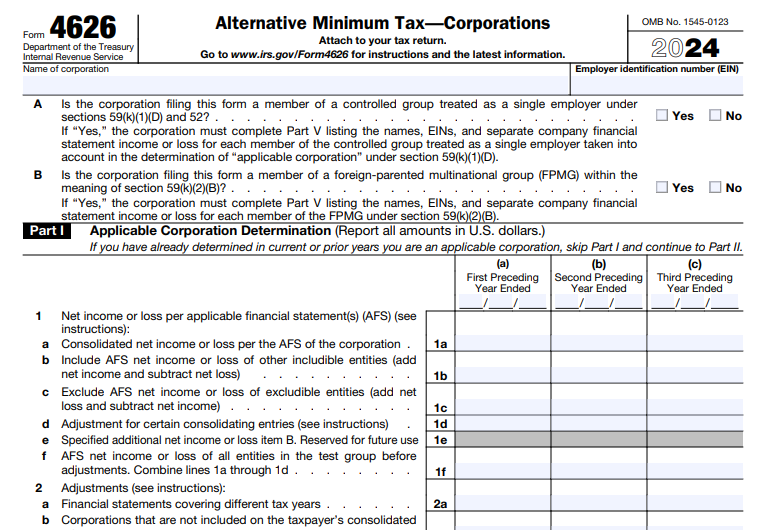
IRS Form 4626, titled “Alternative Minimum Tax – Corporations,” is used by corporations to determine if they qualify as an “applicable corporation” under Internal Revenue Code (IRC) Section 59(k) and to compute any Corporate Alternative Minimum Tax owed under Section 55. Unlike the pre-2018 corporate AMT, which was repealed by the Tax Cuts and Jobs Act (TCJA), the current CAMT targets large corporations with significant book income but potentially low taxable income due to deductions and credits.

The form calculates a 15% minimum tax on adjusted financial statement income (AFSI) after certain adjustments, ensuring these entities contribute a fair share to federal revenues. It’s attached to the corporation’s income tax return, such as Form 1120, and must be filed by the return’s due date, including extensions.

Key features of Form 4626 include:

  • Part I: Determines applicable corporation status based on average annual AFSI thresholds.
  • Part II: Computes AFSI with adjustments for taxes, depreciation, and other items.
  • Part III: Calculates the tentative minimum tax and any CAMT liability.
  • Schedules: Additional worksheets for foreign tax credits and controlled foreign corporations (CFCs).

For the latest version, visit the IRS website to download Form 4626 and its instructions.

Who Needs to File IRS Form 4626?

Not every corporation is required to file Form 4626. The form applies primarily to large entities that meet the “applicable corporation” criteria. Here’s a breakdown:

Applicable Corporation Status

A corporation (excluding S corporations, regulated investment companies (RICs), and real estate investment trusts (REITs)) is considered applicable if:

  • Its average annual AFSI over the three prior tax years exceeds $1 billion (aggregated for controlled groups).
  • For foreign-parented multinational groups (FPMGs), an additional test requires average AFSI of at least $100 million from U.S. effectively connected income.

Once a corporation qualifies as applicable, it retains this status unless it receives IRS approval for a change or meets specific de minimis exceptions.

Exemptions and Exceptions

  • Tax-Exempt Organizations: Generally exempt from filing Form 4626, even if they have unrelated business income, as confirmed by IRS guidance for tax year 2023 (extended applicability).
  • Small Corporations: Those not meeting the AFSI thresholds or using the simplified method (detailed below) may avoid filing.
  • Prior Non-Applicable Entities: If a corporation was not applicable in previous years and doesn’t meet thresholds, filing isn’t required.

Small corporate taxpayers who inadvertently reported CAMT for 2023 can seek relief through amended returns.

To determine status, use the optional interim simplified method from IRS Notice 2025-27, which raises thresholds to $800 million (general) and $80 million (FPMG) for easier testing.

IRS Form 4626 Download and Printable

Download and Print: IRS Form 4626

How to Calculate the Corporate Alternative Minimum Tax Using Form 4626

Calculating CAMT involves several steps, starting with financial statement data and applying IRS-specific adjustments. Here’s a high-level overview:

  1. Gather Financial Data: Collect applicable financial statements (AFS), such as SEC Form 10-K or audited statements, for the current and prior three years.
  2. Determine AFSI (Part II): Start with net income from the AFS and make adjustments, including:
    • Disregarding federal income taxes.
    • Aligning depreciation with tax rules.
    • Including pro-rata shares from CFCs.
    • Reducing by financial statement net operating losses (FSNOLs), capped at 80% of AFSI.
  3. Compute Tentative Minimum Tax (Part III): Apply a 15% rate to AFSI, minus the CAMT foreign tax credit (FTC), which includes credits for foreign taxes paid by CFCs and domestic corporations.
  4. Compare to Regular Tax: CAMT is owed if the tentative minimum tax exceeds the corporation’s regular tax plus base erosion anti-abuse tax (BEAT).

For consolidated groups, calculations are done on a group basis. Use U.S. dollars for all amounts, and rely on interim guidance from IRS Notices (e.g., 2023-7, 2024-10) until final regulations are issued.

Pro Tip: Software like Bloomberg Tax or Thomson Reuters can streamline complex calculations.

Recent Changes and Updates for 2025

The IRS continues to refine CAMT rules. Key updates include:

  • Notice 2025-27: Provides an interim simplified method for status determination, effective for 2025 tax years.
  • Final 2024 Form 4626 Instructions: Released in December 2024, with detailed guidance on AFSI adjustments and FTC calculations.
  • Proposed Regulations: Issued in September 2024, offering elective safe harbors and reliance options for earlier years.

Stay informed by checking the IRS website for 2025 form releases, expected early in the year.

Common FAQs About IRS Form 4626

Is the Corporate AMT Still in Effect After TCJA?

Yes, but it’s a new version. The old corporate AMT was repealed, but CAMT was enacted in 2022 for tax years after 2022.

What If My Corporation Is Part of a Multinational Group?

FPMGs face additional thresholds and must aggregate AFSI accordingly.

Can I Carry Forward CAMT Credits?

Yes, unused CAMT FTCs can be carried forward indefinitely.

Where Can I Find More Help?

Consult the IRS instructions for Form 4626 or a qualified tax advisor.

Conclusion

Mastering IRS Form 4626 is vital for large corporations to avoid penalties and ensure compliance with the Corporate Alternative Minimum Tax. By understanding its requirements and staying updated on IRS guidance, you can effectively manage your tax obligations in 2025 and beyond. For personalized advice, consult a tax professional. Remember, this article is for informational purposes only and not a substitute for official IRS guidance.
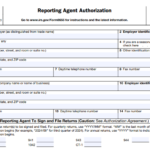
 

IRS Form 8655 – Reporting Agent Authorization

IRS Form 8655 - Reporting Agent Authorization

IRS Form 8655 – Reporting Agent Authorization – In today’s complex tax landscape, businesses often rely on professional payroll services to handle their tax obligations efficiently. One key tool for this is IRS Form 8655, also known as the Reporting Agent Authorization. This form allows taxpayers to designate a reporting agent—such as a payroll provider or accounting firm—to manage specific tax-related tasks on their behalf. Whether you’re a small business owner, HR professional, or tax advisor, understanding Form 8655 can streamline your compliance process and reduce administrative burdens.

In this comprehensive guide, we’ll cover everything you need to know about IRS Form 8655, including its purpose, how to fill it out, submission methods, and recent updates as of 2025. We’ll draw from official IRS resources to ensure accuracy and relevance.

IRS Form 8655 - Reporting Agent Authorization
IRS Form 8655 – Reporting Agent Authorization


What Is IRS Form 8655?

IRS Form 8655 is a legal document that authorizes a designated reporting agent to act on behalf of a taxpayer for certain IRS matters. It’s particularly useful for employers who outsource payroll and tax filing to third-party services. Unlike a general power of attorney (Form 2848), Form 8655 is tailored specifically for reporting agents handling employment taxes, deposits, and related communications.

This authorization helps ensure timely and accurate tax filings, but it’s important to note that the taxpayer remains ultimately responsible for all tax obligations. Reporting agents must file returns electronically and use the Electronic Federal Tax Payment System (EFTPS) for deposits.

Who Needs to Use Form 8655?

Form 8655 is ideal for:

  • Businesses outsourcing payroll to service providers.
  • Accounting firms or tax professionals managing client taxes.
  • Any taxpayer who wants a third party to handle specific IRS interactions, such as filing employment tax returns or making deposits.

If you’re a seasonal employer or have multiple entities, this form can specify authorizations for various tax forms and periods. Sole proprietors should use the owner’s name on the form, while corporations or partnerships use the business name.

What Does Form 8655 Authorize?

The form grants the reporting agent permission to perform several key functions, including:

  • Signing and Filing Returns: For forms like 940, 941, 943, 944, 945, 1042, and CT-1, starting from a specified quarter or year.
  • Making Deposits and Payments: For a broader range of forms, including 720, 1041, 1120, 990-PF, and 990-T, via EFTPS.
  • Receiving Duplicate Notices: The IRS can send copies of tax information, notices, and correspondence to the agent.
  • Disclosure for Information Returns: Access to confidential data for Forms W-2, 1099, 3921, and 3922 to respond to IRS inquiries.
  • State or Local Returns: Optional authorization for related state or local filings.

These authorizations are effective indefinitely from the start date until revoked or terminated. They do not relieve the taxpayer of liability and cannot be retroactive.

How to Complete IRS Form 8655 Step by Step

Filling out Form 8655 is straightforward but requires attention to detail. The form includes sections for taxpayer information, reporting agent details, and specific authorizations. Here’s a breakdown:

  1. Taxpayer Information (Lines 1-8):
    • Enter the taxpayer’s legal name (Line 1a), trade name if applicable (1b), EIN (2), address (3), and contact details (6-8).
    • Check the box if you’re a seasonal employer (4).
    • Optional: Other ID number (5).
  2. Reporting Agent Information (Lines 9-14):
    • Provide the agent’s company name (9), EIN (10), address (11), and contact info (12-14).
  3. Authorization Details (Lines 15-19):
    • Line 15: List tax returns for signing/filing (e.g., 941) and start period in YYYY/MM format (MM as the last month of the quarter for quarterly returns).
    • Line 16: List returns for deposits/payments and start month in YYYY/MM.
    • Line 17: Check to receive duplicate notices.
    • Lines 18a-c: Specify calendar years for disclosure authorizations (e.g., 2025 for current year).
    • Line 19: Check for state/local return authorization.
  4. Signatures:
    • The taxpayer (or authorized representative) must sign and date, certifying the information.
    • The reporting agent also signs.

Estimated time to complete: About 1 hour. Use the latest revision (January 2024 as of 2025).

For a visual reference, here’s a sample of IRS Form 8655:

How to Submit Form 8655

Submission options include:

  • Mail: Send to IRS Accounts Management Service Center, MS 6748, RAF Team, 1973 N. Rulon White Blvd., Ogden, UT 84404.
  • Fax: Use 855-214-7523 (updated in 2025; limit 25 forms per transmission).
  • Electronic: For high-volume agents (over 100 clients/week), use Secure Data Transfer (SDT) or other approved methods per Publication 1474.

Reporting agents must submit a Reporting Agent’s List along with Forms 8655 for initial authorizations or changes. Electronic signatures are allowed with proper authentication.

IRS Form 8655 Download and Printable

Download and Print: IRS Form 8655

Revoking or Terminating Form 8655 Authorization

To revoke:

  • Submit a new Form 8655 with a different agent (automatically revokes the prior one from the new start date).
  • Send a signed revocation statement or a copy of the original Form 8655 marked “REVOKE” to the IRS.

Reporting agents can terminate by filing a deletion list or written statement. Revocations do not affect prior periods or other authorizations like Form 2848.

Recent Updates to IRS Form 8655 in 2025

As of December 2025, key changes include:

  • Updated fax number: 855-214-7523 for submissions.
  • Clarifications in Publication 1474 (Rev. 6-2025) on electronic signatures, requiring evidence like captured images or timestamps.
  • No major form revisions since October 2018, but editorial updates to lines and formats.
  • Enhanced guidance on coexistence with other forms like 2848 and 8821.

Stay informed by checking the IRS website for the latest revisions.

  • Form 2848: Power of Attorney for broader representation.
  • Form 8821: Tax Information Authorization for viewing info without representation.
  • Publication 1474: Technical specs for reporting agents.
  • Publication 1167: Rules for substitute forms.
  • Revenue Procedure 2012-32: Guidelines for electronic filing.

For more, visit the IRS e-file providers page or enroll in EFTPS to monitor deposits.

Frequently Asked Questions About IRS Form 8655

What happens if I submit a new Form 8655?

It revokes the prior authorization starting from the new form’s effective date.

Can I use an electronic signature on Form 8655?

Yes, but with proper identity verification and evidence retained.

Is Form 8655 required for all payroll services?

No, but it’s necessary for agents to file electronically on your behalf.

How long does the authorization last?

Indefinitely, until revoked.

What if my reporting agent changes?

File a new Form 8655 to update the authorization.

Conclusion

IRS Form 8655 simplifies tax management by allowing trusted agents to handle filings and payments, freeing up time for your core business. Always use the most current version and consult official IRS guidance or a tax professional for personalized advice. By staying compliant, you can avoid penalties and ensure smooth operations in 2025 and beyond.


IRS Form 712 – Life Insurance Statement

IRS Form 712 - Life Insurance Statement

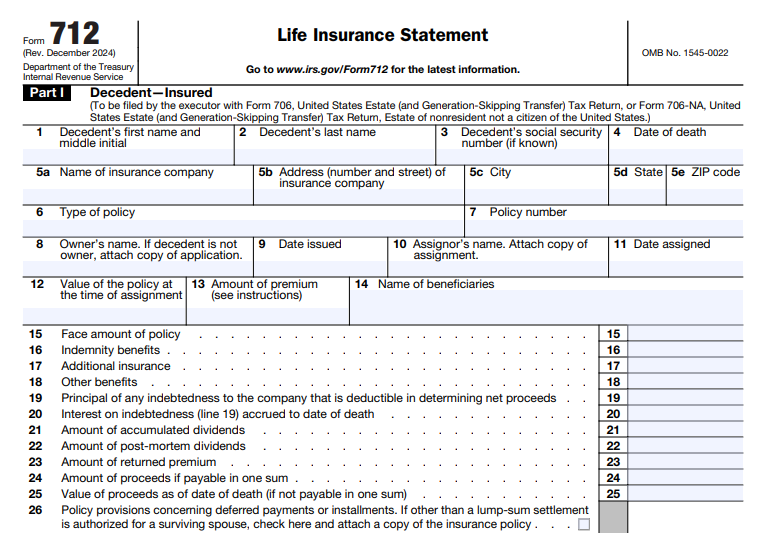
IRS Form 712 – Life Insurance Statement – In the realm of estate planning and tax compliance, understanding the intricacies of life insurance policies is crucial. One key document that often comes into play is IRS Form 712, also known as the Life Insurance Statement. This form plays a vital role in reporting the value of life insurance policies for estate and gift tax purposes, ensuring accurate tax calculations and compliance with federal regulations. Whether you’re an executor handling an estate or a donor transferring policy ownership, knowing how to navigate Form 712 can save time and prevent costly errors. In this guide, we’ll break down everything you need to know about IRS Form 712, from its purpose to step-by-step filing instructions.

IRS Form 712 - Life Insurance Statement
IRS Form 712 – Life Insurance Statement


What is IRS Form 712?

IRS Form 712 is an informational statement provided by life insurance companies to report the details and value of a life insurance policy. It includes essential data such as the policy’s face amount, accumulated dividends, outstanding loans, and net proceeds. The form is divided into two main parts: Part I for policies where the decedent is the insured, and Part II for policies involving a living insured, often used in gift scenarios.

This form is not filed independently but is attached to other tax returns like Form 706 (United States Estate Tax Return) or Form 709 (United States Gift Tax Return). A separate Form 712 must be completed for each life insurance policy involved. The latest revision of the form is from December 2024, making it current for 2025 tax filings.

Purpose of IRS Form 712

The primary purpose of Form 712 is to establish the fair market value of a life insurance policy at a specific point in time—either the date of death for estate taxes or the date of transfer for gift taxes. For estates, it helps determine if life insurance proceeds are includable in the gross estate, which could impact estate tax liability. In gift tax scenarios, it verifies the value of the policy being transferred, ensuring proper reporting on Form 709.

Key details reported include:

  • Policy ownership and transfers within three years of death.
  • Beneficiary information.
  • Financial elements like premiums, dividends, and indebtedness.
  • Valuation basis for installment payments or deferred benefits.

This information aids the IRS in verifying compliance under Internal Revenue Code sections like 6501(d) and 6109.

Who Needs to File IRS Form 712?

Form 712 is typically requested and certified by an officer of the life insurance company, not the taxpayer directly. However, the following parties are involved:

  • Executors of Estates: Must attach Form 712 to Form 706 or 706-NA for any life insurance on the decedent’s life.
  • Donors Making Gifts: Required for Form 709 when transferring ownership of a life insurance policy.
  • Advisors or Representatives: Often handle requests on behalf of estates or donors.

If the estate’s value approaches or exceeds the federal estate tax exemption (currently $13.61 million for 2025, adjusted for inflation), filing becomes particularly important to minimize tax exposure.

When and Where to File IRS Form 712

Form 712 is filed as an attachment to the relevant tax return:

  • With Form 706: Due nine months after the date of death, with possible extensions.
  • With Form 709: Due April 15 of the year following the gift, or with an extension.

It is not sent separately to the IRS but returned to the executor or donor who requested it. Request the form early from the insurance carrier, as preparation can take time.

IRS Form 712 Download and Printable

Download and Print: IRS Form 712

How to Obtain IRS Form 712

To get Form 712:

  1. Download the blank PDF from the official IRS website (irs.gov).
  2. Contact the life insurance company directly, providing policy details and the date of death or transfer.
  3. For specific carriers like Protective Life, call their customer service line and specify the need for Form 712 due to a death or transfer.

There are no direct costs mentioned for obtaining the form, but processing times vary by insurer.

Step-by-Step Guide to Filling Out IRS Form 712

Filling out Form 712 requires accurate data from insurance records. An authorized company officer must certify it. Estimated completion time: About 18 hours for recordkeeping, plus preparation. Here’s a breakdown:

Part I: Decedent-Insured

Used for estate tax returns (Form 706/706-NA).

  • Lines 1-4: Enter decedent’s name, SSN, and date of death.
  • Lines 5-7: Insurance company details, policy type, and number.
  • Lines 8-12: Owner, issue date, assignor, assignment date, and value at assignment.
  • Line 13: Annual premium (not cumulative).
  • Lines 14-25: Beneficiaries, face amount, benefits, indebtedness, dividends, and proceeds.
  • Lines 26-30: Installment provisions, amounts, and valuation basis.
  • Lines 31-35: Yes/No questions on transfers, annuities, ownership, and other policies. Attach copies of applications, assignments, or policies as needed.

Part II: Living Insured

Used for gift tax returns (Form 709) or estates with policies on others.

  • Section A (Lines 36-40): Donor/decedent name, SSN, gift/death dates.
  • Section B (Lines 41-57): Insured details, company info, policy specifics, premiums, assignee, and beneficiary.
  • Line 58 (Non-paid-up policies): Calculate interpolated terminal reserve, add premiums/dividends, subtract indebtedness for net value.
  • Line 59 (Paid-up/single premium): Compute single-premium cost, adjust for dividends/indebtedness.

Sign and date the certification at the bottom.

Valuation Methods and Common Issues

Valuation often involves the interpolated terminal reserve for ongoing policies or single-premium equivalents for paid-up ones. Common issues include:

  • Transfers within three years of death, which may include proceeds in the estate.
  • Incidents of ownership retained by the decedent.
  • Delays in obtaining the form from insurers.

If proceeds are not includable, explain why on the tax return.

Tips and Best Practices for IRS Form 712

  • Plan Ahead: Consult tax advisors before transferring policies to avoid unintended estate inclusion.
  • Avoid Common Mistakes: Use annual premiums only on Line 13; attach all required documents.
  • For Large Estates: Consider gifting policies to irrevocable trusts to remove them from the taxable estate.
  • If No Form Available: Provide alternative documentation like policy copies or proceeds checks.
  • Retain records as long as they may be relevant for tax purposes.

Recent Updates to IRS Form 712

As of December 2024, there are no significant updates to Form 712. However, always check the IRS website for the latest version, especially with ongoing adjustments to estate tax exemptions.

Conclusion

Mastering IRS Form 712 is essential for anyone dealing with life insurance in estate or gift planning. By accurately reporting policy values, you ensure compliance and potentially reduce tax burdens. If you’re unsure about any aspect, consult a tax professional. For the official form and instructions, visit the IRS website today.

This article is for informational purposes only and not tax advice. Always verify with current IRS guidelines.


IRS Form 7203 – S Corporation Shareholder Stock and Debt Basis Limitations

IRS Form 7203 - S Corporation Shareholder Stock and Debt Basis Limitations

IRS Form 7203 – S Corporation Shareholder Stock and Debt Basis Limitations – As an S corporation shareholder, managing your tax obligations requires careful tracking of your investment in the company. One critical tool for this is IRS Form 7203, officially titled “S Corporation Shareholder Stock and Debt Basis Limitations.” This form helps you calculate your stock and debt basis, which directly impacts the deductions, losses, and credits you can claim on your personal tax return. Introduced in 2021, Form 7203 ensures compliance with basis limitation rules under Internal Revenue Code sections 1366 and 1367, preventing you from claiming more losses than your actual economic investment in the S corp.

In this article, we’ll break down everything you need to know about IRS Form 7203, including who must file it, how to calculate your basis, a step-by-step guide to completing the form, and tips for avoiding common pitfalls. Whether you’re a small business owner or an investor in an S corp, understanding these basis limitations can help you maximize tax benefits while staying IRS-compliant. This guide is based on the latest 2025 revisions to the form and instructions.

IRS Form 7203 - S Corporation Shareholder Stock and Debt Basis Limitations
IRS Form 7203 – S Corporation Shareholder Stock and Debt Basis Limitations


What Is IRS Form 7203 and Why Does It Matter?

IRS Form 7203 is a required attachment for certain S corporation shareholders filing their individual tax returns (Form 1040). Its primary purpose is to compute and report your adjusted basis in the S corp’s stock and any loans you’ve made to the company. Basis acts as a cap on the amount of passthrough losses, deductions, and credits you can deduct from the S corp’s Schedule K-1.

Without sufficient basis, excess losses are suspended and carried forward to future years when basis is restored. This prevents shareholders from claiming tax benefits exceeding their at-risk investment, aligning with the at-risk rules under IRC Section 465 and passive activity loss rules under Section 469. Failing to track basis accurately can lead to IRS audits, penalties, or disallowed deductions, making Form 7203 essential for tax planning in S corporations.

For the 2025 tax year, the form has been revised as of December 2025, with updates primarily clarifying calculations for complex scenarios like debt restorations and partial stock dispositions.

Who Needs to File IRS Form 7203?

Not every S corp shareholder must file Form 7203 annually, but it’s required in specific situations. According to IRS guidelines, you must attach Form 7203 to your tax return if you:

  • Claim a deduction for your share of the S corp’s losses (including carryover losses from prior years limited by basis).
  • Receive a non-dividend distribution from the S corp.
  • Dispose of any S corp stock (regardless of whether you recognize a gain or loss).
  • Receive a repayment on a loan you made to the S corp.

Even if filing isn’t mandatory, the IRS recommends completing and retaining the form annually to maintain accurate basis records. This is especially useful for multi-year tracking, as basis adjustments occur at the end of the S corp’s tax year.

File the form with your personal tax return by the due date (typically April 15, or October 15 if extended). If you’re using tax software like TurboTax or TaxSlayer, it may generate the form automatically based on your K-1 inputs.

Understanding Stock Basis in S Corporations

Your stock basis starts with your initial investment (e.g., the cost of purchased shares or carryover basis in tax-free transfers). It adjusts annually based on S corp activity reported on your Schedule K-1. Increases include:

  • Ordinary business income.
  • Separately stated income items (e.g., interest, dividends).
  • Tax-exempt income.
  • Excess depletion deductions.

Decreases include:

  • Distributions (cash or property).
  • Nondeductible expenses.
  • Losses and deductions.
  • Oil and gas depletion.

Basis can’t go below zero, and adjustments follow a specific order to prioritize income increases before losses. If you elect under Regulations section 1.1367-1(g), you can alter this order, allowing nondeductible expenses to be deferred.

Understanding Debt Basis in S Corporations

Debt basis applies to loans you personally make to the S corp (not guarantees or bank loans). It starts with the loan amount and adjusts similarly to stock basis, but only after stock basis is exhausted. Key points:

  • Increases: New loans or advances.
  • Decreases: Losses and nondeductible expenses exceeding stock basis; principal repayments.
  • Restorations: Net increases from income can restore reduced debt basis, up to the original loan face value.

Open account debt (informal loans) is tracked net, while formal notes are separate. Repayments on reduced-basis debt can trigger gain recognition.

IRS Form 7203 Download and Printable

Download and Print: IRS Form 7203

How to Calculate Your S Corporation Shareholder Basis

To calculate basis, start with last year’s ending basis and apply adjustments in order:

  1. Add income and contributions.
  2. Subtract distributions.
  3. Subtract nondeductible expenses (unless electing deferral).
  4. Subtract losses and deductions.

Use data from your Schedule K-1 (boxes for income, distributions, etc.). For multiple shares or loans, prorate adjustments. Tools like spreadsheets or tax software can help, but always verify against IRS rules.

Adjustment Type Effect on Basis K-1 Box Reference
Income Items Increase Boxes 1-10
Contributions Increase N/A (Enter manually)
Distributions Decrease Box 16, Code D
Nondeductible Expenses Decrease Box 16, Code C
Losses/Deductions Decrease Boxes 1-12

Step-by-Step Guide to Filling Out IRS Form 7203

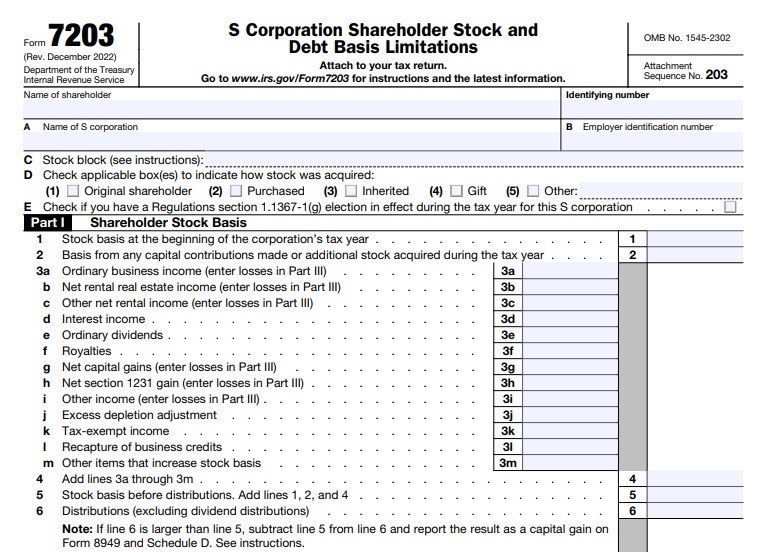
Form 7203 has three parts. Gather your prior-year basis, current K-1, and loan details before starting.

Part I: Shareholder Stock Basis

  • Line 1: Enter beginning stock basis (prior year’s ending).
  • Lines 2-5: Add contributions, income, and excess depletion.
  • Line 6: Subtract distributions (excess over basis is gain).
  • Lines 7-9: Subtract nondeductible items if no election.
  • Line 11: Enter allowable losses from Part III.
  • Line 12: Add debt basis restorations from Part II.

Part II: Shareholder Debt Basis

  • Track up to three loans; use extras for more.
  • Lines 16-20: Loan balances and adjustments.
  • Lines 21-25: Basis calculations and restorations.
  • Lines 26-33: Reductions for expenses and losses.

Part III: Shareholder Allowable Loss and Deduction Items

  • Enter K-1 losses in columns (a) and (b).
  • Allocate allowable amounts to stock (c) and debt (d); carry forward excess (e).

Report allowable items on your return; suspend the rest.

Common Mistakes When Handling S Corp Basis Limitations

Avoid these pitfalls:

  • Forgetting to track basis annually, leading to overclaimed losses.
  • Misclassifying loans (e.g., including guarantees).
  • Ignoring the order of adjustments.
  • Not prorating for partial dispositions.
  • Failing to report gains on debt repayments.

Always keep records and consider professional help for complex cases.

Recent Changes and Updates for 2025

The 2025 revision (posted November 2025) includes minor clarifications on debt restoration rules and elections under section 1.1367-1(g). No major structural changes, but check the IRS website for any late updates.

In summary, IRS Form 7203 is your key to properly limiting S corp deductions based on your investment. By mastering stock and debt basis calculations, you can optimize your tax strategy. However, tax laws are complex—consult a CPA or tax advisor for personalized guidance to ensure accuracy and compliance. For the official form and instructions, visit the IRS website.


IRS Form 5330 – Return of Excise Taxes Related to Employee Benefit Plans

IRS Form 5330 - Return of Excise Taxes Related to Employee Benefit Plans

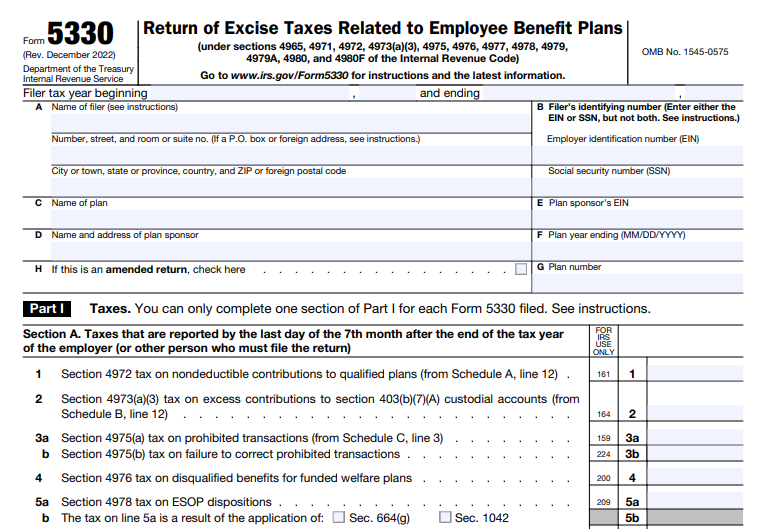
IRS Form 5330 – Return of Excise Taxes Related to Employee Benefit Plans – In the complex world of employee benefit plans, staying compliant with IRS regulations is crucial for employers, plan sponsors, and other involved parties. One key form that often comes into play is IRS Form 5330, which deals specifically with excise taxes related to these plans. Whether you’re dealing with prohibited transactions, funding deficiencies, or other compliance issues, this form ensures that any applicable taxes are reported and paid accurately. In this guide, we’ll break down everything you need to know about Form 5330, including who must file it, the taxes it covers, filing instructions, deadlines, and penalties. By understanding these details, you can avoid costly mistakes and maintain your plan’s good standing.

IRS Form 5330 - Return of Excise Taxes Related to Employee Benefit Plans
IRS Form 5330 – Return of Excise Taxes Related to Employee Benefit Plans


What Is IRS Form 5330?

IRS Form 5330, titled “Return of Excise Taxes Related to Employee Benefit Plans,” is a tax return used to report and pay various excise taxes imposed on employee benefit plans under the Internal Revenue Code. These taxes are typically triggered by non-compliance events, such as failing to meet minimum funding standards or engaging in prohibited transactions. The form helps the IRS enforce rules that protect plan participants and ensure fair administration of retirement and welfare benefit plans.

Unlike standard income tax returns, Form 5330 focuses solely on excise taxes, which are penalty-like fees designed to discourage violations. It’s essential for maintaining the tax-qualified status of plans like 401(k)s, pensions, and ESOPs (Employee Stock Ownership Plans). If you’re an employer or plan administrator, familiarizing yourself with this form can prevent unexpected liabilities.

Who Needs to File Form 5330?

Not everyone involved in employee benefits will need to file Form 5330—it’s required only when specific excise taxes apply. According to IRS guidelines, the following parties may be obligated to file:

  • Employers: Liable for taxes related to minimum funding deficiencies (section 4971), liquidity shortfalls (section 4971(f)), or failures in multiemployer plans under sections 4971(g) and (h).
  • Plan Sponsors: Including multiemployer plan sponsors for failures to adopt rehabilitation or funding restoration plans.
  • Disqualified Persons: Individuals or entities involved in prohibited transactions under section 4975, such as fiduciaries or parties in interest.
  • Individuals: For excess contributions to certain custodial accounts (section 4973(a)(3)) or other personal liabilities.
  • Plan Entity Managers: For prohibited tax shelter transactions under section 4965.
  • Other Entities: Such as employers paying excess fringe benefits (section 4977) or those with ESOP dispositions (section 4978).

A separate form is generally required for each plan if taxes stem from multiple plans, but you can consolidate taxes with the same due date on one form. Financial institutions handling multiple IRAs or plans in prohibited transactions can file a single form with an attached list of affected accounts.

If no excise tax is due, you don’t need to file. However, if a violation occurs, filing promptly is key to minimizing penalties.

Types of Excise Taxes Reported on Form 5330

Form 5330 covers a wide array of excise taxes, each tied to specific sections of the Internal Revenue Code. Here’s a breakdown of the main ones:

  • Section 4965: Taxes on prohibited tax shelter transactions involving tax-exempt entities.
  • Section 4971: Penalties for minimum funding deficiencies, liquidity shortfalls, and failures in endangered or critical status plans.
  • Section 4972: Nondeductible contributions to qualified plans.
  • Section 4973(a)(3): Excess contributions to 403(b)(7)(A) custodial accounts.
  • Section 4975: Prohibited transactions, often the most common trigger, with a 15% initial tax and up to 100% if not corrected.
  • Section 4976: Disqualified benefits from funded welfare plans.
  • Section 4977: Excess fringe benefits.
  • Section 4978: Certain ESOP dispositions.
  • Section 4979: Excess contributions to cash or deferred arrangements.
  • Section 4979A: Prohibited allocations of qualified securities by ESOPs.
  • Section 4980: Reversions of qualified plan assets to employers.
  • Section 4980F: Failure to provide notice of benefit accrual reductions.

Each tax has its own rate and calculation method— for example, prohibited transactions under section 4975 are based on the “amount involved,” which is the greater of the fair market value given or received. Always refer to the form’s schedules (A through L) for the specific tax you’re reporting.

How to File IRS Form 5330: Step-by-Step

Filing Form 5330 can be done electronically or on paper, depending on your situation. Here’s how:

  1. Gather Information: Collect details on the plan (including EIN or SSN, plan number), the excise tax type, and calculations.
  2. Complete the Form: Use the appropriate schedules for your tax (e.g., Schedule C for prohibited transactions). Include attachments for uncorrected issues or explanations.
  3. Electronic Filing: Required for filers submitting 10 or more returns in the calendar year (for tax years ending after December 31, 2023). Use the IRS Modernized e-File (MeF) system via an authorized provider. As of 2024, there’s only one provider, allowing paper filing with documentation of hardship due to limited options—check for 2025 updates.
  4. Paper Filing: Mail to Department of the Treasury, Internal Revenue Service Center, Ogden, UT 84201. Use designated private delivery services if needed.
  5. Pay the Tax: Attach a check or money order payable to “United States Treasury,” noting the form, section, and plan details.
  6. Extensions: File Form 8868 for up to a 6-month extension, but pay any estimated tax with it.

Common errors include omitting the plan number, using incorrect identifying numbers, or failing to attach required statements. Double-check everything to avoid delays.

IRS Form 5330 Download and Printable

Download and Print: IRS Form 5330

Filing Deadlines for Form 5330

Deadlines vary by the excise tax type—refer to Table 1 in the Form 5330 Instructions for specifics. Generally:

  • For prohibited transactions (section 4975), file by the last day of the 7th month after the end of the tax year.
  • For minimum funding issues (section 4971), due by the last day of the 7th month after the plan year ends.
  • Other taxes may align with your fiscal year or specific event dates.

If the due date falls on a weekend or holiday, it shifts to the next business day. Late filings incur penalties, so mark your calendar.

Penalties for Late Filing or Non-Compliance

Failing to file or pay on time can be expensive:

  • Late Filing Penalty: 5% of the unpaid tax per month (or part thereof), up to 25%.
  • Late Payment Penalty: 0.5% per month, up to 25%, plus interest.
  • Additional Taxes: For uncorrected prohibited transactions, a 100% tax may apply.

Penalties can be waived for reasonable cause—attach an explanation to your form. Participating in voluntary correction programs like the Employee Plans Compliance Resolution System (EPCRS) can help rectify issues before they escalate.

Tips for Successfully Filing Form 5330

  • Consolidate Where Possible: Report multiple taxes with the same deadline on one form to simplify.
  • Seek Professional Help: Consult a tax advisor or ERISA attorney for complex plans.
  • Stay Updated: Check IRS.gov for annual adjustments, like inflation-indexed amounts.
  • Use Resources: Download the latest form and instructions from IRS.gov. For electronic filing waivers, document hardships like the limited number of providers.

By proactively managing your employee benefit plans, you can minimize the need for Form 5330 altogether.

Conclusion

IRS Form 5330 plays a vital role in enforcing compliance for employee benefit plans, helping protect workers’ retirement security. Whether you’re an employer facing a funding shortfall or a fiduciary correcting a prohibited transaction, understanding this form is essential. Always use the most current IRS resources to ensure accuracy, and consider professional guidance to navigate these rules effectively. For more details, visit the official IRS website or consult a tax expert. Staying informed not only avoids penalties but also supports a robust benefits program for your team.


IRS Form 15103 – Form 1040 Return Delinquency

IRS Form 15103 - Form 1040 Return Delinquency

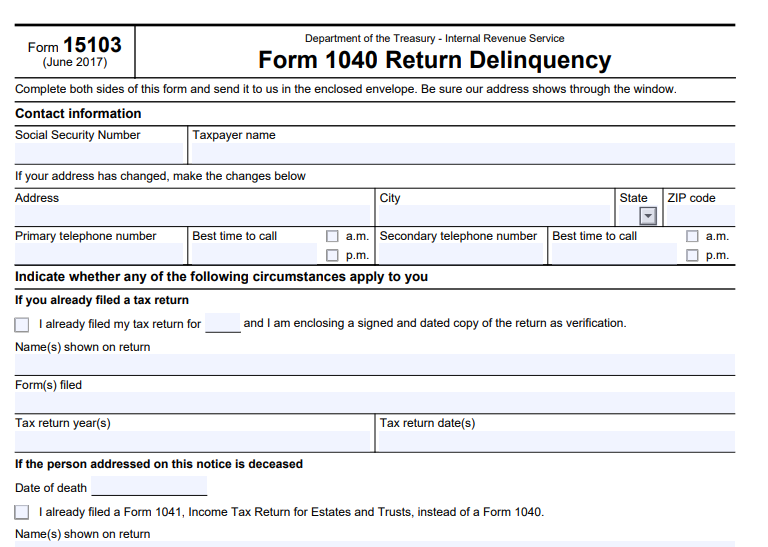
IRS Form 15103 – Form 1040 Return Delinquency – In today’s complex tax landscape, receiving a notice from the IRS about a delinquent Form 1040 can be stressful. If you’ve gotten a letter claiming you haven’t filed your personal tax return, IRS Form 15103 – officially titled Form 1040 Return Delinquency – is your key tool for responding. This form helps you explain your situation, whether you’ve already filed, don’t need to file, or have other valid reasons. In this SEO-optimized guide, we’ll break down everything you need to know about IRS Form 15103, including its purpose, how to fill it out, and submission tips, based on the latest IRS guidelines as of late 2025.

IRS Form 15103 - Form 1040 Return Delinquency
IRS Form 15103 – Form 1040 Return Delinquency


What Is IRS Form 15103?

IRS Form 15103 is a delinquency response form designed for individuals who receive a notice from the IRS indicating no record of their Form 1040 tax return for a specific year. It’s a two-page document that allows taxpayers to provide details and documentation to resolve the issue without escalating to penalties or further enforcement actions.

The form, last revised in June 2017, includes sections for personal information, explanations of your filing status, and options for handling credits or refunds. It’s commonly enclosed with non-filer compliance alert notices, such as CP59, CP516, or CP518, which are part of the IRS’s efforts to ensure tax compliance, especially among high-income earners.

Key features of the form include:

  • Checkboxes for common scenarios, like already filing a return or the taxpayer being deceased.
  • Spaces to detail your filing status (e.g., single, married filing jointly).
  • Options to explain low income or other exemptions from filing.
  • Signature under penalties of perjury to confirm accuracy.

This form is available in English and Spanish (Form 15103-SP) for broader accessibility.

When Do You Need to Use Form 15103?

You should use IRS Form 15103 if you’ve received a non-filer notice like CP59, which is sent when the IRS has no record of your prior year’s personal tax return. These notices often target cases from tax years 2017-2021, particularly for high-income individuals (e.g., those earning over $400,000).

Common situations where Form 15103 applies:

  • You’ve already filed: Provide a signed copy of your return as proof.
  • You don’t need to file: Explain factors like low income, non-U.S. residency, or dependency on another’s return.
  • Alternative filing: If you filed Form 1041 for an estate or trust instead.
  • Deceased taxpayer: Include the date of death.
  • Handling credits: Apply prior-year refunds to another return or request a check (note: filing is required for refunds).

If you filed recently (within eight weeks), no action may be needed, but verify details like your Social Security Number and tax year match the notice. Ignoring the notice can lead to the IRS preparing a substitute return, which may not include your deductions or credits.

How to Complete IRS Form 15103 Step by Step

Filling out Form 15103 is straightforward, but accuracy is crucial since it’s signed under penalty of perjury. Here’s a step-by-step guide:

  1. Provide Contact Information: Enter your Social Security Number, name, address (update if changed), phone numbers, and best times to call.
  2. Select Applicable Circumstances: Check boxes and fill in details for scenarios like:
    • Already filed: Include name on return, form type, tax year, and filing date. Attach a signed copy.
    • Deceased: Provide date of death.
    • Filed Form 1041: List name, EIN, and tax year.
  3. Explain Non-Filing (If Applicable):
    • Select filing status (e.g., head of household).
    • Check boxes for conditions like age 65+, blindness, non-U.S. citizen, or work abroad.
    • State total income and reason for not filing.
  4. Handle Credits or Payments: If you have overpayments or estimated payments, indicate if you want to apply them to another tax period or receive a refund. Remember, filing a return is required for refunds.
  5. Sign and Date: Affirm that all information is true and complete.

Complete both sides of the form, as it spans two pages.

How to Submit IRS Form 15103

Submission options include:

  • Mail: Use the enclosed envelope from your notice, ensuring the IRS address shows through the window. Include the notice stub and any attachments like your tax return.
  • Fax: Send to the number listed in your notice. Use a secure fax service and protect your data.
  • Online Upload: If available, submit via your IRS Online Account for a mobile-friendly experience.

Act quickly to avoid escalation. For CP59 notices, updated in April 2025 as part of the Simple Notice Initiative, responses help prevent further actions like audits or liens.

IRS Form 15103 Ddownload and Printable

Download and Print: IRS Form 15103

Potential Consequences of Ignoring a Delinquency Notice

Failing to respond can result in:

  • Accrual of penalties and interest if you owe taxes.
  • Loss of refunds or credits due to time limits (generally three years for refunds).
  • IRS filing a substitute return, potentially leading to higher taxes without your inputs.
  • Escalation to collection actions, such as levies, liens, or even criminal prosecution in severe cases.

Filing past due returns promptly can protect Social Security benefits (for self-employed) and minimize costs.

Tips for Handling IRS Form 15103 and Avoiding Common Mistakes

  • Double-Check Details: Ensure your SSN, name, and tax year match the notice to avoid delays.
  • Gather Documentation: Always attach required proofs, like a copy of your filed return.
  • Use IRS Resources: Download the form from the official IRS website and review publications like Publication 1 (Your Rights as a Taxpayer) or Publication 594 (The IRS Collection Process).
  • Seek Professional Help: If unsure, consult a tax advisor, especially for complex situations like international work or estates.
  • File Electronically if Possible: For the actual tax return, e-filing speeds up processing.
  • Track Your Response: Keep copies of everything sent to the IRS.

By addressing the notice promptly with Form 15103, you can resolve the issue efficiently and avoid unnecessary stress.

Frequently Asked Questions About IRS Form 15103

What if I already filed my Form 1040?

Attach a signed copy to Form 15103 and submit it to verify.

Can I get a refund without filing?

No, you must file a return to claim refunds, even if not otherwise required.

How long do I have to respond to a CP59 notice?

Respond immediately to stop penalties; there’s no fixed deadline, but delays increase risks.

Is Form 15103 updated for 2025?

The form itself remains from 2017, but related notices like CP59 were updated in April 2025 for clarity.

Where can I download IRS Form 15103?

Access it directly from the IRS website in PDF format.

Navigating IRS notices doesn’t have to be overwhelming. By using Form 15103 correctly, you can clear up delinquencies and stay compliant. For personalized advice, visit the IRS website or contact a tax professional.


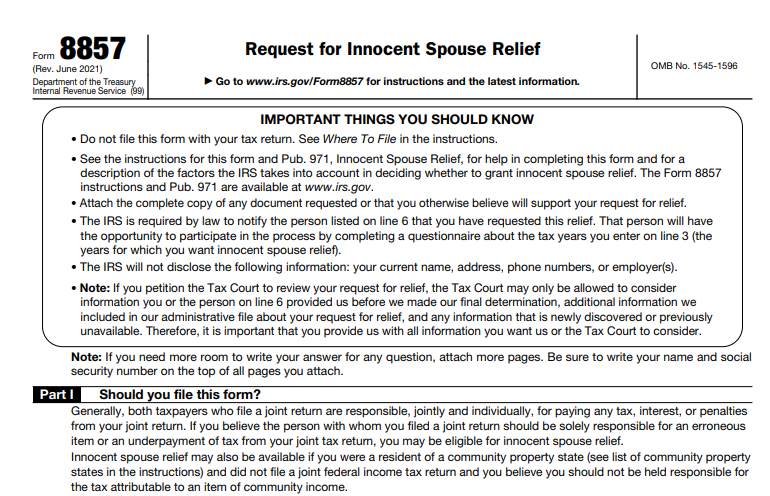
IRS Form 8857 – Request for Innocent Spouse Relief

IRS Form 8857 - Request for Innocent Spouse Relief

IRS Form 8857 – Request for Innocent Spouse Relief – If you’re facing tax liabilities from a joint return with your spouse or former spouse, you might qualify for relief through IRS Form 8857. This form allows you to request innocent spouse relief, potentially absolving you from paying taxes, penalties, and interest that aren’t your responsibility. In this comprehensive guide, we’ll cover everything you need to know about Form 8857, including eligibility, filing steps, deadlines, and more. Whether you’re dealing with understated taxes due to errors or unpaid balances, understanding this process can provide significant financial protection.

IRS Form 8857 - Request for Innocent Spouse Relief
IRS Form 8857 – Request for Innocent Spouse Relief


What Is Innocent Spouse Relief?

Innocent spouse relief is a provision from the IRS that relieves you from joint tax liability if your spouse or former spouse is solely responsible for errors or underpayments on a joint tax return. When you file jointly, both parties are typically equally liable for the entire tax debt. However, if you can prove you were unaware of the issues—such as unreported income, incorrect deductions, or inflated credits—you may be eligible for relief.

This relief applies to federal income taxes but not to household employment taxes, individual shared responsibility payments, business taxes, or trust fund recovery penalties. It’s particularly relevant in cases of divorce, separation, or domestic abuse, where one spouse may have been coerced or uninformed.

Types of Relief Available Through Form 8857

Form 8857 isn’t limited to one type of relief. The IRS will evaluate your situation and determine the best fit:

  • Innocent Spouse Relief: This is for understated taxes due to your spouse’s erroneous items (e.g., unreported income or improper deductions). You must prove you had no knowledge or reason to know about the errors at the time of signing the return.
  • Separation of Liability Relief: Allocates the tax debt between you and your spouse based on individual responsibility. It’s available if you’re divorced, widowed, legally separated, or haven’t lived together for at least 12 months before filing.
  • Equitable Relief: A catch-all option if you don’t qualify for the above. It applies to both understated and unpaid taxes (taxes reported but not paid) if holding you liable would be unfair, considering factors like abuse, economic hardship, or compliance history.

Residents of community property states (Arizona, California, Idaho, Louisiana, Nevada, New Mexico, Texas, Washington, Wisconsin) may also qualify for specific relief from community income items, even without a joint return.

Who Qualifies for Innocent Spouse Relief?

Eligibility depends on the type of relief, but common requirements include:

  • Filing a joint tax return for the year in question.
  • An understatement of tax due to erroneous items attributable to your spouse (e.g., omitted income or false deductions).
  • No actual knowledge or reason to know about the errors—determined by what a reasonable person in your situation would know, factoring in education, financial involvement, and any evasion by your spouse.
  • It’s unfair to hold you liable, considering benefits received, divorce status, abuse, or economic hardship.

For equitable relief, additional threshold conditions apply, such as no fraudulent asset transfers and timely filing. The IRS considers holistic factors like:

  • Marital status (favoring relief if separated or divorced).
  • Economic hardship (inability to pay basic living expenses).
  • Abuse or financial control (physical, psychological, or emotional, which can outweigh knowledge of errors).
  • Compliance with tax laws post-separation.
  • Health issues at the time of filing or requesting relief.

Exceptions exist for domestic abuse victims: Relief may be granted even if you knew about errors, if fear or coercion prevented you from challenging them. Partial relief is possible if you’re unaware of only part of the understatement.

Disqualifiers include participating in fraud, signing a closing agreement, or court-denied relief in prior proceedings.

How to File IRS Form 8857: Step-by-Step Guide

Filing Form 8857 is straightforward but requires detailed documentation. You don’t need to specify the relief type—the IRS will decide based on your submission.

  1. Check Eligibility: Use the form’s initial questions (lines 1-2) to confirm if innocent spouse relief applies or if you need Form 8379 for injured spouse allocation instead.
  2. Gather Information: Include your SSN/ITIN, current address, spouse’s details, tax years involved, and explanations of erroneous items, your lack of knowledge, and why liability is unfair.
  3. Complete the Form: Detail circumstances like forged signatures, duress, property transfers, or abuse (refer to Revenue Procedure 2013-34 for abuse claims).
  4. Attach Supporting Documents: Provide bank statements, canceled checks, or proof of payments made with your own funds (for refunds). Redact sensitive info and label attachments with your name and SSN.
  5. Sign and Date: The form must be signed; unsigned submissions are returned. If using a preparer, they must include their PTIN.
  6. Submit: Mail via USPS to P.O. Box 120053, Covington, KY 41012; private delivery to 7940 Kentucky Drive, Stop 840F, Florence, KY 41042; or fax to 855-233-8558. Do not attach to your tax return.

For multiple years, file separate forms or attach a statement.

Required Documents and Attachments for Form 8857

To strengthen your case, include:

  • Proof of payments (e.g., bank records showing funds came from your separate account).
  • Evidence of abuse or financial control (e.g., police reports, medical records).
  • Divorce decrees or separation agreements showing legal obligations.
  • Financial statements demonstrating economic hardship.

The IRS may request more info during review.

IRS Form 8857 Download and Printable

Download and Print: IRS Form 8857

Deadlines for Filing Form 8857

Timing is critical:

  • Innocent Spouse and Separation of Liability: Within 2 years of the IRS’s first collection attempt (e.g., notice of offset, levy, or lawsuit).
  • Equitable Relief (Balance Due): Within the 10-year collection statute (suspended during review).
  • Equitable Relief (Refund/Credit): Within 3 years of filing the return or 2 years of paying the tax, whichever is later.
  • Community Income Relief: No later than 6 months before the assessment period expires (usually 3 years from filing), or 30 days after IRS exam contact.

File as soon as you learn of the liability to avoid complications. If no IRS response within 6 months, you can petition Tax Court.

What Happens After You File Form 8857?

The IRS reviews your request, which may take 6 months or longer. They’ll notify your spouse (unless abuse warrants nondisclosure) and allow participation. Collection activities pause, but interest accrues.

You’ll receive a determination letter. If denied, appeal within 30 days or petition Tax Court within 90 days. Both spouses can appeal.

Common FAQs About IRS Form 8857

Can I Get a Refund Through Innocent Spouse Relief?

Yes, for innocent spouse and equitable relief if you made payments with your own funds, within refund timelines. No refunds for separation of liability.

What If I’m in a Community Property State?

You may qualify for relief from community income even without a joint return, based on state laws but overridden for IRS allocation.

Are There Any 2025 Updates to Form 8857?

As of 2025, no major changes are noted beyond ongoing reviews. Check IRS.gov for the latest, as pages were updated in March and November 2025.

Should I Hire a Professional?

Complex cases involving abuse or large debts benefit from tax attorneys or enrolled agents familiar with IRS procedures.

Conclusion: Protect Yourself with Innocent Spouse Relief

Navigating tax liabilities from a joint return can be overwhelming, but IRS Form 8857 offers a lifeline for those unfairly burdened. By understanding eligibility, gathering evidence, and filing promptly, you can seek relief and move forward financially. For personalized advice, consult IRS Publication 971 or a tax professional. Always verify details on official IRS sources to ensure compliance in 2025.


IRS Form 8288 – U.S. Withholding Tax Return for Certain Dispositions by Foreign Persons

IRS Form 8288 - U.S. Withholding Tax Return for Certain Dispositions by Foreign Persons

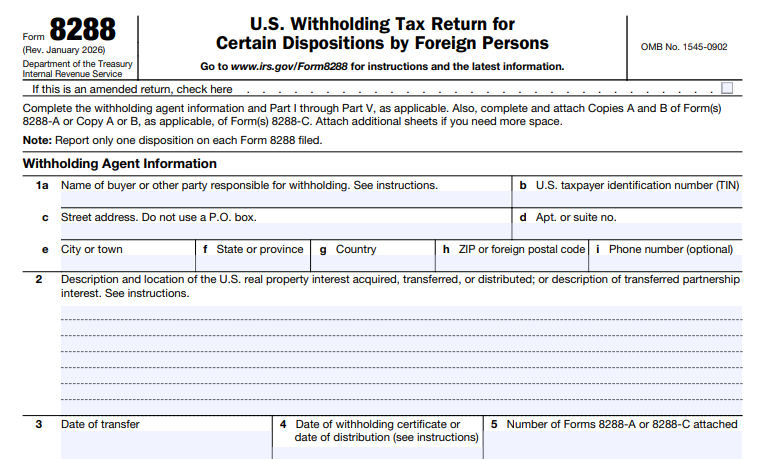
IRS Form 8288 – U.S. Withholding Tax Return for Certain Dispositions by Foreign Persons – When foreign individuals or entities sell or dispose of U.S. real property, they often encounter specific tax obligations under the Foreign Investment in Real Property Tax Act (FIRPTA). At the heart of this process is IRS Form 8288, which ensures that the U.S. government collects withholding tax on these transactions. This article breaks down everything you need to know about Form 8288, including its purpose, filing requirements, withholding rates, and recent updates as of late 2025. Whether you’re a foreign seller, buyer, or real estate professional, understanding this form can help you navigate compliance and avoid penalties.

IRS Form 8288 - U.S. Withholding Tax Return for Certain Dispositions by Foreign Persons
IRS Form 8288 – U.S. Withholding Tax Return for Certain Dispositions by Foreign Persons


What Is IRS Form 8288?

IRS Form 8288, titled “U.S. Withholding Tax Return for Certain Dispositions by Foreign Persons,” is used to report and remit withholding tax on the sale or other disposition of U.S. real property interests (USRPIs) by foreign persons. Under FIRPTA, which is codified in Section 1445 of the Internal Revenue Code, buyers (or transferees) are typically responsible for withholding a portion of the proceeds to cover potential capital gains taxes owed by the foreign seller. This form also applies to certain distributions and transfers under Sections 1445(e), 1446(f)(1), and 1446(f)(4), such as those involving partnerships or qualified investment entities (QIEs).

USRPIs include land, buildings, mines, wells, and even interests in U.S. corporations that hold significant real property. The form ensures that foreign sellers pay taxes on gains from these assets, treating them as effectively connected with a U.S. trade or business. Without proper withholding, the buyer could become liable for the tax.

Who Must File Form 8288?

The primary filer of Form 8288 is the withholding agent, which is usually the buyer or transferee in the transaction. This includes:

  • Buyers purchasing U.S. real property from foreign persons (under Section 1445(a)).
  • Corporations, QIEs, trusts, or estates making distributions attributable to USRPI gains (under Section 1445(e)).
  • Transferees in partnership interest transfers where the partnership has effectively connected gain (under Section 1446(f)(1)).
  • Partnerships distributing property to transferees who failed to withhold (under Section 1446(f)(4)).

Foreign persons themselves do not file Form 8288; instead, they report their actual tax liability on their U.S. tax return (e.g., Form 1040-NR or 1120-F). However, if excess withholding occurs, the transferee may claim a refund using Part V of the form.

Exceptions to filing include cases where no withholding is required, such as:

  • The property is acquired for use as a residence and the sales price is $300,000 or less.
  • The transferor provides a non-foreign affidavit (Form W-9).
  • The transaction qualifies for nonrecognition treatment, or the property is not a USRPI (e.g., publicly traded stock in certain corporations).

Withholding Rates Under FIRPTA

Withholding rates vary based on the type of transaction:

  • Section 1445(a) Dispositions: Generally 15% of the amount realized (sales price, including cash, fair market value of other property, and liabilities assumed). Reduced to 10% for residential properties where the price is between $300,001 and $1,000,000, and the buyer intends to use it as a residence.
  • Section 1445(e) Distributions: 21% (or 35% for pre-2018 transactions) on gains from USRPIs by corporations, QIEs, trusts, or estates; 15% for certain redemptions or liquidations.
  • Section 1446(f)(1) Partnership Transfers: 10% of the amount realized, unless adjusted by a withholding certificate.
  • Section 1446(f)(4) Partnership Distributions: Up to 100% of the distribution until the required 10% withholding plus interest is covered.

These rates can be reduced or eliminated with an IRS-issued withholding certificate (Form 8288-B), which requires proof that the actual tax liability is less than the standard withholding amount.

How to Complete Form 8288

Form 8288 is divided into parts based on the applicable section:

  • Part I: For Section 1445(a) withholding. Enter the withholding agent’s details, property description, transfer date, amount realized, and withheld tax.
  • Part II: For Section 1445(e) distributions. Report the amount subject to withholding and applicable rates.
  • Part III: For Section 1446(f)(1) transfers. Calculate 10% of the amount realized.
  • Part IV: For Section 1446(f)(4) distributions by partnerships.
  • Part V: For refund claims on excess withholding.

Attach related forms like 8288-A (Statement of Withholding) for each foreign transferor or 8288-C for certain partnership withholdings. If the Taxpayer Identification Number (TIN) is missing, file anyway—the IRS will request it later.

Due Dates and Filing Requirements

Form 8288 must be filed by the 20th day after the date of transfer or distribution. Mail it to the Ogden Service Center, P.O. Box 409101, Ogden, UT 84409, along with the withheld funds.

A significant update requires electronic payments via the Electronic Federal Tax Payment System (EFTPS) for all FIRPTA withholdings, following an executive order issued on March 25, 2025. As of October 17, 2024, paper checks are no longer accepted, and payments must be made electronically to comply. This change aims to streamline federal payments and reduce processing delays.

For installment sales, withhold the full amount on the first payment if possible; otherwise, obtain a withholding certificate.

IRS Form 8288 Download and Printable

Download and Print: IRS Form 8288

Recent Changes to IRS Form 8288 in 2025

In 2025, the IRS introduced several updates to enhance compliance:

  • Electronic Payment Mandate: All FIRPTA payments must now be submitted via EFTPS, effective following the March 2025 executive order. This eliminates mailed checks and applies to transactions closing after September 30, 2025.
  • Draft 2026 Form Revisions: Released on August 28, 2025, the draft includes changes to address compliance gaps, such as clearer reporting for partnership transfers and updated instructions for withholding agents.
  • Tax Year Adjustments: The IRS may adjust the tax year on Form 8288 based on the transfer date, ensuring accurate reporting.

These changes reflect ongoing efforts to modernize FIRPTA administration and close loopholes in international tax compliance.

  • Form 8288-A: Statement of Withholding on Dispositions by Foreign Persons. Attached to Form 8288 for each foreign transferor; the IRS stamps and returns Copy B to the transferor for credit on their tax return.
  • Form 8288-B: Application for Withholding Certificate. Used to request reduced or zero withholding based on actual tax liability.
  • Form 8288-C: Statement of Withholding Under Section 1446(f)(4). For partnerships withholding on distributions.

Penalties for Non-Compliance

Failing to withhold or file Form 8288 can result in severe penalties:

  • Late filing or payment: Up to 25% of the tax due under Section 6651.
  • Failure to withhold: The agent is liable for the full tax plus interest.
  • Willful violations: Fines up to $10,000 or criminal penalties under Section 7202.
  • Personal liability for responsible parties under Section 6672.

Agents must also notify the IRS if they suspect false certifications, or they risk liability.

Frequently Asked Questions About IRS Form 8288

What if the sales price is under $300,000?

No withholding is required if the buyer acquires the property as a residence.

Can withholding be reduced?

Yes, by obtaining a withholding certificate from the IRS via Form 8288-B, typically processed within 90 days.

How does FIRPTA apply to partnerships?

For transfers of partnership interests, withholding is 10% if the partnership has USRPIs generating effectively connected income.

What if I overwithheld?

File Part V of Form 8288 to request a refund, attaching supporting documents.

Conclusion

Navigating IRS Form 8288 and FIRPTA withholding is crucial for anyone involved in U.S. real estate transactions with foreign parties. By understanding the form’s requirements and staying updated on changes like the 2025 electronic payment mandate, you can ensure compliance and minimize risks. Always consult a tax professional for personalized advice, as tax laws can be complex and subject to change. For the latest official guidance, visit the IRS website.


IRS Form 4029 – Application for Exemption From Social Security and Medicare Taxes and Waiver of Benefits

IRS Form 4029 - Application for Exemption From Social Security and Medicare Taxes and Waiver of Benefits

IRS Form 4029 – Application for Exemption From Social Security and Medicare Taxes and Waiver of Benefits – In today’s complex tax landscape, certain individuals may qualify for exemptions from standard payroll taxes due to religious beliefs. IRS Form 4029, officially titled “Application for Exemption From Social Security and Medicare Taxes and Waiver of Benefits,” provides a pathway for members of recognized religious groups to opt out of these taxes. This form is particularly relevant for groups like the Amish or Mennonites, allowing them to align their tax obligations with their faith. If you’re exploring religious exemptions from Social Security taxes or Medicare tax waivers, this guide covers everything you need to know, including eligibility, filing process, and potential implications.

IRS Form 4029 - Application for Exemption From Social Security and Medicare Taxes and Waiver of Benefits
IRS Form 4029 – Application for Exemption From Social Security and Medicare Taxes and Waiver of Benefits


What Is IRS Form 4029?

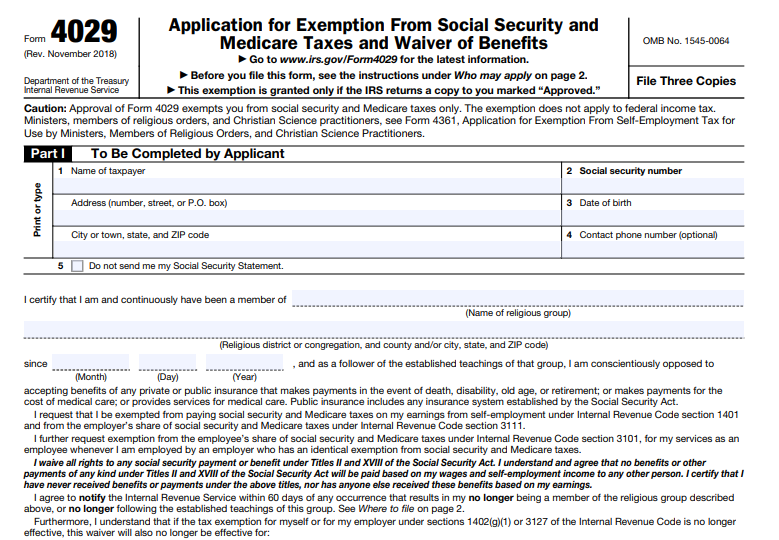
IRS Form 4029 is a specialized application used by qualifying individuals to request an exemption from paying Social Security and Medicare taxes on their wages and self-employment income. By filing this form, applicants also irrevocably waive their rights to any benefits under Social Security Titles II (old-age, survivors, and disability insurance) and XVIII (Medicare). This exemption applies to both employee and employer shares of these taxes, ensuring that no contributions are made on behalf of the exempt individual.

The form’s purpose stems from provisions in the Internal Revenue Code (IRC) sections 1401, 3101, and 3111, which allow for religious-based opt-outs. It’s a one-time election that, once approved, remains in effect as long as the individual meets the requirements. Note that this does not exempt you from federal income taxes—only Social Security and Medicare.

Who Is Eligible for the Form 4029 Exemption?

Eligibility for the religious exemption from Social Security taxes is strictly limited to members of recognized religious groups that meet specific criteria set by the IRS and Social Security Administration (SSA). To qualify:

  • Membership in a Recognized Religious Group: You must be a member of a religious sect or division that has been in continuous existence since December 31, 1950. The group must be conscientiously opposed to accepting public or private insurance benefits for death, disability, old age, retirement, or medical care (including Social Security and Medicare).
  • Adherence to Teachings: You must personally follow the group’s established teachings opposing such insurance benefits.
  • Group Support System: The religious group must provide a reasonable level of living support for its dependent members.
  • No Prior Benefits Received: You cannot have received (or be entitled to) Social Security or Medicare benefits based on your earnings, unless you’ve repaid them in full.

Common examples include Amish and Mennonite communities, but the SSA certifies whether a group qualifies. Ministers, members of religious orders, or Christian Science practitioners should use Form 4361 instead. Partnerships can apply if all partners qualify and file individually.

As of 2025, there have been no major updates to these eligibility rules, though taxpayers should check for any guidance related to child tax credits or other intersecting benefits.

How to File IRS Form 4029: Step-by-Step Guide

Filing for a Social Security tax exemption via Form 4029 requires careful preparation. Here’s how to apply:

  1. Obtain the Form: Download the latest version from the IRS website (IRS.gov). The form was last revised in November 2018, with no significant changes noted in 2025.
  2. Complete Part I (Applicant Section): Provide your personal details, including name, address, Social Security Number (SSN), date of birth, and membership details. Certify your opposition to insurance benefits and waive rights to Social Security payments. If you don’t have an SSN, apply using Form SS-5.
  3. Obtain Certification (Part II): An authorized representative of your religious group must sign, confirming your membership and the group’s qualifications.
  4. Submit the Form: Mail the original and two copies to the Social Security Administration at: Security Records Branch, Attn: Religious Exemption Unit, P.O. Box 7, Boyers, PA 16020. File it by the due date of your tax return for the first year you have self-employment income or join the group.
  5. Await Approval: The IRS will review and return an approved or disapproved copy. Keep the approved version for your records.

For self-employed individuals, the exemption is retroactive to qualifying years. For employees, it starts the first quarter after filing. If your status changes (e.g., you leave the group), notify the IRS within 60 days.

IRS Form 4029 Download and Printable

Download and Print: IRS Form 4029

Consequences and Implications of Filing Form 4029

Opting for this Medicare tax waiver and Social Security exemption has long-term effects:

  • Tax Savings: You won’t pay the 12.4% Social Security tax (split between employee and employer) or the 2.9% Medicare tax on exempt income.
  • Loss of Benefits: The waiver is irrevocable, meaning no future access to Social Security retirement, disability, survivors’ benefits, or Medicare based on your earnings. This applies even to dependents.
  • Employer Responsibilities: If approved, employers don’t withhold or pay these taxes. Mark “Exempt—Form 4029” on relevant tax forms like Form 1040 or W-2.
  • Potential Risks: If the exemption ends, benefits are only payable based on post-exemption earnings. False information can lead to penalties.

Rely on your religious community’s support system, as you’ll forgo government safety nets.

When dealing with Form 4029, you may encounter:

  • Form 4361: For ministers and similar roles.
  • Form 1040: To report self-employment tax exemptions.
  • Publication 15-A: Employer’s Supplemental Tax Guide for handling exempt employees.
  • Form W-2: For noting exemptions on wage statements.

Frequently Asked Questions About IRS Form 4029

Can I revoke Form 4029 after approval?

No, the waiver is irrevocable for the period it’s effective.

Does this exemption apply to state taxes?

No, it only covers federal Social Security and Medicare taxes.

What if I’m self-employed and an employee?

The exemption covers both, as long as you qualify.

Are there any 2025 updates to Form 4029?

As of late 2025, no major changes have been announced, but always verify with IRS.gov for the latest.

Conclusion: Is the Form 4029 Exemption Right for You?

IRS Form 4029 offers a vital religious exemption from Social Security and Medicare taxes for eligible individuals, but it comes with the permanent waiver of associated benefits. If your faith prohibits participation in such programs, consult with your religious leader and a tax professional before filing. For the most current information, visit the official IRS and SSA websites. This guide is for informational purposes—professional advice is recommended for personal tax situations.


IRS Form 12153 – Request for a Collection Due Process or Equivalent Hearing

IRS Form 12153 - Request for a Collection Due Process or Equivalent Hearing

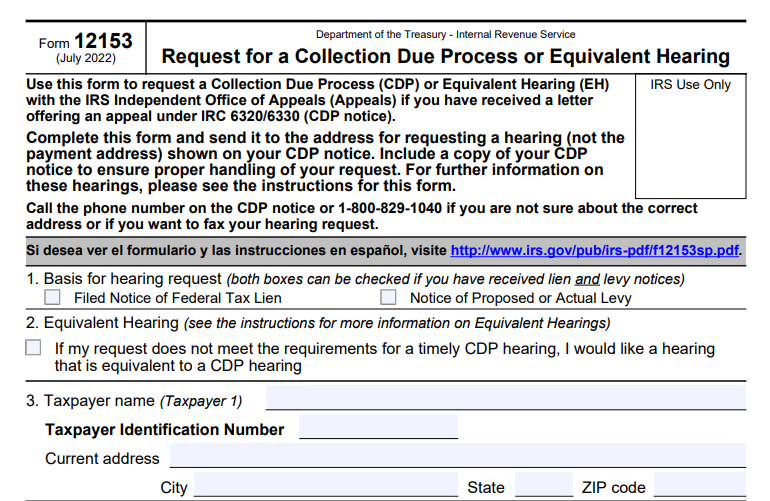
IRS Form 12153 – Request for a Collection Due Process or Equivalent Hearing – If you’re facing IRS collection actions like a tax lien or levy, understanding your appeal rights is crucial. IRS Form 12153, officially titled “Request for a Collection Due Process or Equivalent Hearing,” allows taxpayers to challenge these actions through the IRS Independent Office of Appeals. This form can help you explore payment alternatives, dispute liabilities under certain conditions, and potentially halt aggressive collection efforts. In this comprehensive guide, we’ll break down everything you need to know about Form 12153, including when to use it, how to file, and what to expect—based on the latest IRS guidelines as of 2025.

Whether you’re dealing with unpaid taxes, a notice of federal tax lien, or an intent to levy, filing Form 12153 timely can protect your rights and provide breathing room. Let’s dive in.

IRS Form 12153 - Request for a Collection Due Process or Equivalent Hearing
IRS Form 12153 – Request for a Collection Due Process or Equivalent Hearing


What Is IRS Form 12153 and Why Is It Important?

IRS Form 12153 is the official document used to request a Collection Due Process (CDP) hearing or an Equivalent Hearing (EH) when the IRS notifies you of certain collection actions. This form applies if you’ve received a CDP notice under Internal Revenue Code (IRC) sections 6320 or 6330, such as a Notice of Federal Tax Lien or a Notice of Intent to Levy.

The primary purpose of a CDP hearing is to give you an impartial review by the IRS Appeals Office before or after the IRS takes enforced collection steps. During the hearing, you can:

  • Discuss alternatives to collection, like installment agreements or offers in compromise.
  • Challenge the appropriateness of the lien or levy.
  • Dispute the underlying tax liability if you haven’t had a prior chance to do so.

Filing this form is important because a timely CDP request can suspend collection actions (like levies) and extend the 10-year statute of limitations on collections. Without it, you might face immediate asset seizures or property encumbrances, making it harder to resolve your tax issues.

When Should You File IRS Form 12153?

You should file Form 12153 upon receiving specific IRS notices that offer appeal rights. Common triggers include:

  • Letter 11: Final Notice of Intent to Levy and Notice of Your Right to a Hearing.
  • Letter 1058: Final Notice – Reply Within 30 Days (intent to levy).
  • CP90 or CP297: Final Notice of Intent to Levy.
  • Letter 3172 or Letter 3173: Notice of Federal Tax Lien Filing and Your Right to a Hearing Under IRC 6320.
  • CP504: Urgent!! Intent to Levy Certain Assets (a precursor to formal levy notices).

The key deadline for a CDP hearing is 30 days from the date on the notice. If you miss this window, you may still qualify for an Equivalent Hearing by checking the appropriate box on the form and filing within one year (plus five business days for liens) from the notice date. However, an EH doesn’t provide the same protections, such as suspending collections or allowing judicial review.

File if you believe the IRS action is inappropriate, you’re facing financial hardship, or you want to propose payment options. Not all collection actions qualify—some may fall under the Collection Appeals Program (CAP) instead.

CDP Hearing vs. Equivalent Hearing: Key Differences

Understanding the distinction between a CDP Hearing and an Equivalent Hearing is essential for maximizing your rights:

Aspect CDP Hearing Equivalent Hearing
Timing Filed within 30 days of notice Filed after 30 days, up to 1 year
Suspension of Collection Yes, prohibits most levies and suspends 10-year collection period No suspension
Judicial Review Yes, you can appeal the decision in court No court appeal available
Process Full review by Appeals Office Similar review, but fewer protections
Outcomes Can lead to alternatives like installment plans; disputes liability if no prior opportunity Same potential outcomes, but without halting collections

A timely CDP request offers stronger safeguards, so act quickly.

IRS Form 12153 Download and Printable

Download and Printable: IRS Form 12153

How to Fill Out and Submit IRS Form 12153

Filling out Form 12153 is straightforward but requires attention to detail to avoid invalidation. Here’s a step-by-step guide:

  1. Section 1: Basis for Request – Check boxes for “Filed Notice of Federal Tax Lien” and/or “Notice of Proposed or Actual Levy.” If both apply, check both.
  2. Section 2: Equivalent Hearing – Check this if your request is untimely for CDP.
  3. Sections 3-6: Personal Information – Provide your name(s), Taxpayer Identification Number (TIN), address, and contact details.
  4. Section 7: Tax Information – List the tax type, form number, and periods from your notice. Attach a copy of the notice to skip this if preferred.
  5. Section 8: Reason for Hearing – Explain your issues in detail (e.g., “I am not liable,” “Financial hardship,” or “Innocent spouse relief”). This is required; without it, your request is invalid.
  6. Section 9: Proposed Alternative – Suggest options like “Installment Agreement” or “Offer in Compromise.” Attach Form 433-A (individuals) or 433-B (businesses) with supporting documents for faster processing.
  7. Section 10: Signature – Sign and date. If represented, attach Form 2848 (Power of Attorney).

Submission Tips:

  • Send to the hearing request address on your CDP notice (not the payment address).
  • Include a copy of your notice.
  • Keep proof of mailing (e.g., certified mail).
  • For questions, call the number on your notice or 1-800-829-1040.

Submitting financial info early can expedite resolution, though it’s not mandatory.

What Happens After Filing Form 12153?

Once submitted, the IRS Appeals Office will review your request. For a timely CDP filing, collection actions are generally suspended. The hearing is typically conducted via phone or correspondence, where you’ll discuss your case with an impartial officer.

Possible outcomes include:

  • Approval of a collection alternative (e.g., installment plan).
  • Withdrawal or subordination of a lien.
  • Determination on liability disputes (if eligible).
  • Continuation of collection if no agreement is reached.

If you disagree with the outcome, you can petition the U.S. Tax Court (for CDP hearings only). Interest and penalties continue to accrue during this process.

Tips for a Successful CDP or Equivalent Hearing

  • Act Fast: Meet the 30-day deadline for full CDP benefits.
  • Be Detailed: Provide thorough explanations and documentation to strengthen your case.
  • Seek Help: Consider Low Income Taxpayer Clinics (LITCs) or tax professionals for guidance.
  • Explore Alternatives Early: Contact IRS Collections before filing to discuss options.
  • Refer to Resources: Check IRS Publications 594 (The IRS Collection Process), 1660 (Collection Appeal Rights), and 2105 (Why Do I Owe Taxes?).

Remember, not all liability disputes can be raised in CDP—use audit reconsideration or refund claims if needed.

Final Thoughts on IRS Form 12153

Navigating IRS collection actions can be stressful, but Form 12153 empowers you to seek a fair review and explore resolution options. By filing promptly and preparing thoroughly, you can potentially avoid severe consequences like asset levies. Always consult the official IRS website for the most current form and instructions, as tax rules can evolve.

If you’re unsure about your situation, reach out to the IRS or a tax advisor. Taking proactive steps with Form 12153 could be the key to regaining control over your tax obligations.